
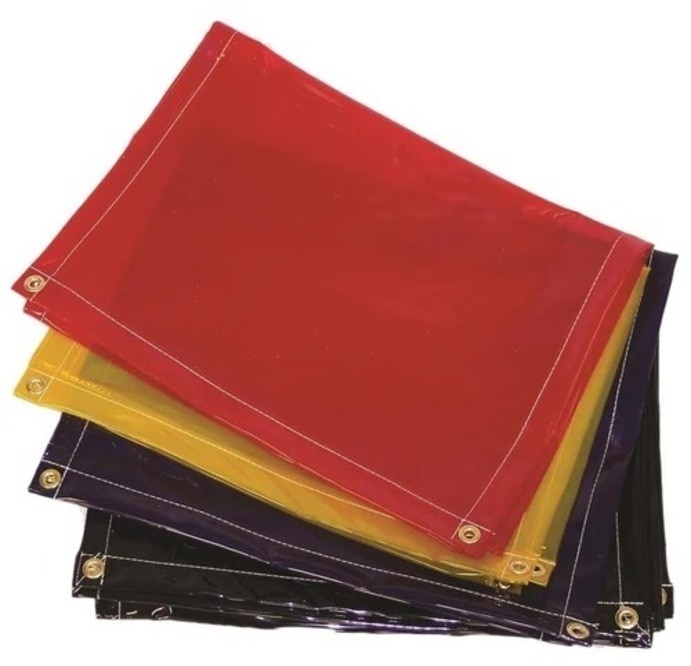
A Prima laser-machine bellow cover and a welding curtain solve different hazards, so choosing by price or appearance can leave either a guideway exposed or people unprotected from arc radiation. You will be able to identify the correct protection, measure a replacement accurately, specify materials and curtain performance, and decide when a cell requires both.
Key takeaways
- Match the cover to the hazard: chips and coolant need bellows; arc flash needs curtains.
- Measure travel, folded height, mounting points and clearance before requesting a replacement bellow.
- Specify flame resistance, viewing shade, heat exposure and overlap for robot-cell welding curtains.
- Approve drawings, access points and replacement intervals before accepting the quotation.
Choose the protection by the hazard, not the machine name
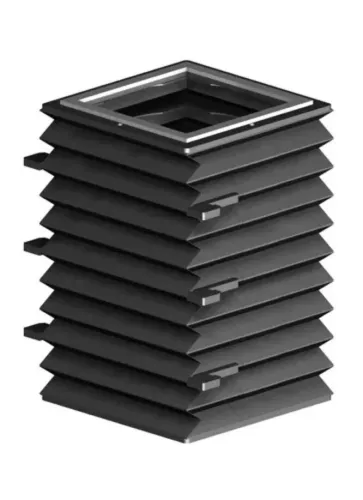
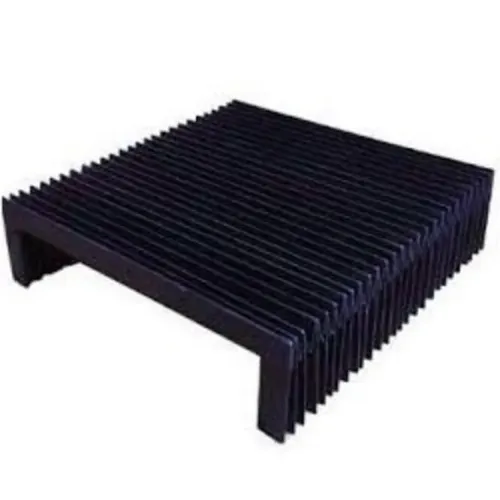
Use a bellow over exposed Prima rails, ball screws, slides, or other moving mechanisms; use a welding curtain around an arc-welding robot cell; use both when the cell combines welding with a laser machine axis. The machine name alone does not identify the hazard.
| Option | Protects | Choose it when |
|---|---|---|
| Prima laser-machine bellow cover | Guideways, drives and moving parts from dust, chips, hot particles and mechanical damage | A moving axis is exposed to contamination or impact |
| Robot-cell welding curtain | People and nearby work areas from arc radiation, sparks and spatter | Arc welding creates line-of-sight exposure around the cell |
| Both | The machine mechanism and the welding area separately | Laser cutting or another exposed axis operates beside welding |
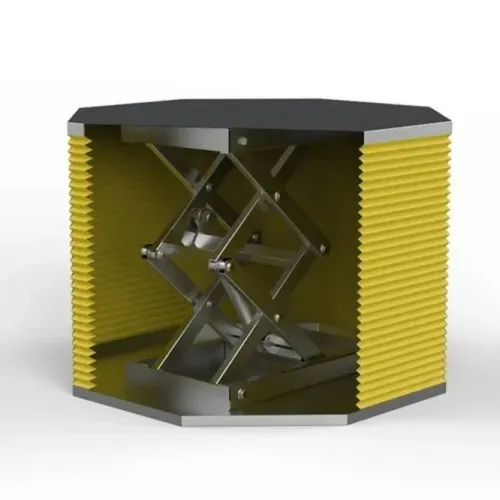
A Prima laser machine bellow cover comparison must start with actual travel, not the nominal model. Give the supplier the axis or guideway, fully compressed and extended lengths, folded height, width, mounting-hole pattern, guideway geometry, travel direction, clearance, speed, acceleration and minimum bend radius. An outside-dimension match can foul at full compression or restrict travel.
Specify heat- and spark-resistant fabric, scraper elements, stainless-steel lamellae or a spark shield where laser cutting produces incandescent particles; flexible PVC-coated fabric alone is not automatically suitable. Specify the curtain separately.
ISO 25980 addresses transparent welding curtains for arc-welding radiation, but it does not prove suitability for a fiber, CO₂ or Nd:YAG laser, and a curtain is not structural guarding, access control or safety-rated robot protection.
Measure the Prima axis before requesting a replacement bellow
Measure the protected Prima axis at both limits, not just the old cover’s outside size. A Prima laser machine bellow cover comparison is meaningful only when the replacement matches travel, compression, mounting and motion data.
Record these measurements and operating values:
- Machine model, covered axis and travel direction
- Fully compressed length and fully extended length
- Guideway width, mounting-face width and end-frame dimensions
- Folded height, overall cover width and mounting-hole pattern
- Clearance to the carriage, ball screw, nozzle, cable carrier and nearby guards
- Axis speed, acceleration, cycle frequency and minimum bend radius
- Chip, coolant, hot-particle and spark exposure at the cover location
| Field | What to capture | Why it matters |
|---|---|---|
| Axis travel | Actual usable stroke, plus end clearances | Prevents restricted movement or overextension |
| Closed/open length | Measure the installed cover at both limits | Prevents fouling when folds compress |
| Mounting geometry | Hole centres, bolt size, flange faces and end frames | Allows the cover to bolt on without forced alignment |
| Operating conditions | Speed, acceleration, heat, sparks, coolant and cleaning method | Determines fabric, slats and construction |
Send photographs and a dimensioned sketch showing interference points. Require a supplier drawing or sample approval that states compressed and extended lengths, folded height, fabric construction, temperature limits, cleaning method and replacement-bellow interchangeability. A trial fit and full-stroke test catch errors that a nominal model number cannot.
Select bellows materials for Pune’s chips, coolant and laser heat
Fabric is adequate when the bellows sits behind a guarded enclosure and faces chips, dust and coolant rather than direct sparks or incandescent particles. Choose heat- and spark-resistant fabric with documented temperature and coolant compatibility; ordinary PVC-coated fabric selected only for flexibility can burn through at exposed folds.
| Option | Suitable condition | Why it fails or works |
|---|---|---|
| Fabric bellows | Enclosed axis; intermittent sparks; moderate chip impact | Flexible and light, but exposed folds can burn, abrade or lose shape |
| Stainless-steel lamellae | Direct hot particles, repeated sparks or sharp abrasive chips | Adds a sacrificial metal barrier, but increases mass, folded height and cleaning requirements |
| Fabric with spark shield or wear strip | Sparks strike one zone or the first and last folds | Protects the vulnerable area and allows cheaper replacement of the shield instead of the complete cover |
Specify lamellae when hot particles land repeatedly on the cover, sparks cross the travel path, or abrasive chips attack the first and last folds. Add a replaceable spark shield or wear strip when damage is localised; this limits downtime and replacement cost.
Check that the added weight does not exceed the axis cover’s allowable compression, speed or mounting capacity.
Require a drawing or sample showing fabric construction, temperature limits, compressed and extended lengths, folded height, mounting holes and cleaning method. The bellows remains a contamination barrier, not laser guarding; assess laser enclosure performance separately against IEC 60825-1 and ISO 11553-1.
Specify a robot-cell welding curtain without confusing it with safeguarding
Specify the curtain as an optical barrier, not as the robot cell’s safety system. For a robot cell welding curtain in Pune, demand the manufacturer’s transmission or attenuation data, stated welding process limits, UV and visible-light performance, and compliance information for ISO 25980. Dark colour alone proves nothing.
- State the curtain height, join overlap and bottom clearance. Missing overlap or a floor gap can leave a direct arc-radiation path.
- Specify resistance to welding spatter, sparks, heat and cleaning chemicals, including the maximum process conditions.
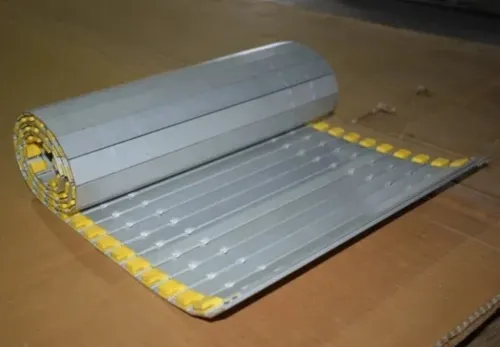
- Choose fixed, sliding or retractable panels, then name the rail, frame, supports and anchoring method required for the cell.
- Record whether access paths, robot motion, fixtures and maintenance openings remain clear throughout travel.
- Define the replacement method, curtain-panel dimensions and expected replacement lead time.
ISO 25980 concerns transparent welding screens; it does not approve a curtain for a fibre, CO₂ or Nd:YAG laser. Obtain a wavelength-specific laser assessment against IEC 60825-1 and the applicable site rules before combining both protections.
A curtain cannot replace perimeter guarding, access gates, safety interlocks, emergency stops or reset controls. Coordinate the layout with the risk assessment and ISO 10218-2 integration requirements; apply ISO 14119 when selecting interlocking devices. Ask Kalavijay Engineering to verify the rail layout and curtain travel against the robot’s access envelope before fabrication, not after installation.
Approve the quotation only after the cell and replacement plan are verified
A low component price is not a usable comparison. Ask each Prima laser machine bellow cover supplier in Pune to quote against the same measured travel, mounting faces, clearance, speed, acceleration and minimum bend radius; a cover that matches only the outside dimensions can foul when compressed or restrict the axis.
| Check | Bellow-cover quotation | Welding-curtain quotation |
|---|---|---|
| Fit evidence | Approved drawing or sample showing compressed and extended lengths, folded height, width, holes, fabric and temperature limit | Cell layout showing curtain height, overlap, posts, gates and robot access paths |
| Hazard control | Heat- and spark-resistant construction, slats, scrapers or shield where hot particles reach the guideway | Stated optical protection for the welding process, plus spatter resistance |
| Installation | Site measurement, mounting hardware, trial fit and full-travel check | Posts, tracks, overlaps, clearances and access-control coordination |
| Safety boundary | Protects moving machine parts; it is not a laser enclosure or personnel safeguard | Controls line-of-sight arc radiation; it does not replace structural guarding, interlocks or safety-rated access protection |
- Confirm that the bellow cannot enter the robot envelope, pinch cables or obstruct curtain movement at every axis position.
- Ask who verifies laser enclosure integrity, door interlocks, emergency stops and commissioning; do not treat a welding curtain as laser protection.
- Require cleaning instructions, fabric construction, folded height, replacement lead time and an interchangeable drawing with the quotation.
- Include installation, trial fit and future replacement in total cost. Reject a quote that offers “custom” parts without these records.
Frequently asked questions
Should you choose a Prima laser machine bellow cover or a welding curtain?
Choose a bellow for exposed rails, ball screws, slides and moving mechanisms. Choose a welding curtain around an arc-welding robot cell. Use both when the cell includes welding and a laser-machine axis.
What measurements are needed for a replacement Prima machine bellow?
Record the protected travel, compressed and extended lengths, width, height, mounting-hole pattern, end-frame dimensions, folded height and clearance from nearby moving parts. Photograph each mounting point and note coolant, chip and heat exposure.
What should you specify for a robot-cell welding curtain in Pune?
Specify the welding process, arc location, curtain height and length, overlap at entrances, mounting arrangement, viewing shade or opacity, flame-resistant material and clearance from sparks, hot parts and robot motion.
Does a welding curtain replace robot-cell safeguarding?
No. A curtain controls arc light and sparks but does not replace perimeter guarding, interlocked access doors, emergency stops, safety-rated robot controls or the risk assessment for the cell.
Related products
 | Welding Booth Curtain Robot Cell Door Motorized Welding Curtain We are Manufacturer of Motarized Rolling Curtains for Welding Curtain Booths or welding Curtains cells. View product → |
 | Bellow Cover We are professtional factory. We sell all consumables and functional parts applicable for most OEM brands including... View product → |
 | Curtains for welding Cell Motorized Rolling Curtains for welding Cell We are Manufacturer of Motarized Rolling Curtains for Welding Curtain Booths or welding Curtains cells. View product → |
 | Welding Curtain Designed with durable PVC strips, this door protects individuals outside the welding area from harmful spark, spatter, and arc flash while permitting... View product → |