
Coolant, chips, abrasive dust and moisture can reach guideways, ball screws and linear scales before an operator notices a problem. By matching the cover to the axis, exposure and available space, you can reduce contamination-related maintenance without treating a bellow as a substitute for wipers, seals or machine guarding.
Key takeaways
- Protect guideways from chips, coolant, abrasive dust and monsoon moisture.
- Choose fabric bellows for flexible protection; use steel covers for severe chip impact.
- Provide travel, compressed length, expansion height and mounting dimensions before ordering.
- Replace covers with cracks, exposed folds, loose frames or coolant penetration.
What benefits does a CNC bellow cover provide on a Pune machine shop floor?
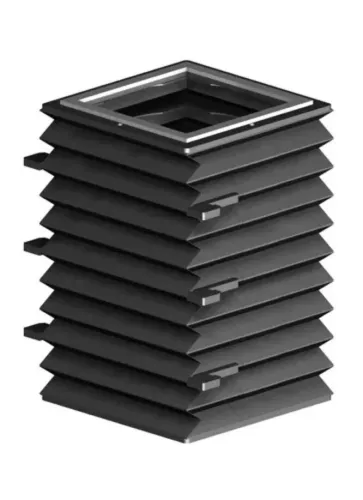
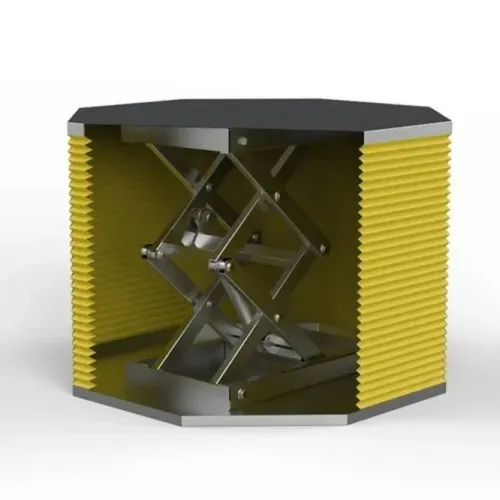
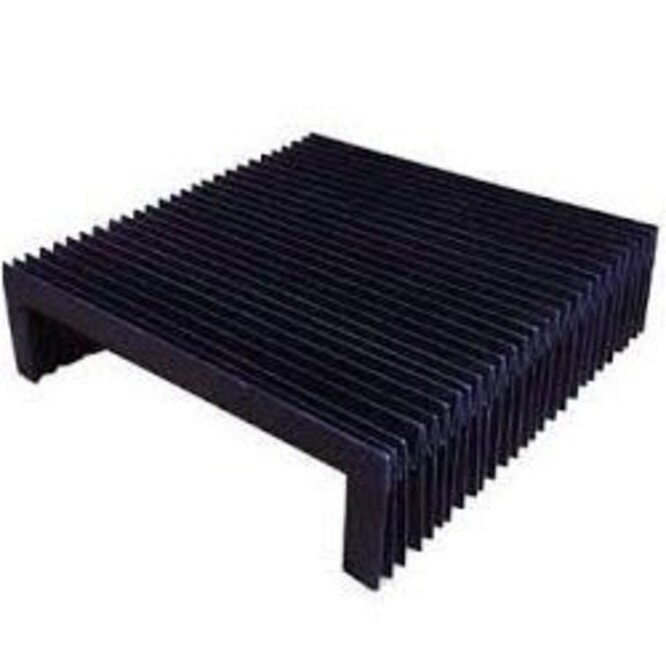
A CNC machine bellow cover shields guideways, ball screws, linear scales and other moving elements as its folded sections extend and compress with axis travel. For Pune manufacturers, the benefits of a cnc machine bellow cover for benefits in pune appear in reduced exposure to chips, abrasive dust, metalworking coolant, monsoon moisture and dusty floors.
That barrier means less contamination reaches sliding and measuring surfaces, so operators clean less frequently and face fewer contamination-related stoppages. It also helps preserve positioning performance when debris was causing wear, sticking or scale-reading errors.
A cover does not directly increase machine accuracy; it protects the conditions that allow the machine to retain its existing performance.
On a shared production floor, specify CNC machine protection bellows around the actual contamination route and check that the compressed folds have clearance from the carriage, enclosure and adjacent axis.
- Keep way wipers and scrapers: they clean the moving interface after contamination reaches it.
- Retain labyrinth seals: they block entry paths around protected components.
- Control coolant and evacuate chips: bellows do not correct flooding, splash or chip accumulation in horizontal folds.
- Inspect for trapped chips and rubbing, especially during monsoon operation.
The result is cleaner motion and more consistent operation, not a replacement for the machine’s other protection systems.
How does a fabric bellow compare with a steel cover or an exposed guideway?
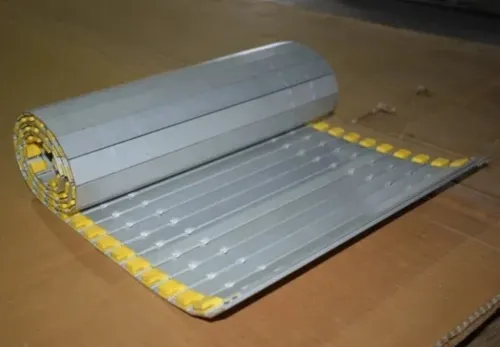
Fabric bellows fit restricted clearances and changing axis movement because they compress, extend and accommodate uneven paths with low mass. Telescopic steel way covers need more installation space but provide stronger primary defence against hot, sharp or heavy chips, making them preferable for aggressive dry machining. Exposed guideways provide no contamination barrier.
| Option | Flexibility and motion | Protection, space and upkeep |
|---|---|---|
| Fabric bellow | High flexibility; suits rapid travel and acceleration with low noise | Compact; shields against coolant, dust and ordinary chips; inspect seams, folds and fasteners; failure includes tearing, delamination, abrasion and coolant ingress |
| Telescopic steel cover | Rigid; needs aligned, predictable travel | Strongest defence against hot, sharp or heavy chips; noisier and heavier; requires more space; inspect slides, scrapers and seals |
| Exposed guideway | Maximum access and no cover mass | No chip or coolant protection; simplest access but highest contamination exposure; wear, sticking and measurement errors develop directly |
Horizontal folds can collect chips, especially on a chip-producing axis. Provide fold clearance, prevent sharp chips from lodging, and leave cleaning and inspection access; trapped debris can abrade a nominally sealed CNC machine protection bellows.
A cnc machine bellow cover is not a safety guard: ISO 12100 risk assessment and ISO 14120 guard design separately address access prevention, interlocking and foreseeable impact.
Which specifications should Pune manufacturers give before selecting a cover?
Give the cnc bellow cover supplier a measured operating specification, not only the machine model or nominal stroke. A search for cnc machine bellow cover for benefits in pune is no substitute for these details:
- Axis stroke; fully extended and compressed lengths; folded height; opening width and height.
- Guideway shape, minimum bend radius, mounting-hole pattern, movement speed, acceleration, orientation and available clearance.
- Cover mass, allowable speed and acceleration, required supports or guides, and whether the cover adds unacceptable bending resistance or friction.
| Exposure | State precisely | Compatibility review |
|---|---|---|
| Coolant and moisture | Alkaline, synthetic or semi-synthetic coolant; oil; monsoon moisture | Confirm material, coating, thread, adhesive and hardware compatibility; water resistance alone proves nothing. |
| Contamination | Metal-chip size and sharpness; cast-iron or aluminium dust | Check abrasion, puncture and fold-cleaning resistance. |
| Heat and ignition | Cutting temperature, sparks and ambient-temperature range | Confirm thermal and flame limits. |
Provide coating, fastener thread, adhesive and mounting-hardware requirements. A catalogue cover with the right nominal stroke can still foul a carriage, enclosure or adjacent axis if its compressed stack, opening or fold direction is wrong. Request an installation drawing showing neutral, minimum and maximum lengths and service clearances.
How do you measure an existing cover and confirm the replacement fits?
The machine model alone cannot confirm fit: the same CNC model can have different axes, aftermarket tooling, guideway arrangements and enclosure clearances. Measure the existing cnc machine bellow cover in place and record:
- Fully extended and compressed lengths, folded height, cross-section, opening width and height, mounting-face dimensions, bolt-hole spacing, travel direction and guideway shape.
- The distance from the cover to carriages, tooling, enclosures, chip conveyors and adjacent moving parts. Photograph both end positions, and provide the machine or cover drawing if available.
- Coolant, chip and temperature conditions, plus any unusual acceleration or speed that could affect the cnc machine protection bellows.
Request a supplier drawing showing the neutral position, minimum and maximum lengths, fold direction, mounting points, allowable compression and service clearances. Without it, installers can preload the cover, causing uneven folding and seam failure.
During installation, move the axis through both limits. Confirm that the cover reaches each limit without stretching, rubbing, fouling or collapsing into the guideway. Check that mounting plates stay square, the compressed fold stack clears the enclosure, chip conveyor and neighbouring axis, and lubrication points, sensors and wipers remain accessible.
Horizontal folds need enough clearance for chip removal and inspection.
When do you need a replacement cover, a custom cover or a different supplier?
A direct replacement is justified only when the machine, mounting arrangement and operating conditions remain unchanged. Measure dimensions, mounting details, operating data and photographs anyway: the old CNC machine bellow cover may have been preloaded, stretched or incorrectly fitted.
Choose a custom design when the stroke, space, exposure or mounting differs. Give the supplier:
- Axis drawings, stroke, compressed and extended lengths, cross-section, travel speed, acceleration and orientation.
- Coolant and chip conditions, temperature, sparks, clearance and inspection requirements.
When comparing a CNC bellow cover manufacturer in Pune, including Kalavijay Engineering, with an external CNC bellow cover supplier, compare these points:
| Check | Ask for | Why it matters |
|---|---|---|
| Construction | Material, coating, thread, adhesive and hardware | Water resistance does not prove compatibility with alkaline or synthetic coolant. |
| Performance | Coolant and temperature limits, tested stroke and speed, cover mass | Excess mass or heat can overload a fast servo axis. |
| Delivery | Lead time, replacement support and drawing-approval process | A low-price cover is useless during a long machine stoppage. |
| Acceptance | Inspection dimensions, fold movement and leakage criteria | Both suppliers must be judged against the same result. |
Require an installation drawing before approving the order. It must show neutral, minimum and maximum lengths, mounting points, fold direction, compressed height, clearances and any required support. Ask a CNC bellow cover supplier to correct discrepancies before manufacture.
Related product
 | Bellow Cover We are considered a well-known name in the business that manufactures and supplies CNC Bellow Cover. View product → |
How should you inspect and maintain a CNC machine protection bellow?
1. Inspect CNC machine protection bellows at a defined interval and record each finding. Look for pinholes, torn corners, separated seams, delamination, hardened or swollen coating, loose fasteners, and folds that no longer open evenly. A small puncture can admit coolant and abrasive fines to the guideway before external damage looks serious.
2. Remove trapped chips from horizontal folds with the machine maker’s approved cleaning method; do not force chips deeper with sharp tools or high-pressure air.
For a cnc machine bellow cover for benefits in Pune, review coolant compatibility separately from monsoon moisture resistance, because water resistance does not prove compatibility with alkaline, synthetic, or semi-synthetic fluids.
3. After cleaning or maintenance, move the axis through its permitted travel and check for rubbing, uneven compression, fold clearance, and mounting-plate movement. Compare every defect with the original operating specification: hot chips, heavy chip loads, aggressive coolant, or excessive acceleration can show that the design is wrong rather than simply dirty.
Clean, correctly fitted bellows support guideway protection and positioning consistency. They do not replace scheduled lubrication, way wipers, scrapers, seals, chip evacuation, coolant management, or formal machine guarding. A cnc machine protection bellows is one protection layer, not the whole protection system.
Frequently asked questions
What benefits does a CNC bellow cover provide on a Pune machine shop floor?
It shields guideways, ball screws and linear scales from chips, abrasive dust, coolant, moisture and floor contamination, helping reduce cleaning and premature wear.
How does a fabric bellow compare with a steel cover or an exposed guideway?
Fabric bellows suit flexible, lightweight protection across changing axis travel. Steel covers handle heavier chip impact, while exposed guideways provide no physical barrier against contamination.
Which specifications should Pune manufacturers give before selecting a cover?
Provide axis travel, fully compressed and extended lengths, folded height, width, mounting method, guideway shape, operating speed, temperature, coolant type and chip or spark exposure.
How do you measure an existing cover and confirm the replacement fits?
Record the cover’s extended length, compressed length, width, height, fold count, mounting-hole pattern and attachment clearances, then compare them with the machine’s full axis travel.
When do you need a replacement cover, a custom cover or a different supplier?
Replace a cover when folds crack, frames loosen, seals fail or contamination reaches the guideway. Request a custom cover when dimensions, travel or mounting differ from standard designs.