
Chips, coolant, heat, folding stress, and poorly aligned machine travel can shorten a leather bellow cover’s life long before the leather appears visibly worn. You will learn how to clean and inspect the cover safely, identify damage that conditioning cannot fix, choose a more suitable material when needed, and specify and test a replacement correctly.
Key takeaways
- Isolate the machine before removing chips or cleaning the folds.
- Inspect compressed and extended positions for pinholes, tears, and loose stitching.
- Match leather and coatings to coolant, heat, chips, and folding frequency.
- Measure travel, mounting points, and compressed length before ordering replacement.
Clean the Cover Without Driving Contamination Into the Folds
Stop the axis and isolate the machine before cleaning. Chips trapped in a fold can cut the leather when the cover compresses, while metal fines can enlarge pinholes and wear stitching.
- Remove loose chips and metal fines with a soft brush or a vacuum fitted with a soft nozzle. Work from the fold crests toward the valleys; do not scrape with a blade or blow compressed air into folded sections.
- Blot coolant with an absorbent, lint-free cloth. Wipe remaining residue with a lightly damp cloth, using only a cleaner confirmed compatible with the specific leather, coating, adhesive, and thread.
- Avoid strong alkaline degreasers, chlorinated solvents, petroleum solvents, and unapproved silicone or wax products. They can embrittle leather, soften bonded joints, or leave a film that attracts more dust.
- Dry the cover fully in its natural, unfolded or lightly extended position at ambient temperature. Direct heaters, hot-air guns, and prolonged sun exposure can shrink, harden, or distort the leather.
- Apply dressing only when the leather supplier approves it. Set conditioning intervals by duty: abrasive chips, frequent folding, and repeated coolant exposure demand closer checks than intermittent use in a clean enclosure.
Record stroke length, cycle frequency, coolant or chip exposure, temperature, cleaning product, and inspection date. That duty record makes leather bellow cover care repeatable. Use it when specifying a leather bellow cover for maintenance, rather than relying on a calendar reminder alone.
Inspect Every Fold, Mounting Point, and Travel Position
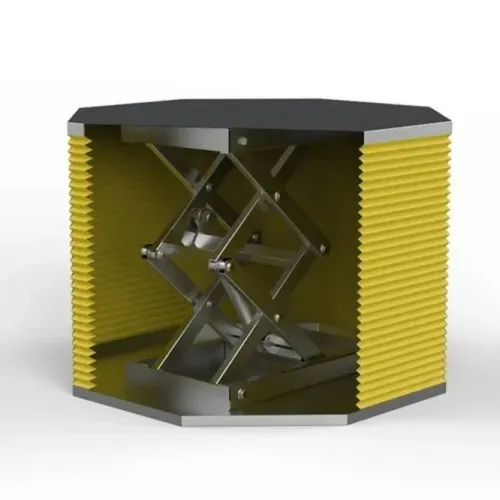
A cover that looks sound while extended can hide serious damage in stacked folds. Lock out the machine, inspect the leather machine bellow cover at rest, and examine it again fully extended and fully compressed; never place your hands near a moving axis.
Check each fold, attachment, and travel position for:
- Grain cracks on fold crests, hardened leather, loss of flexibility, or deep compression marks
- Thinning, pinholes, abrasion, or tears at fold valleys
- Loose or pulled stitching, elongated stitch holes, loose rivets, and torn mounting loops
- Delamination, lifted backing, or a surface that exposes the guideway to chips and coolant
- A twisted mounting frame, bowed rail, shifted fastener, or distorted attachment point
- Folds that buckle, rub, overlap incorrectly, or fail to stack evenly when compressed
Record every finding in the leather bellow cover for maintenance log, including the fold number and machine-axis position. A small tear in a non-folding margin can suit a manufacturer-approved patch, but a tear across an active fold, repeated cracking, or exposed machinery indicates replacement rather than cosmetic repair.
Inspect the surrounding cause, not only the leather. A misaligned guide, blocked travel stop, loose hardware, excessive compression, or incorrect folded height can overload one fold and cause early failure. During a controlled full-stroke observation, confirm that the compressed package clears the carriage, ballscrew, guide, cables, and adjacent guarding.
Stop the machine if any fold snags, drags, or leaves a gap.
Match the Cover to Fluids, Heat, Chips, and Folding Frequency
Service life falls fastest when the cover’s material does not match the fluid, heat, chip load, or folding rate. Verify the leather grade, backing, thread, adhesive, temperature limit, and chemical compatibility before relying on a leather machine bellow cover.
Cutting oil, soluble coolant, abrasive fines, moisture, UV exposure, and continuous short-stroke cycling accelerate swelling, hardening, abrasion, or fold fatigue. Record stroke length, cycles per hour, fluid exposure, temperature, and cleaning products; use that duty record to set leather bellow cover care intervals.
| Option | What it handles | Choose it when |
|---|---|---|
| Leather | Moderate dust, chips, and folding in a controlled enclosure | The leather remains flexible and fluids and temperature are confirmed compatible |
| PU-coated fabric | Coolant, oil, abrasion, and frequent flexing | You need a washable, flexible barrier; verify PU resistance to your exact fluid |
| Fire-resistant fabric | Sparks, flame, and hot particles | The cover sits near welding or grinding; select a tested heat barrier, not ordinary leather |
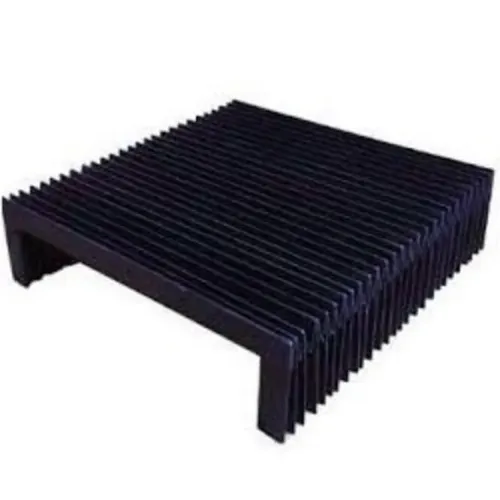
| Thermally bonded bellows | Sealed seams against coolant and fine contamination | Stitch holes or leaking seams would shorten life during frequent cycling |
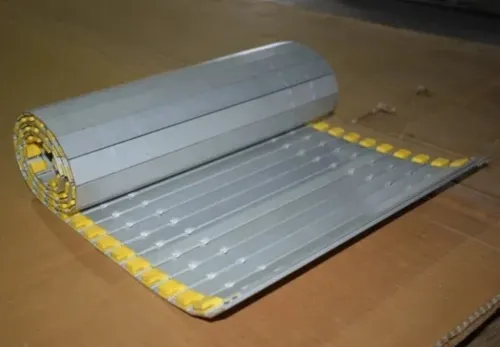
| Metal telescopic cover | Heavy chips, hot swarf, and severe mechanical impact | The axis has space for telescoping sections and needs rigid protection rather than tight folding |
A fire-resistant fabric bellows is not automatically a certified welding curtain; match the product to the stated heat, flame, and spark exposure. Choose metal when hot chips would burn fabric, but avoid it where the axis geometry demands compact, high-frequency folding.
Repair Small, Stable Damage and Measure Replacements Precisely
Repair is sensible when the damage is small, stable, and outside the working folds. A compatible reinforcement patch, adhesive, or stitching method specified by the original manufacturer can secure a tear in a non-folding margin. Conditioner is not structural repair: it cannot restore cracked-through leather, missing fibres, torn stitch lines, or separated backing.
Treat the cover as a replacement condition when you find:
- A tear crossing an active fold
- Elongated stitch holes or pulled stitching
- Repeated cracking at the same location
- Pinholes or damage that exposes the guideway, ballscrew, or other protected component
- A distorted mounting frame or widespread delamination
For leather bellow cover replacement in Pune, send more than the outside dimensions. Give the supplier the machine drawing and photographs, then specify:
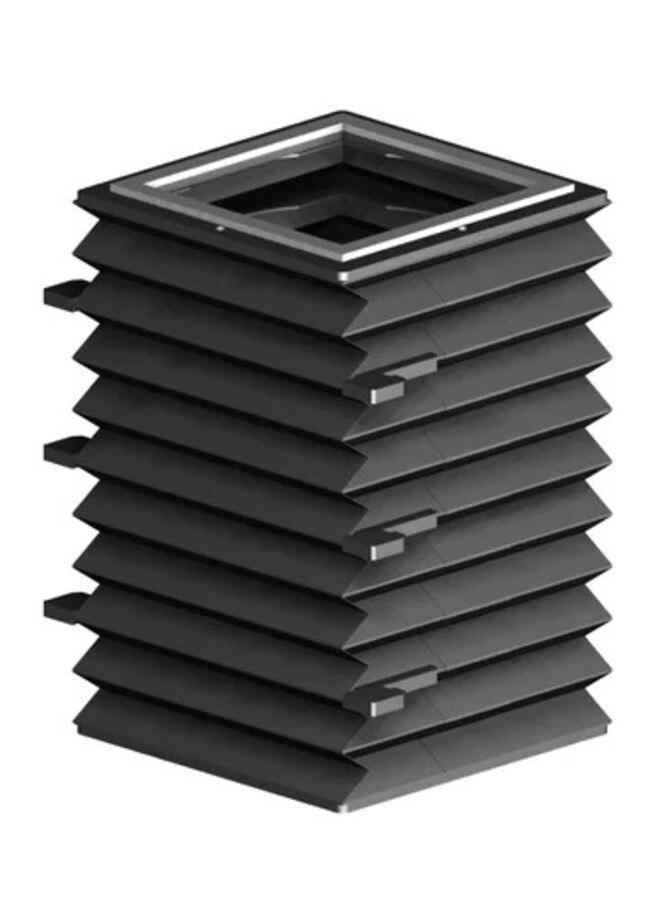
- Extended length, compressed length, width, height, and folded height
- Number of folds and fold pitch
- Mounting-hole positions, rail details, loops, rivets, or bolt pattern
- Allowable travel and mounting orientation
- Cutting fluids, chips, heat, sparks, and cycle rate
Kalavijay Engineering can use these operating details to assess whether a leather construction remains suitable rather than copying a failed cover. Require confirmation that the proposed cover has passed the full stroke and that its compressed package clears the carriage, guides, ballscrew, cables, and guarding.
A cover with correct outside dimensions can still fail if its fold pitch or attachment geometry is wrong.
Related product
 | Bellow Cover Many applications in the industry require customized sewn fabric products for covering specific objects of the machinery. View product → |
Run a Full-Stroke Test Before Returning the Machine to Service
A full-stroke test proves that a repaired or replacement cover follows the machine axis without restricting travel, rubbing guides, snagging cables, or folding incorrectly. Test it at low speed before production, not only by pushing the leather machine bellow cover by hand.
1. Clear chips, tools, loose hardware, and coolant from the axis. Confirm the guideway, attachment rails, travel stops, cable routing, and adjacent guarding are secure. Keep hands outside the moving envelope.
2. Jog the axis slowly from its home position to full extension. Watch for a mounting frame that twists, a fold that catches, or leather that contacts the guide, carriage, ballscrew, or guarding.
3. Jog back to full compression and inspect the stacked folds. Confirm the compressed package fits its available height and does not force the last fold flat, buckle the frame, or trap a cable.
4. Repeat the stroke several times at low speed, then at the machine’s normal rapid-traverse speed if the cover remains clear. Listen for scraping, snapping stitches, and abnormal motor load; stop immediately when any appears.
5. Check the cover at both end positions after stopping. Look for displaced mounting hardware, new creases, rub marks, pulled stitching, or a fold that reverses direction.
Record the extended length, compressed height, clearance, and test speed. Do not approve leather bellow cover repair or replacement until the cover completes the full stroke without contact or distortion. A nominally correct fold pitch or mounting orientation can still fail if the machine axis is misaligned.
Frequently asked questions
How should you clean a leather bellow cover?
Stop and isolate the machine first. Remove loose chips from each fold without forcing contamination deeper into the leather, then use a cleaner compatible with the leather and its protective coating. Dry the folds before compressing the cover.
When can you repair a leather bellow cover instead of replacing it?
Repair small, stable damage when the surrounding leather remains flexible and the mounting points, stitching, and fold geometry are sound. Replace the cover when tears spread under movement, stitching fails repeatedly, or contamination has weakened several folds.
What should you check before installing a leather bellow cover replacement?
Measure travel, extended and compressed lengths, mounting-point spacing, fold depth, and available clearance. Confirm that the material suits the machine’s fluids, heat, chips, and folding frequency, then run the cover through its full stroke before returning the machine to service.