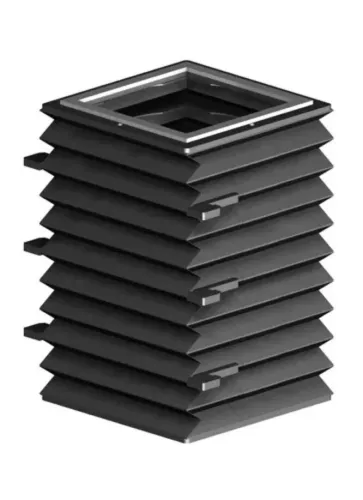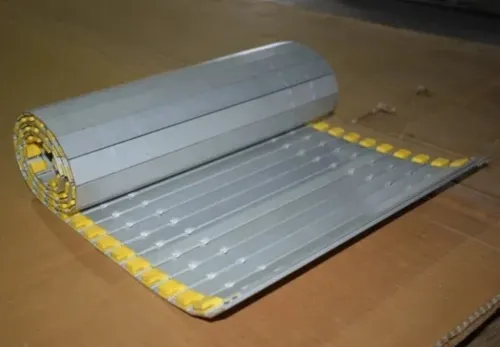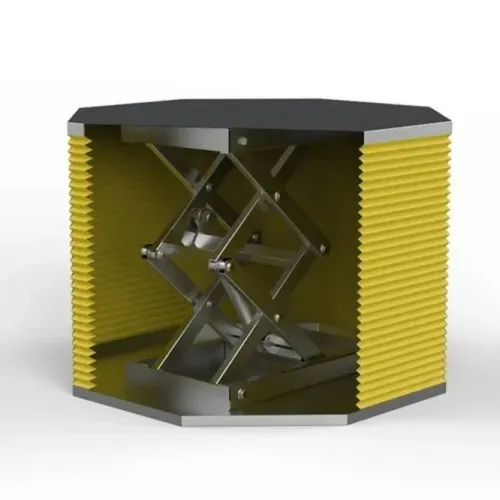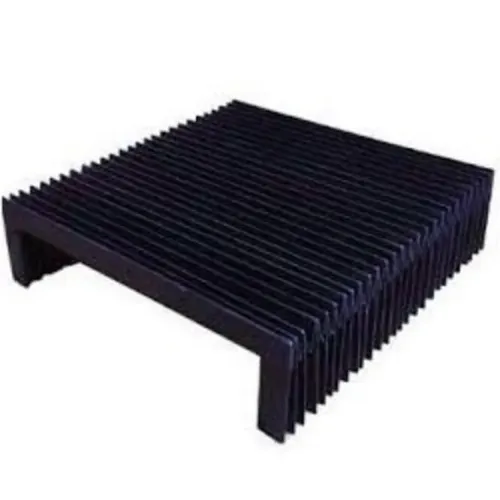

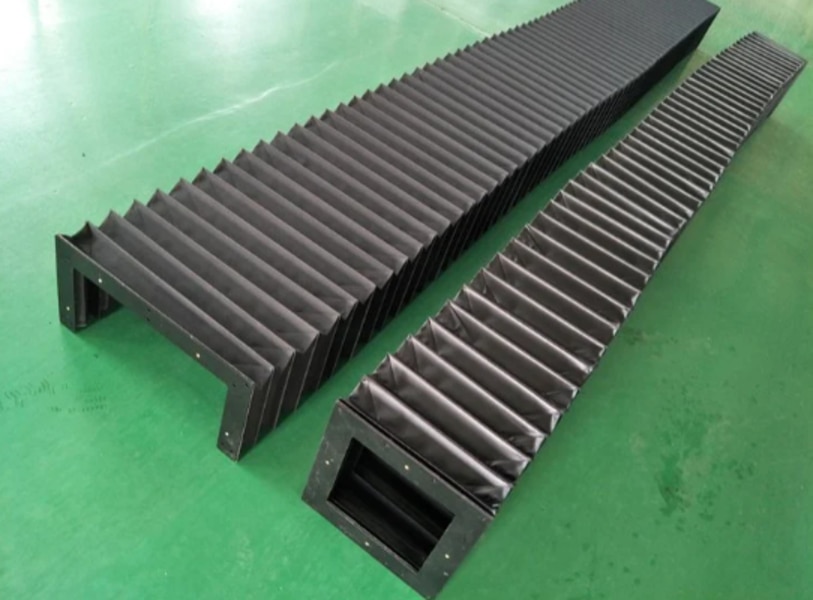
Choosing an oil-resistant bellow for a Prima laser machine starts with identifying the fluid, temperature and movement—not with the colour or generic label of the fabric. By the end, you can compare laminate constructions, specify the cover geometry, and request evidence that matches the oil, coolant and chip conditions at your Pune facility.
Key takeaways
- Identify the exact fluid, concentration, temperature and contact pattern first.
- Compare coated fabrics by laminate, seam construction and flex performance.
- Inspect folds and seams for chip, heat, spark and laser-cutting damage.
- Reject fabric bellows when pooling, abrasion or heat exceeds their design limits.
Identify the oil exposure before comparing materials
Record the exact fluid before selecting Prima laser machine bellow cover materials for oil exposure in Pune. “Oil exposure” is incomplete: a cover facing neat cutting oil has a different compatibility problem from one facing water-miscible coolant, hydraulic oil, way lubricant, grease, cleaning solvent or a mixture.
Describe the exposure in terms the supplier can test:
- Name the fluid and record whether contact is intermittent splash, continuous flow, oil mist, pooled coolant, chip-laden coolant or repeated cleaning-fluid contact.
- Record fluid temperature, cover temperature, contact frequency, travel speed and expected service life.
- Request the coolant or lubricant safety data sheet. Note corrosion inhibitors, biocides, extreme-pressure additives, surfactants and solvent content.
- Record monsoon humidity, outdoor storage and every cleaning chemical; Pune’s ambient climate cannot replace application data.
- Photograph chips, dross, sparks and residue on the existing folds. Abrasive chips can work into folds during repeated movement, so static mineral-oil survival does not prove service life.
| Fluid | Exposure to record | Why it changes the specification |
|---|---|---|
| Neat cutting oil | Splash, flow or pooling | Tests coating swelling and seam wicking |
| Water-miscible coolant | Concentration, temperature and additives | Tests hydrolysis and corrosion-inhibitor effects |
| Hydraulic oil or way lubricant | Mist, leakage or continuous contact | Tests petroleum compatibility under flexing |
| Grease or mixture | Deposits and chip loading | Tests contamination retention |
| Cleaning solvent | Chemical name and contact frequency | Tests coating, adhesive and thread attack |
Compare the main laminate constructions for oil and coolant
For ordinary mineral oil or coolant exposure combined with flexing and abrasion, polyurethane-coated polyester is the strongest general-purpose candidate. Ask whether the polyurethane is polyester-based or polyether-based: polyether grades generally resist hydrolysis better, while the complete laminate determines flex life and mechanical strength.
| Construction | Main advantage | Main limitation |
|---|---|---|
| Polyurethane-coated polyester | Balanced oil resistance, flex fatigue and abrasion performance | Chemistry and fabric specification vary |
| PVC-coated polyester | Cost-oriented choice for light-to-moderate contamination | Oil, heat and flexing can cause softening, swelling, tackiness or plasticizer extraction |
| Nitrile-rubber-coated fabric | Suits continuous mineral-oil or petroleum-lubricant contact | Check coolant additives, solvents and cleaning chemicals |
| Silicone-coated fabric | Useful around hot surfaces and intermittent thermal exposure | Temperature rating does not prove petroleum-oil suitability; cutting and edge damage remain concerns |
| PTFE-coated glass fabric | Broad chemical and high-temperature resistance | Stiff, costly, and vulnerable to crease damage or edge fraying |
Choose nitrile when petroleum lubricant remains in contact with the cover continuously. Do not approve it without checking the actual coolant formulation, because additives and cleaners can change the result.
Aramid reinforcement improves tear and puncture resistance; it does not provide oil resistance by itself. Treat the coating, base cloth, seams and reinforcement as one construction.
These are the practical Prima laser machine bellow cover material options to compare. A material that survives static oil contact can still fail under repeated folding, chip abrasion or heat. Test the complete laminate against the fluid and movement it will face.
Check seams, folds and laser-specific damage risks
Oil resistance is only as strong as the weakest construction detail. Evaluate the coating, base cloth, seam, adhesive, thread, edge treatment and mounting frame together: oil can wick through stitches, attack adhesive or thread, and collect around end frames. Welded or sealed seams improve containment, but request flex-fatigue results and repair instructions.
A Prima laser machine bellow cover comparison should separate these construction choices:
| Construction | Main risk or benefit | What to verify |
|---|---|---|
| PU-coated polyester | Flexible and abrasion-resistant | Coating chemistry, hydrolysis resistance and flex life |
| PVC-coated polyester | Lower-cost contamination barrier | Softening, swelling, tackiness and plasticizer loss |
| Nitrile-coated fabric | Strong candidate for mineral oil | Coolant additives, solvents and seam compatibility |
| PTFE-coated glass or silicone fabric | Chemical or heat resistance | Stiffness, crease damage and edge fraying |
Confirm extended length, compressed length, fold pitch, minimum fold radius, travel speed, fold count, travel direction, mounting-hole pattern and end-frame dimensions. A chemically compatible fabric still fails when over-compressed or forced through the wrong guide arrangement.
Laser service adds hot dross, sparks, radiant heat, sharp chips and fine cutting dust. If those hazards reach the folds, specify protected corners, wear strips, internal guide frames, overlap flaps, drain paths or a separate splash-and-spark shield. Keep the cover clear of the laser head and moving guards.
Compare flexibility, sealing, weight, chip impact and maintenance, not nominal oil resistance alone.
Demand application-specific oil and flex evidence
Approve a replacement only after the supplier connects its material claims to your machine, fluid and movement. “Oil resistant” is not a comparable specification without test conditions.
1. Request the coating chemistry, base fabric, total thickness, operating-temperature range and seam method. Record whether the construction uses polyurethane, PVC, nitrile rubber, silicone or another coating.
2. Name the tested fluid, exposure time and test temperature. ASTM D471 evaluates liquid effects on vulcanized rubber through changes in mass, volume, hardness and tensile properties; accept that result only when the tested fluid and construction represent your application.
3. Request results using the actual service fluid, or a representative fluid, at the expected temperature and exposure time. A chart for mineral oil does not approve a cover exposed to water-miscible coolant, hydraulic oil, way lubricant or cleaning solvent.
4. Ask how the complete bellow performed under repeated folding, abrasion and seam loading. Static immersion alone misses failure caused by chips working into folds while the cover flexes.
5. Obtain the warranty exclusions, then record monsoon humidity, outdoor storage, cleaning chemicals, fluid temperature, travel speed and spark load for the Pune installation.
For an oil resistant bellow cover in Pune, send the Prima axis, drawing or photographs, dimensions and exposure record to Kalavijay Engineering so the recommendation can be checked against the actual interface. Without those details, no quotation is technically comparable.
Related products
 | Bellow Cover We are professtional factory. We sell all consumables and functional parts applicable for most OEM brands including... View product → |
 | Bellow Cover We, " KALAVIJAY ENGINEERING" are masters in manufacturing and supplying excellent quality of Bellows covers. View product → |
Decide when fabric bellows are not the right protection
Heavy chips, impact and high rigidity are reasons to compare fabric with a telescopic steel cover, even though steel adds mass, guide friction and installation space. Choose by the hazard and axis movement, not by oil resistance alone.
| Option | Main advantage | Limitation | Choose it when |
|---|---|---|---|
| Telescopic steel cover | Handles heavy chips and impact | Heavier; needs space and clearance | Rigidity matters more than low weight |
| Stainless-steel shield | Resists severe splash and hot debris | May not seal fine mist or follow complex movement | Heat and direct splash dominate |
| Laminated cover | Balances chemical resistance and flexibility | Requires construction-specific testing | The axis needs both flexing and fluid resistance |
| Simple wiper | Protects a narrow exposed edge | Does not enclose a moving axis | Contamination reaches one accessible edge |
Combine a fabric bellow with a splash shield when oil and chips arrive together. A stronger fabric alone will not prevent impact damage if chips strike the folds.
For an oil resistant bellow cover in Pune, compare these alternatives against travel speed, available clearance, heat, minimum fold radius, sealing, drainage, service access and replacement time. Record folded and extended length, travel direction, fold count, mounting-hole pattern, end-frame dimensions, guard interference and clearance from the laser head.
The best Prima laser machine bellow cover comparison ends with a documented geometry-and-fluid match, not the lowest fabric price.
Frequently asked questions
Which fluid details matter before choosing Prima laser machine bellow cover materials?
Record the exact fluid, including neat cutting oil, water-miscible coolant, hydraulic oil, way lubricant, grease, cleaning solvent or a mixture. Note concentration, temperature, exposure frequency, pooling and whether the fluid reaches folds or seams.
Which laminate constructions should you compare for oil and coolant exposure?
Compare the coating or film chemistry, substrate fabric, layer thickness, flexibility and resistance to the named fluid. Ask whether the construction has been tested after repeated flexing while exposed to the actual oil or coolant.
What damage risks should you check on a laser machine bellow cover?
Inspect stitched or bonded seams, fold geometry and attachment points. Check for coolant wicking, oil swelling, delamination, chip penetration, heat damage, sparks and laser-cutting debris reaching the protected guideway.
What evidence should a supplier provide for an oil-resistant bellow cover in Pune?
Request application-specific compatibility evidence that identifies the fluid, concentration, temperature, exposure duration and flex cycles. A generic statement such as oil resistant does not establish performance for your machine.
When is a fabric bellow the wrong protection for a laser machine?
Choose another protection design when the cover faces sustained pooling, severe chip abrasion, concentrated heat, repeated sparks, aggressive solvents or movement that exceeds the fabric bellows' flex and attachment limits.