
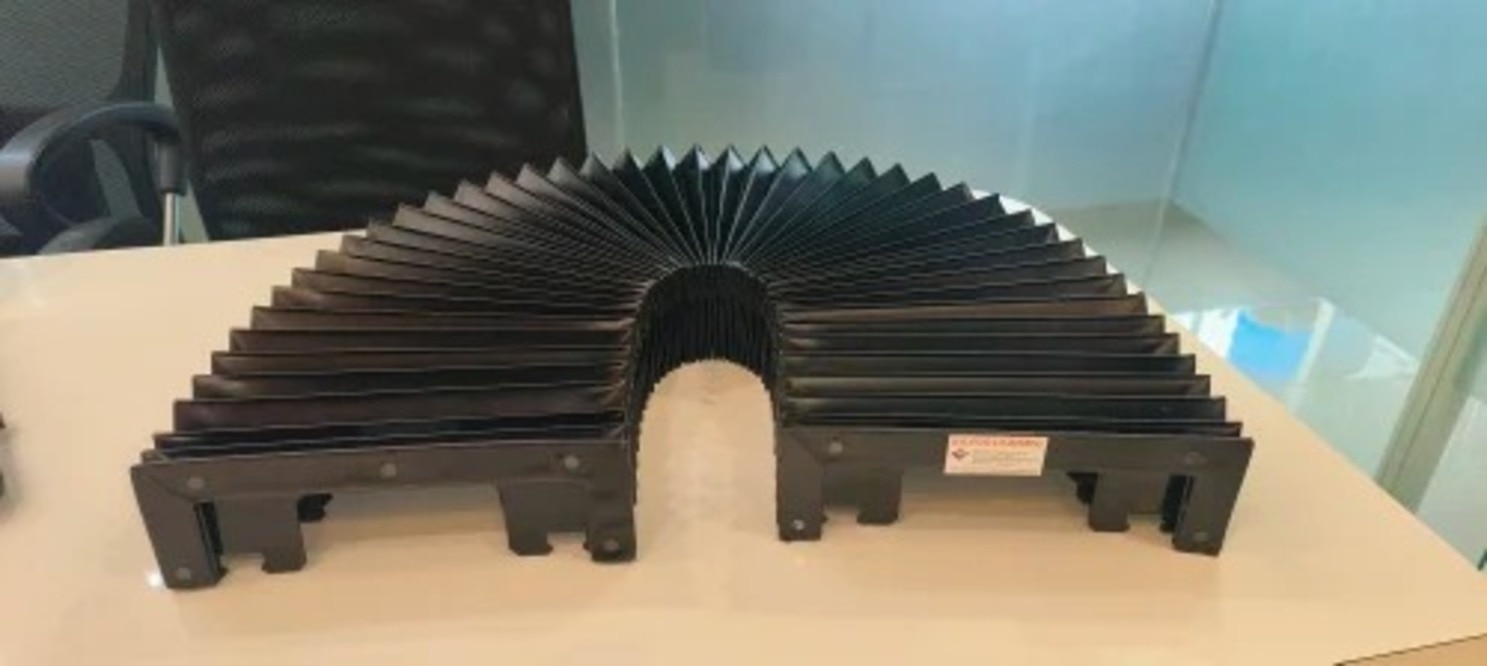
A replacement cover can look identical to the old one and still fail because its folded height, mounting pattern, travel direction or compression length is wrong. You will learn how to identify the correct Bystronic axis cover, diagnose the real failure, prepare a safe replacement, compare construction options and verify the machine before returning it to production.
Key takeaways
- Record the model, serial number, axis, part number and old-cover label before ordering.
- Inspect guides, seals, fasteners and travel limits before blaming the bellows.
- Apply machine-specific lockout controls before removing any laser-machine protection.
- Approve installation only after a slow full-stroke test and written service record.
Identify the Exact Bystronic Cover Before You Order
A Bystronic laser machine bellow cover fits only when its machine, axis, geometry and attachment details match. Record the Bystronic model name, machine serial number, applicable serial-number range, axis designation, old-cover identification label and any OEM part number in the manual or stamped on the end frame.
| Check | Record before ordering | Why it matters |
|---|---|---|
| Machine identity | Model, serial number, serial-number range and axis | Similar bed sizes can use different travel geometries |
| Cover geometry | Compressed and extended length, folded height, fold pitch and width | A duplicate-looking cover can compress, stretch or bunch incorrectly |
| Attachment | Flange thickness, mounting-hole spacing and end-frame dimensions | A small hole-pattern error prevents accurate fitting |
| Movement | Travel direction, cut-outs and chip guards | Reversed orientation can drive folds against their working direction |
A supplier should match these records to an approved drawing, not infer compatibility from bed size or appearance. A generic cover listed for several OEM brands is not an interchangeable spare; its reinforcement, wipers, permissible compression and end frames can differ.
You can measure overall width, visible height, travel direction and mounting-hole locations while the cover remains installed. Remove it for accurate folded height, internal reinforcement, flange thickness, compressed length and hidden attachment details. Photograph both ends, every fold, wipers, brackets and cable or hose clearances before removal.
The supplier should reconcile those photographs and measurements with the drawing for the specific Bystronic machine bellows.
Find the Failure Before Replacing the Bellows
A failed bystronic machine bellows is evidence, not a diagnosis. Record the failure mode before removal, photograph both end frames, folds, wipers, brackets and cable clearances, and mark the fixed end, moving end and travel direction.
1. Stop and clean the area. Remove chips, slag, lens debris, hardened coolant and oil from the guideway, rail, ball screw, brackets and surrounding enclosure. Debris trapped beneath the cover can damage its replacement or increase drive load.
2. Inspect the cover visually and mechanically. Check for torn or delaminated fabric, heat damage, hardened or curled wipers, cut or failed scraper strips, bent guide frames, distorted mounting flanges, loose or sheared fasteners, and uneven fold compression. Wipers and scraper strips are protective wear parts, not decorative trim.
3. Move the axis through its permitted travel and watch for rubbing marks, one-sided wear, fold inversion, snagging, stretching, bunching or restricted movement. Rubbing on one side indicates misalignment; fold inversion or uneven compression indicates incorrect travel geometry. Sharp sheet contact, a cable-carrier strike or a failed scraper explains localized cuts and repeated failures.
4. Inspect the cause before ordering a cover. Damaged rails, contaminated or damaged ball screws, bent brackets, a misaligned axis, restricted travel or a failed scraper must be corrected first. Replacing only the bellows leaves the same force or obstruction to destroy the new cover. Record the finding and recheck the complete stroke after correction.
Replace the Cover Under Laser-Machine Lockout Controls
Treat laser machine cover fitting as hazardous maintenance, not a fabric change. Follow the site lockout/tagout procedure and use the machine’s service instructions.
1. Stop the Bystronic machine and apply electrical lockout/tagout. Disable stored electrical energy, isolate pneumatic and hydraulic circuits where fitted, lock out the laser source, and verify zero energy.
2. Check for hot surfaces around the cutting head, nozzle assembly, and work zone. Keep tools, dust, and fabric debris out of the optical path.
3. Remove sheet, pallets, slag, and other obstructions. Photograph both end frames, folds, wipers, brackets, and cable or hose clearances; mark the fixed end, moving end, travel direction, and orientation.
4. Detach mounting plates and fasteners without forcing the frames. Remove the old cover, clean the guideway, and inspect the rail and ball screw for chips, slag, lens debris, hardened coolant, damage, or obstruction.
5. Fit the replacement in its marked orientation. Do not pinch the fabric or skew the end frames; tighten fasteners evenly and restore the wipers or scrapers.
6. Before restoring power, move the axis by hand where the site procedure permits. Check for fold collision, stretching, bunching, and contact with the cutting head, nozzle, cable carriers, hoses, or sheet edges.
7. Restore controls and perform a guarded low-speed jog, a no-load cycle, and a monitored test cut. Watch for rubbing, alarms, abnormal motor load, and renewed contamination.
The cover never replaces the machine’s interlocked enclosure or laser-safety system.
Match Construction and Quotation to Pune’s Cutting Conditions
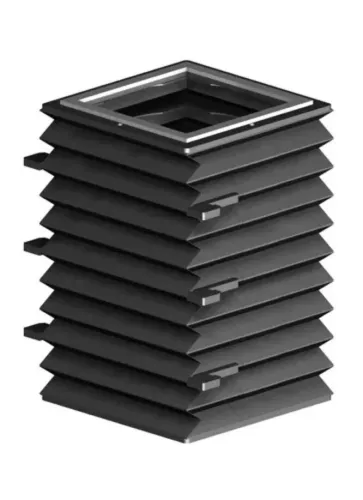
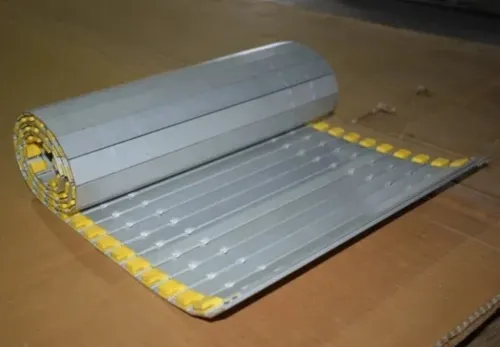
Choose construction from the exposure, not the Bystronic badge. Dry metallic dust may suit coated-fabric bellows; wet coolant and oil mist demand compatible coating, seams and wipers; hot chips, slag, sparks and abrasive debris can require metal-lamella protection. Cutting gas and cleaning chemicals must also be checked against the cover material.
| Option | Best fit | Check before quote |
|---|---|---|
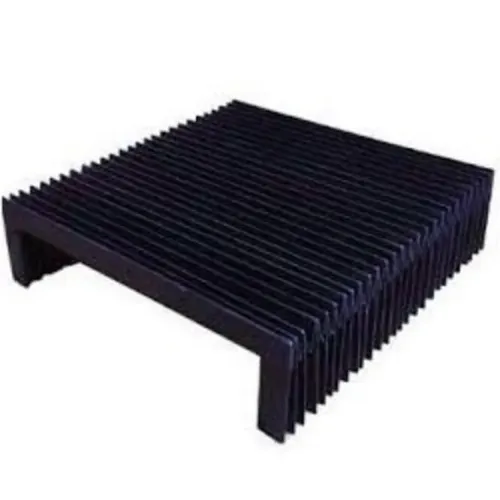
| Coated-fabric bellows | Dry dust, light chips and controlled coolant | Coating, reinforcement and chemical resistance |
| Heat-sealed bellows | Dust, coolant or oil when sealed seams suit the exposure | Seal integrity, coating and permissible compression |
| Thermal-welded bellows | Repeated flexing with coolant, oil mist or fine debris | Weld strength, fold pitch and temperature limit |
| Metal-lamella bellows | Hot chips, slag, sparks and abrasive debris | Lamella overlap, travel clearance and added weight |
The Bystronic name does not determine material, reinforcement, fold pitch, wiper compound, permissible compression or travel-speed suitability. Compare an OEM replacement with a custom-fabricated cover by total downtime, fitting effort, warranty risk, travel clearance and the cost of a geometry mismatch—not purchase price alone.
A custom option can be useful for laser machine protection in Pune; Kalavijay Engineering is relevant when its measurement-led quotation is approved before fabrication.
Give a Pune supplier:
- Model and serial number, axis, drawings, photographs, every measured dimension, stroke, speed, temperature, contamination, processed alloys, cut-outs, delivery location, installation access and site-service requirement.
- Material specification, drawing revision, installation orientation, warranty terms, fabrication and delivery lead time, site-service scope and exclusions.
That record supports a defensible Bystronic laser machine bellow cover replacement quotation.
Related product
 | Bellow Cover Bystronic Laser Machine Bellow Cover We are professtional factory. We sell all consumables and functional parts applicable for most OEM brands including... View product → |
Accept the Installation With a Full-Stroke Test and Record
Accept the installation only after laser machine cover fitting passes a dimensional, clearance and full-stroke check; a static fit does not prove dynamic clearance.
1. Before installation, compare the incoming bystronic laser machine bellow cover with the approved drawing or measurement sheet. Verify extended length, compressed length, width, folded height, fold pitch, flange thickness, hole locations and movement direction. Reject any mismatch before spending machine downtime on fitting.
2. During installation and the complete axis stroke, check end-stop, nozzle and cutting-head, pallet-changer, cable-carrier, hose, sheet-edge and nearby-axis clearance. Look for rubbing, fold collision, inversion, snagging, excessive compression, stretching at full extension, bunching at compression, loose fasteners, frame distortion and restricted travel.
3. Confirm that the scraper or wiper contacts uniformly. Check that chips, coolant and oil cannot reach the guideway, and inspect for light leaks through damaged folds where the cover protects an enclosed path.
4. Return the machine progressively: use guarded low-speed motion, then no-load cycling, then a monitored test cut. Stop for alarms, abnormal motor load, renewed rubbing or contamination.
Record the machine and axis, failure mode, installed part or drawing revision, material, date, stroke-test result and every bracket or wiper change. Use the record to set inspection intervals and investigate repeated failures instead of fitting visually similar covers without diagnosing the cause.
This evidence turns laser machine protection in Pune from a visual acceptance decision into a traceable maintenance control.
Frequently asked questions
What details identify the exact Bystronic bellow cover before ordering?
Record the Bystronic model, machine serial number, applicable serial-number range, axis designation, old-cover identification label and OEM part number.
What should you inspect before replacing Bystronic machine bellows?
Find the failure source by inspecting the cover, end frames, guideways, fasteners, seals, debris path and axis travel limits.
What controls apply during a Bystronic laser machine bellow cover replacement?
Use the machine’s lockout procedure, isolate electrical and stored energy, secure moving assemblies and follow laser-safety controls before removal.
How do you accept a replacement laser machine cover after installation?
Run a slow full-stroke test, check folds and attachments for interference, inspect clearances, then record the result and installation details.