
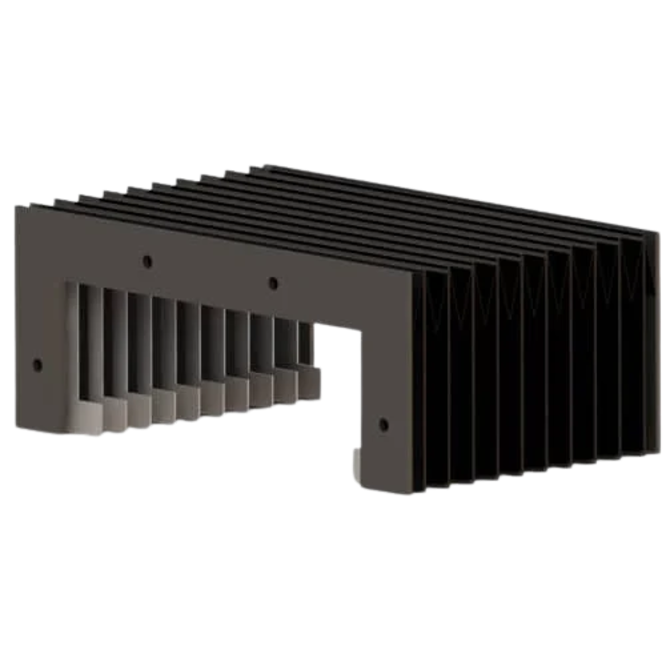
Stone dust, sharp chips, water slurry, and polishing residue can reach guideways, screws, drives, and cable routes unless the moving protection is matched to the machine’s stroke and environment. By the end, you will know what to measure, which material and construction details to request, how to check compatibility and fit, and when another protection method is safer.
Key takeaways
- Measure travel, compressed length, extended length, and mounting dimensions before ordering.
- Specify protection against stone dust, slurry, coolant, heat, and repeated folding.
- Use guided movement and correct mounting clearance to prevent bellow tearing.
- Request drawings, material details, test evidence, and maintenance instructions from suppliers.
What a nylon bellow must protect on a stone engraving machine
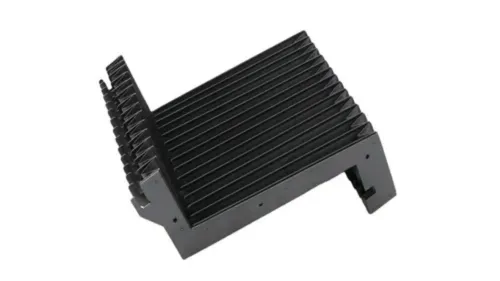
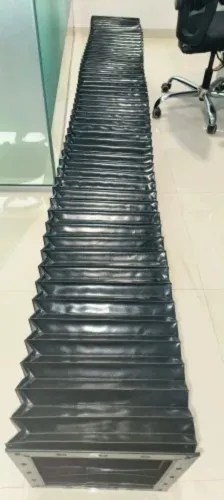
An axis-mounted stone engraving machine bellow cover folds and extends with the carriage, keeping abrasive dust and slurry away from linear guideways, ball screws, lead screws, rack-and-pinion drives, motors, and cable routes.
It is a contamination barrier, not a structural guide, load-bearing member, or automatic safety guard; exposed tooling, gaps, and entanglement hazards still need separate guarding.
| Option | Main strength | Main limitation |
|---|---|---|
| Coated polyamide nylon | Flexible, compact, suitable for guided axis travel | Folds and seams wear under sharp mineral dust |
| PU-coated fabric | Strong moisture and abrasion protection when the coating suits the fluid | Coating can soften, crack, or delaminate with incompatible chemicals |
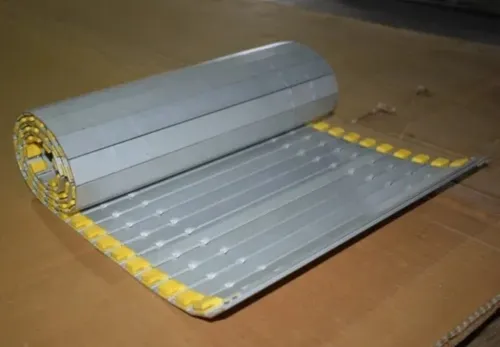
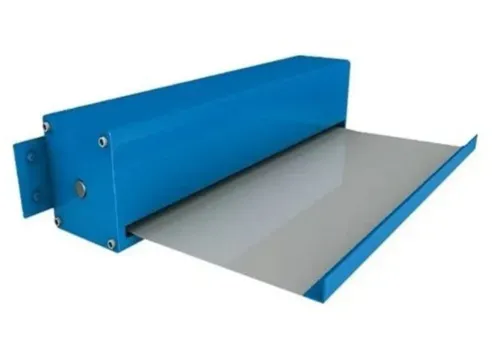
| Telescopic steel cover | Rigid protection against chips and impact | Heavier, needs space, and dislikes misalignment or trapped slurry |
| Brush or wiper | Scrapes surfaces and limits loose debris at an opening | Does not seal against fine dust or wet slurry |
| Loose dust curtain | Cheap, simple separation from broad dust clouds | Cannot follow a precision axis or protect screws reliably |
Granite, engineered stone, ceramic, and concrete produce cutting dust that cuts folds, sands seams, and wears mounting interfaces; marble dust is finer but still abrasive. A stone cutting bellow cover must also withstand dry dust, wet slurry, water spray, cutting fluid, polishing compound, and cleaning chemicals.
Test actual coolant and detergent compatibility rather than trusting a generic claim.
“Nylon” is incomplete. Specify the base fabric, coating, seam construction, end frames, and any wear strips, support slats, or sacrificial panels. Polyamide absorbs moisture, so wet-service dimensions and stiffness require evidence.
How to measure the machine before specifying the cover
1. Measure the axis at both limits, not just its nominal stroke. Record axis travel, collapsed length, extended length, overall width and height, fold pitch or height, travel direction, and mounting orientation.
For a nylon machine bellow cover in Coimbatore or from any supplier, note the compressed position where folds need room without crushing and the extended position where the bellows must not be pulled taut.
2. Measure each end frame: length, width, flange thickness, mounting-hole pattern, hole diameter, and edge access. State whether one end or both ends are fixed, and show how the moving frame attaches to the carriage and the stationary frame attaches to the machine.
3. Check clearance through the full stroke from rails, screws, hoses, clamps, enclosures, and cable carriers. Photograph both ends. A stone engraving machine bellow cover that clears at mid-travel can still buckle at minimum length or snag a hose at full extension.
4. For a vertical Z-axis, check gravity-induced sag, trapped particles, and a drain path for slurry. Add guides, support strips, or internal lamellae when unsupported fabric could enter the moving path; the bellows must not guide the axis.
5. Choose joints for the cleaning regime. Bolted or riveted frames suit abrasive stone dust and repeated washdown; stitched seams suit flexible folds but need protected thread; bonded joints need chemical and water testing because adhesive failure can open a seam.
Keep active folds free of clamps and sharp fasteners, and inspect the closed package for trapped chips before commissioning.
Which performance details and tests justify the material choice
Do not approve a stone cutting bellow cover from the word “nylon” alone. Require the actual coated fabric’s nylon grade or base construction, polyurethane, PVC, or neoprene coating, total thickness, temperature range, chemical-resistance statement, tear strength, abrasion resistance, minimum fold radius, bend-cycle life, allowable travel speed, and resistance to moisture-related dimensional change.
Polyamide absorbs water, altering stiffness, dimensions, and flexing behaviour; generic nylon data does not predict wet-slurry service. Require compatibility testing with the machine’s stone coolant, detergent, sealant, polishing compound, and cleaning chemicals.
| Test evidence | What it must reproduce | What it reveals |
|---|---|---|
| Representative flex cycle | Actual stroke, speed, acceleration, fold radius, temperature, and contamination level | Seam fatigue, coating cracks, fold abrasion, and particle ingress |
| Static tensile test or visual sample | Pull load or appearance only | Insufficient evidence for moving service |
Clean without grinding particles into the folds: isolate the machine, extract loose dry dust with suitable equipment, flush slurry as the fabric maker instructs, avoid sharp tools and excessive pressure, and dry every fold before refitting. Inspect seams, creases, coating cracks, stitching, end frames, plates, rivets, bolts, and fasteners.
Replace rather than patch when fabric is torn through, coating delaminates, a seam repeatedly opens, or the frame or mounting interface is distorted; a patch can trap abrasive slurry and fail during the next cycle.
How installation errors damage the bellows and the machine
An undersized cover overextends, while insufficient compressed clearance crushes folds; both cause seam fatigue, coating abrasion, and fold buckling. Twisted frames, sharp fasteners, poor alignment, or sagging onto a ball screw contaminate the screw, disrupt lubrication, reduce axis accuracy, increase downtime, and make the next replacement harder.
- Shut down and isolate electrical, pneumatic, hydraulic, and coolant energy; lock the axis against movement.
- Photograph the original routing, then remove contaminated bellows, fasteners, debris, and damaged mounting parts.
- Clean and dry every mounting face. Verify the approved drawing, stroke, collapsed length, fold direction, and frame orientation.
- Install the stationary and moving frames without clamping an active fold or puncturing fabric with sharp fasteners.
- Align both ends without twisting either frame. Check cable-carrier and hose-loop clearance through the complete stroke.
- Hand-traverse the axis slowly before powered testing; stop if the cover rubs, sags, buckles, or reaches full extension early.
A stone engraving machine bellow cover is a contamination barrier, not a machine enclosure, chip guard, wiper, or dedicated ball-screw cover. Exposed tooling, gaps, and entanglement hazards still require guarding and a documented risk assessment.
Do not choose nylon for open flame, sparks, very hot chips, aggressive solvents, extreme temperatures, falling-stone impact, or high-pressure washdown.
| Condition | Nylon fabric | PU-coated fabric | Telescopic steel |
|---|---|---|---|
| Dust and motion | Light, frequent inspection | Better abrasion resistance | Strong, but needs wipers and lubrication |
| Moisture and heat | Test coating compatibility | Check hydrolysis and heat limits | Better heat resistance; corrosion control needed |
| Impact and service | Replace after fold or seam damage | Longer flex life when specified | Best impact protection; heavier and costlier |
A stone cutting bellow cover therefore needs selection by dust, moisture, heat, impact, and motion—not material name alone.
What to request from a Coimbatore supplier before placing the order
Turn the quotation into a fit-and-performance checklist, not a request for a “heavy-duty” nylon bellow cover for stone engraving machine in Coimbatore. Send the supplier:
1. Machine make and model; axis travel; guideway or screw dimensions; mounting orientation; photographs from both ends; existing-cover dimensions; hole pattern; flange details; and the locations of coolant lines, cable carriers, hoses, and enclosure edges.
2. A custom drawing showing width, height, collapsed and extended lengths, fold number and pitch, clearances, end frames, and mounting method. Ask for a material stack-up identifying nylon fabric, coating, seams, reinforcement, wear panels, and end-frame material, plus a sample or dimensional inspection before manufacture.
3. Written limits for minimum fold radius, rated stroke and speed, temperature, chemicals, moisture, and cleaning. Request documented flex-cycle conditions covering stroke, speed, acceleration, radius, temperature, and contamination—not merely a visual sample or tensile figure.
4. The replacement lead time, packaging for transport, cleaning instructions, and the supplier’s response time for fit corrections. A local measurement visit can prevent drawing errors; ask whether the supplier supports machine builders and workshops and how drawings are sent, revised, and approved.
5. A price breakdown. Width and height, collapsed and extended lengths, fold count and pitch, speed, end-frame material, mounting hardware, coating, reinforcement, wear panels, testing, and quantity all affect cost.
For a nylon machine bellow cover in Coimbatore, ask Kalavijay Engineering about on-machine measurement, drawing review, and a made-to-fit quotation, then compare documented performance.
Related product
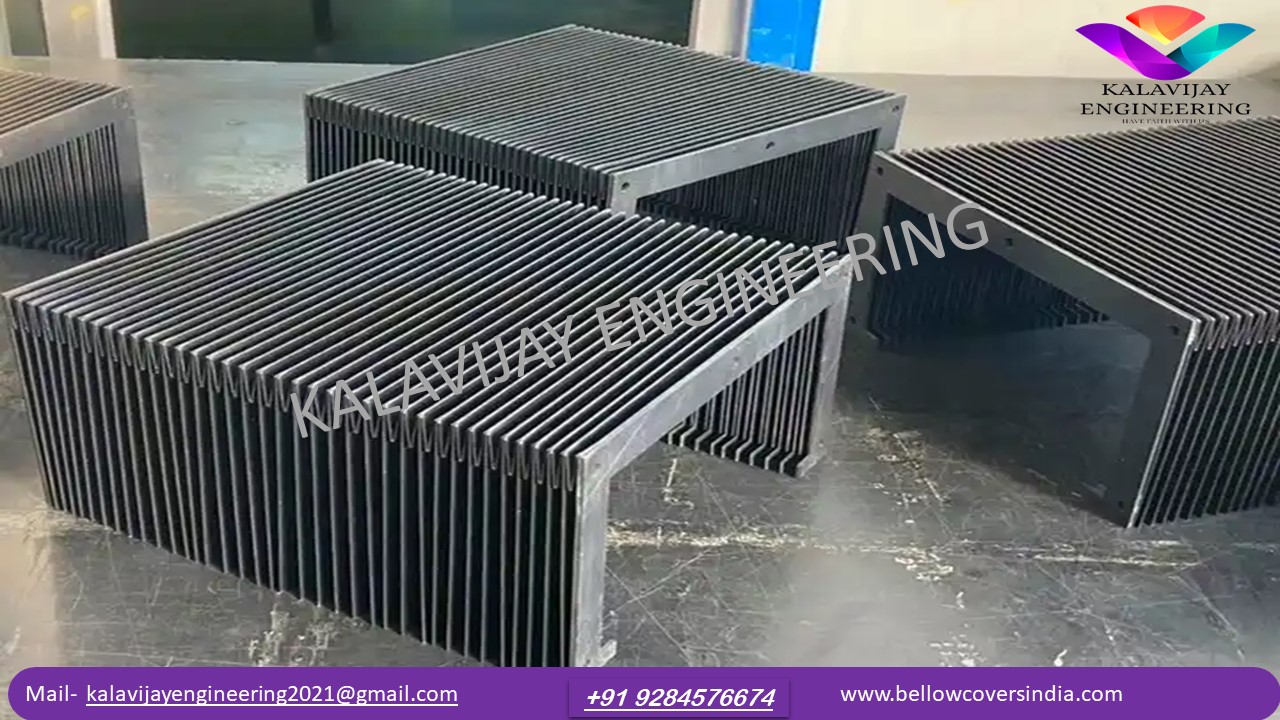 | Bellow Cover Stone Engraving Machine Nylon Bellow Cover Kalavijay Engineering, we are here to present an unparalleled assortment of Stone Engraving Machine Nylon Bellow Cover. View product → |
Frequently asked questions
What must a nylon bellow protect on a stone engraving machine?
It must shield linear guideways, ball screws, lead screws, rack-and-pinion drives, motors, and cable routes from abrasive stone dust and slurry.
How do you measure a machine before ordering a bellow cover?
Record axis travel, compressed and extended lengths, cover width and height, mounting-hole dimensions, folded height, and available clearance throughout the stroke.
Which performance details should you request for a nylon machine bellow cover?
Ask for the fabric or coating specification, temperature range, fold-cycle evidence, resistance to abrasion and slurry, seam construction, and dimensional drawings.
How do installation errors damage a stone cutting bellow cover?
Incorrect alignment, insufficient clearance, excessive compression, unsupported folds, and fasteners that pinch the fabric create rubbing, tearing, and premature failure.
What should you request from a Coimbatore supplier before placing an order?
Request a quotation with the approved drawing, material specification, dimensions, mounting details, inspection criteria, delivery scope, warranty terms, and maintenance instructions.