
A thermally bonded bellow cover suits some machine-tool movements exceptionally well, but the correct choice depends on contamination, heat, motion, mounting direction and the space available at full stroke. By the end, you will be able to match the cover to a Coimbatore machine application, reject unsuitable installations and prepare a specification that a supplier can manufacture and test accurately.
Key takeaways
- Prioritise CNC lathes, machining centres, grinders and EDM equipment.
- Match bellows material to coolant, heat, chips, dust and textile lint.
- Confirm stroke, compressed length, mounting orientation and clearances before ordering.
- Specify sealing performance, operating limits and replacement criteria in writing.
The Coimbatore machines that benefit most from bonded bellows
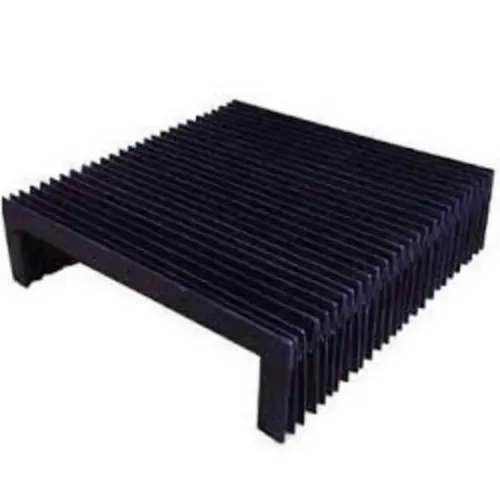
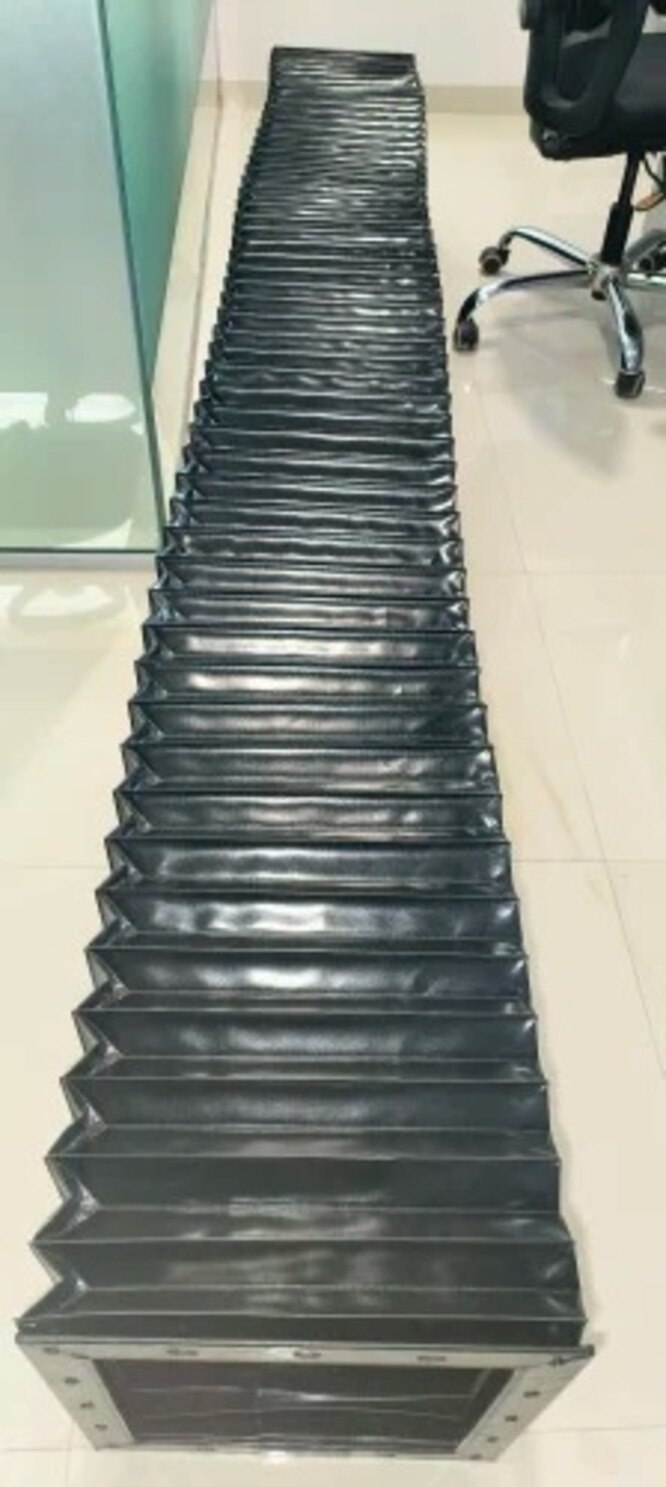
A thermally bonded bellow cover for applications in Coimbatore is a strong fit when enclosed linear guides, ball screws or telescoping machine elements face coolant, cutting oil, swarf, grinding dust or textile lint. CNC lathes, machining centres, surface and cylindrical grinders, EDM equipment and special-purpose machines benefit most.
Heat-sealed seams remove stitch holes where fine chips and liquid could enter.
| Machine type | Contamination pattern | Why the fit is strong |
|---|---|---|
| CNC lathe or machining centre | Flood coolant, oil and metal chips | Shields guideways and ball screws during repeated axis travel |
| Surface or cylindrical grinder | Abrasive dust, slurry and fine swarf | Blocks particles that can damage sliding surfaces |
| EDM machine | Dielectric fluid, fine debris and residue | Protects linear elements from wet, particulate contamination |
| Textile or special-purpose machine | Lint, fibres and light oil | Sealed folds reduce fibre entry without exposed thread |
| Foundry, forging or heavy grinding machine | Hot chips, sparks and impact | Use a bellows with a sacrificial apron, slat cover or deflector |
Do not place flexible fabric directly in a hot-chip path; punctures and scorched folds can end its service life quickly. For welding spatter or severe sparks, add a heat-resistant outer shield and verify the fabric’s temperature limit.
The bellows protects machine elements, not people, and it does not replace a complete enclosure or guard assessed for access and reach under ISO 14120 and ISO 13857.
Match the cover material to coolant, heat and chip exposure
Choose a thermally bonded cover when coolant, cutting oil, fine chips or grinding dust are the main threats and the cover needs sealed seams around a moving guide, ball screw or slide. Heat sealed bellow cover applications suit CNC machining centres, lathes, grinders and enclosed linear axes where flexibility matters more than extreme heat resistance.
| Option | What it means | When it applies |
|---|---|---|
| Thermally bonded | Heat and pressure seal coated fabric without stitch holes | Water-miscible coolant, neat oil, fine swarf, dust and lint; confirm chemical compatibility |
| Stitched or sewn fabric | Threaded seams and needle perforations | Dry dust or low-liquid exposure where drainage and low cost matter |
| Polyurethane | Flexible polymer construction with good abrasion resistance | Repeated flexing and selected oils; test against the actual coolant, biocide and wash-down chemical |
| PVC | Coated fabric or film with economical chemical resistance | Moderate coolant exposure and lower heat; reject it if the formulation softens or embrittles the coating |
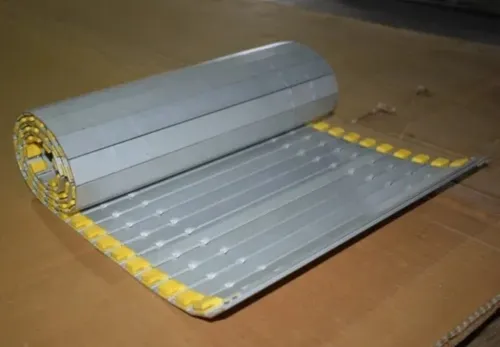
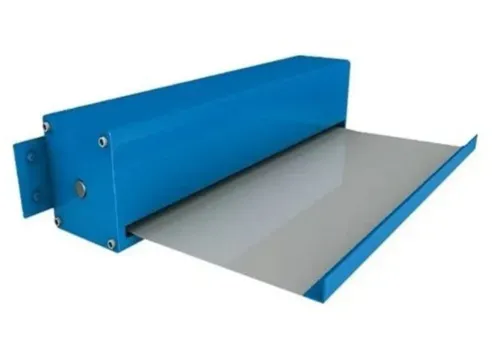
| Telescopic steel | Rigid overlapping steel boxes | Heavy chips, impact and high heat near the slide; allow for greater mass and installation space |
| Segmented protection | Linked metal or composite sections | Large hot chips, sparks or mechanical impact where fabric would tear |
Select a metallic shield or segmented guard for red-hot chips, welding spatter, furnace radiation or abrasive scale. A bonded fabric cover is not a pressure vessel: add wipers, drains and enclosure geometry for wash-down jets, suction or coolant retention. Specify continuous and peak temperature, fluid chemistry and cleaning method before approving the material.
Check movement, orientation and dimensions before ordering
A cover with the correct stroke can still rub, snag or buckle if its direction, fold pack and guide support are wrong. Check movement in the machine’s actual mounting orientation, not on a flat drawing.
1. Record the axis stroke, speed and acceleration, then measure the available closed length and maximum extended length. Include the width, height, mounting-frame dimensions and fold pitch; the compressed pack must not collide with the carriage, spindle housing or adjacent guards.
2. State whether the cover travels horizontally, vertically, inverted or at an angle. In a vertical installation, gravity can pull unsupported folds sideways; in a horizontal installation, chips and coolant can collect on the upper surface. Add drains, support strips or a deflector where the direction creates a collection point.
3. Confirm fold orientation against the travel path. Folds must open and close evenly without twisting, side-loading or catching on a fixed edge. A fold that collapses sideways will buckle even when the nominal stroke is correct.
4. Show the guide or support arrangement, including rails, sliders, rollers, support tables and the distance between attachment points. Do not let the fabric drag across a sharp guide edge or span a gap that allows sagging.
5. Dimension the required clearance at both extremes and through the full travel. Test the folded pack, extended length and side clearance with coolant lines, cable carriers and wipers installed.
For thermally bonded bellows in Coimbatore, send photographs or a travel video with these measurements. Request a drawing showing closed height, extended height, mounting points and minimum bend or fold clearance before approving production.
Define sealing performance, operating limits and replacement points
High sealing capacity means coolant and fine debris cannot pass through bonded seams during normal travel, but it does not mean airtight construction. A thermally bonded cover is not a pressure vessel or vacuum seal; wipers, drains and enclosure geometry still handle liquid flow.
For heat sealed bellow cover applications, record acceptance limits for:
- Liquid ingress: define the wash-down or spray condition, inspect pleat valleys and end frames, and specify the leakage-test method.
- Pressure: state any positive air, suction or coolant pressure in kPa; require the supplier to confirm an allowable limit.
- Temperature: separate continuous temperature from peak exposure, and reject standard fabric for red-hot chips, welding spatter or furnace radiation unless a rated outer layer or metal shield is added.
- Chemicals: test the actual coolant or cleaning-chemical formulation, concentration and contact time, not merely the word “coolant.”
- Sparks and abrasion: describe spark frequency, chip size and grinding scale; burning, pinholing or hardening signals an unsuitable construction.
- Cleaning: state whether vacuum cleaning or low-pressure air is allowed. Blowing lint into a guideway can create the failure the cover was meant to prevent.
Set replacement by condition and service life, not appearance alone. Replace the cover when a seam opens, coating cracks through, folds no longer extend smoothly, or liquid reaches the protected guide. Record stroke cycles and inspection findings so a planned replacement occurs before contamination damages the machine.
Use a Coimbatore purchasing checklist that tests the complete fit
Give the bonded machine bellows supplier in Coimbatore a drawing and operating brief, not the phrase “standard CNC bellow.” The supplier needs enough data to prove that the cover fits the axis, survives the contamination and leaves clearance throughout travel.
1. Record the machine and movement: axis name, stroke, speed, acceleration, mounting orientation, guide arrangement, folded length, extended length, width, height, fold pitch and clearance at both end positions.
2. Describe the exposure: coolant or oil formulation, grinding dust, swarf size, sparks, welding spatter, continuous temperature, peak temperature, cleaning chemicals, wash-down method and required service life.
3. State the installation limits: mounting-frame dimensions, support or guide points, compressed-pack height, replacement-cover interchangeability and whether a wiper, drain, deflector or sacrificial apron will shield the folds.
4. Ask for a dimensioned drawing showing folded and extended positions, mounting holes, fold direction, support arrangement and minimum clearances. Reject a drawing that shows nominal stroke but not the compressed pack.
5. Request material-compatibility confirmation, a movement test through full stroke and inspection records for seams, mounting plates and fold alignment. For positive air, suction, wash-down jets or coolant retention, demand the allowable pressure, leakage-test method and sealing arrangement.
6. If the cover forms part of personnel protection, obtain the guarding assessment against ISO 14120 and ISO 13857. Kalavijay Engineering can be included in the comparison, but approve the thermally bonded bellow cover for applications in Coimbatore only after these records match your machine.
Related product
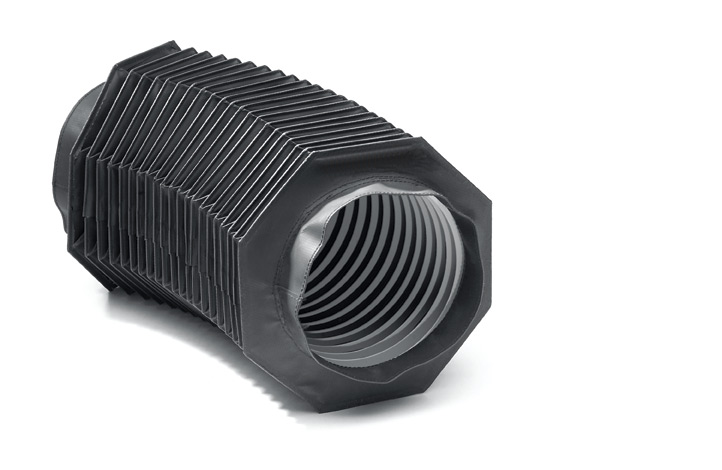 | Bellow Cover Kalavijay Engineering is considered a renowned name in the field that manufactures and supplies Thermal Welded Bellow Cover. View product → |
Frequently asked questions
Which Coimbatore machines benefit most from thermally bonded bellow covers?
CNC lathes, machining centres, surface and cylindrical grinders, EDM equipment and special-purpose machines benefit when guides, ball screws or telescoping elements face coolant, cutting oil, swarf, grinding dust or textile lint.
How do you match a bonded bellow cover to the application?
Assess the coolant or oil, operating temperature, chip size, grinding dust, textile lint, spark exposure and required flexibility before selecting the cover material and construction.
What dimensions and movement details must you check before ordering?
Provide the protected component, travel or stroke, extended and compressed lengths, cross-section, mounting points, direction of movement, orientation, minimum bend or fold requirement and available clearances.
What should a purchasing specification define?
Write down sealing performance, temperature and exposure limits, mounting details, inspection criteria, expected service life and the condition that triggers replacement.