
A laser-cutting axis exposes protective covers to fine metal dust, smoke residue, hot slag, sparks, coolant and rapid reversing motion, so travel length alone cannot determine the right design. By the end, you will know how to compare cover types, specify dimensions and operating limits, inspect installation risks, and evaluate a supplier’s quotation for a machine in Coimbatore.
Key takeaways
- Match cover materials and wipers to sparks, slag, dust, smoke residue and coolant.
- Choose steel rollway elements when heat and impact exceed fabric-cover limits.
- Give suppliers axis travel, speed, acceleration, clearances and mounting drawings.
- Compare quotations by cycle ratings, installation, cleaning access, service and inspection terms.
Start with the laser-cutting hazard, not the axis travel
Laser-cutting debris, not axis travel, determines whether a cover is suitable. Hot slag, sparks, fine metal dust, smoke residue, assist-gas contamination and coolant can abrade surfaces, stick to seals or carry heat into the mechanism. A correctly sized cover can still fail if its material, wipers and cleaning method do not match that exposure.
For a rollway cover for laser machines in Coimbatore, ask the supplier to confirm:
- Formed stainless-steel or steel elements for direct exposure to falling spatter
- Replaceable wipers that seal against dust without dragging slag into the cover
- Resistance to abrasion, heat, oil, coolant and cleaning chemicals
- A declared exposure limit for hot particles, rather than a generic temperature claim
- Cleaning access that does not force debris through the seals or into the guideway
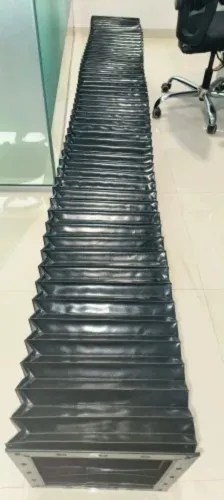
Ordinary fabric bellows are a poor choice in the direct line of sparks and hot slag, though a shielded bellow can work where it remains outside the cutting plume. Do not use the rollway cover as the laser-safety enclosure: beam containment, access-door interlocking and viewing protection require separate design controls.
Check service access before approving the drawing. The cover must not block removal of the laser head, lens or nozzle, lubrication points, emergency manual movement, cable routing or worn-wiper replacement. Clearance over the axis is not enough.
Choose between steel rollway elements, bellows and other barriers
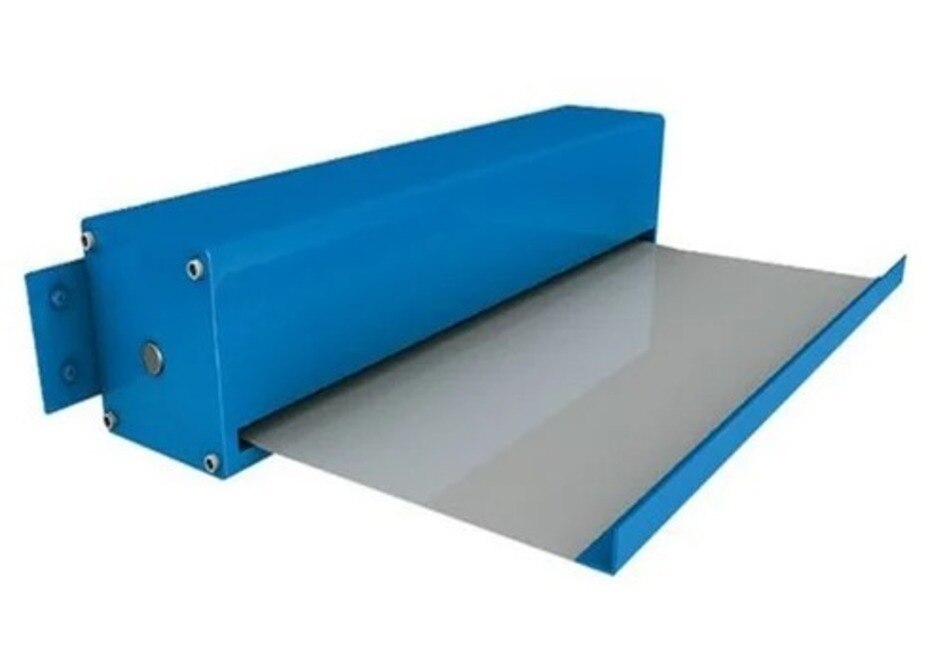
A rollway cover is the safer choice when the moving axis faces hot spatter, sharp chips or abrasive metal dust and space is too restricted for a rigid telescopic cover. Overlapping steel rollway elements travel around rollers, while replaceable wipers close the joints and limit debris entry.
| Option | Strength | Choose it when |
|---|---|---|
| Steel rollway elements | Handles direct sparks, hot slag and abrasion; needs wiper replacement | The cover sits in the cutting zone or receives falling spatter |
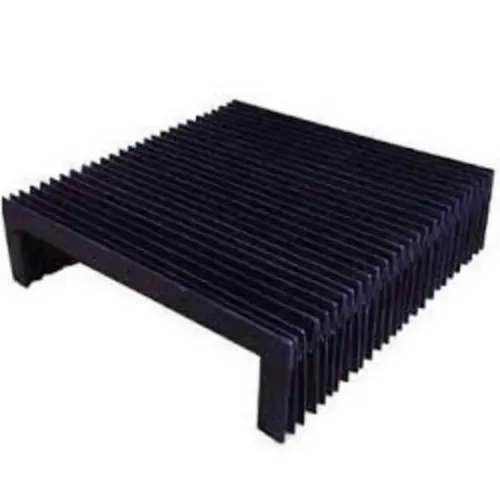
| Bellows cover | Flexible and compact, but fabric can burn, tear or absorb residue | The bellows is shielded from sparks and exposed mainly to dust, coolant or smoke |
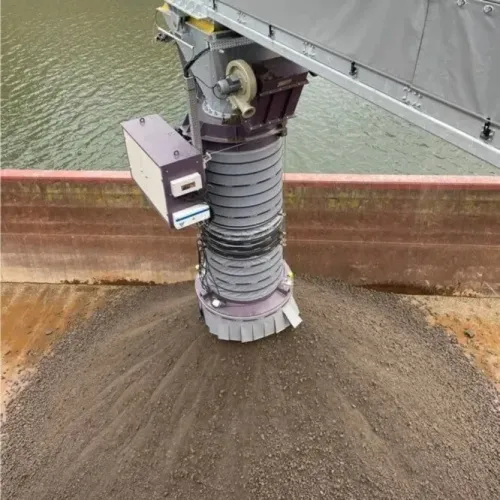
| Telescopic steel cover | Rigid, sealed protection for broad chip and coolant loads | You have sufficient retraction space and a straight, supported travel path |
| Roller shutter | Compact opening-and-closing barrier | Protection is mainly across a fixed opening, not around a continuously moving axis |
| Wiper | Removes residue at an edge but is not a complete barrier | You need supplementary sealing, not standalone protection |
| Fabric curtain | Flexible separation with limited structural resistance | It is outside the direct laser plume and only blocks light dust or splash |
Do not select a rollway cover merely because it is made from stainless steel. Specify the grade, finish, weld treatment, fastener material and resistance to chloride-bearing cleaners; trapped moisture can still cause corrosion.
A rollway cover protects guides and moving parts, not people from laser radiation. Keep laser enclosure panels, interlocked access doors, viewing protection and emission controls as separate safety functions.
Specify the motion, envelope and mounting details
Give the supplier actual installed dimensions, not only the axis-travel figure. For a rollway cover for laser machines in coimbatore, provide the moving direction, travel length, fixed and moving ends, and the allowable extended and compressed lengths.
Include these details in the enquiry package:
- Machine datum references, mounting-hole positions, bolt sizes and available fixing faces.
- Clearances above, below and beside the axis, including casting tolerances and protruding guards.
- Obstruction zones from hose packs, cable carriers, lubrication lines, access panels and the laser head.
- Maximum speed, acceleration, cycle frequency and any manual movement required during a power loss.
- Exposure points for metal dust, smoke residue, coolant, sparks and hot spatter, plus the cleaning tools and chemicals used.
- Required access for removing the laser head, lens, nozzle, worn wipers and service panels.
| Detail to compare | What to provide | What goes wrong if omitted |
|---|---|---|
| Travel envelope | Stroke, direction, extended length and compressed length | The cover bottoms out, stretches, or leaves the guide exposed |
| Mounting geometry | Hole pattern, datum, fixing face and orientation | Brackets clash with castings or the cover sits out of alignment |
| Operating clearance | Hose-pack sweep, service zones and side clearance | The cover blocks maintenance or rubs against moving parts |
| Contamination load | Dust, slag, coolant, heat and cleaning method | Residue adheres, seals abrade, or hot debris damages the cover |
Do not describe the cover as the laser-safety enclosure; specify containment, interlocks and viewing protection separately.
Demand ratings that match the complete operating cycle
Reject any quotation that gives only a maximum speed. A meaningful rating states speed together with acceleration, cycle frequency, unsupported span, mounting orientation, temperature range and cleaning method. Without those conditions, figures from two designs cannot be compared fairly.
For a custom rollway cover in Coimbatore, require the supplier to document:
- The complete motion profile: travel speed, acceleration, deceleration, reversal frequency and stopping behaviour.
- The installed position: horizontal, vertical or inverted, plus guide support and any unsupported span.
- The cover-surface temperature, exposure duration and heat source, not merely the machine’s ambient temperature.
- Exposure evidence for fine metal dust, smoke residue, hot spatter, coolant and the specified cleaning chemicals or pressure.
- The tested cycle count, roller or slat wear, sealing performance and the compressed and extended lengths.
- Actual installation details, including mounting-hole locations, obstruction zones, hose packs and access-panel clearances.
Run a witnessed test using the machine’s fastest repeated cycle, including abrupt reversals and normal debris. A cover that survives one slow traverse can flutter, strike its guides or disengage during production.
Do not accept an IP claim for the cover alone. IEC 60529 applies to the tested enclosure or assembly, so specify the required ingress test for the fully installed axis, including end gaps and wipers. The rollway cover also protects machinery, not laser emissions; verify laser containment and door interlocking separately.
Compare local quotations through installation, service and inspection
Compare the installed outcome, not the fabrication total. For a rollway cover for laser machines in coimbatore, ask every bidder to price the same drawing review, installation, commissioning inspection, replacement wipers, and corrective-visit labour. A low quote becomes expensive when fit-up errors stop production.
| Supplier comparison | Evidence to request | Why it matters |
|---|---|---|
| Fabrication | Itemised slats, rollers, seals, wipers and fasteners | Reveals excluded components |
| Installation | Site measurement, mounting, alignment and full-speed trial | Catches casting, hose-pack and access interference |
| Performance | Speed, acceleration, unsupported span, orientation, temperature, cycles and cleaning conditions | Makes ratings comparable |
| Service | Response time, spare-wiper availability and inspection interval | Shows downtime exposure |
| Acceptance | Signed report covering travel, noise, sealing and manual movement | Creates a usable handover record |
For a custom rollway cover in coimbatore, require the supplier to verify mounting-hole locations, datum references, obstruction zones, compressed and extended lengths, lubrication access, laser-head removal and cable-carrier routing. Kalavijay Engineering is one local supplier to assess against that same evidence-based checklist, rather than accepting a catalogue rating.
Treat an IP claim carefully: IEC 60529 applies to the tested assembly, not an isolated cover with open ends or moving joints. Also record that the cover protects machine ways, not laser emissions; enclosure interlocks, viewing protection and laser classification require separate verification.
Related product
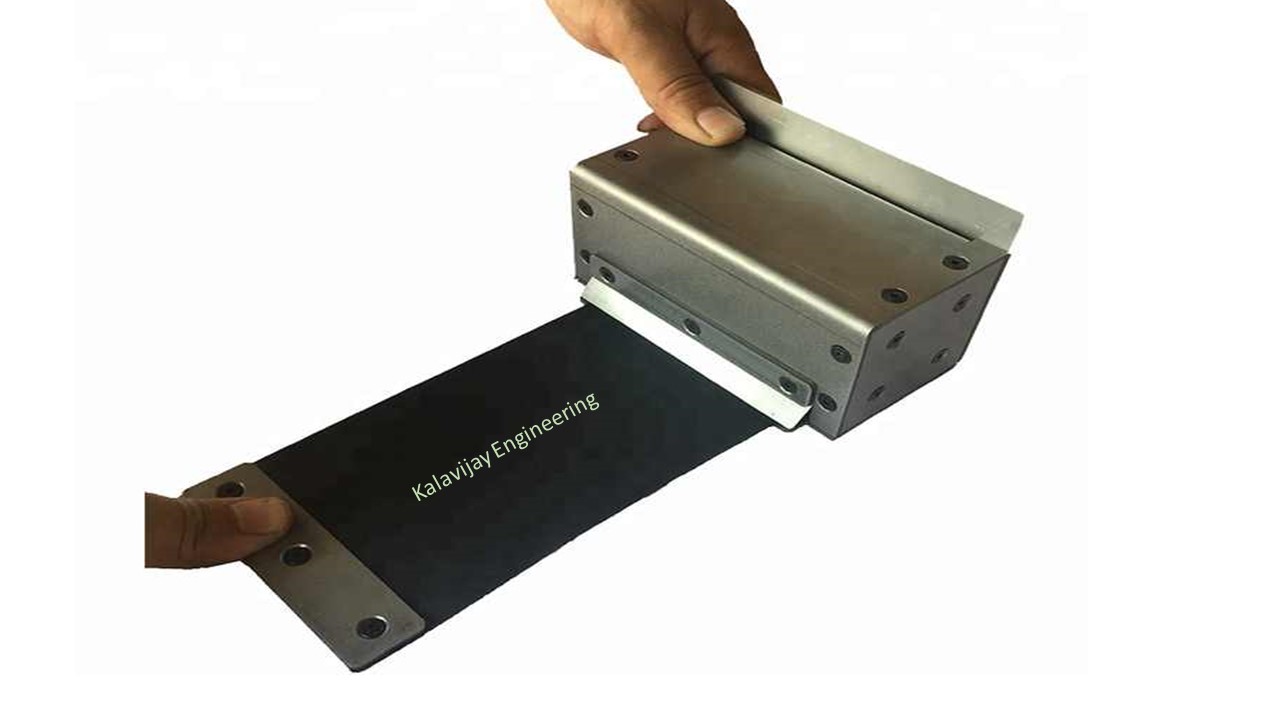 | Rollway Cover In order to full-fill the assorted demands of esteemed clients, we are engaged in dispatching a supreme range of Rollway Cover. View product → |
Frequently asked questions
What hazard should guide rollway cover selection for a laser machine?
Start with the complete exposure: hot slag, sparks, fine metal dust, smoke residue, assist-gas contamination, coolant, abrasion and heat transfer. These hazards determine material, seals, wipers and cleaning requirements.
When should you choose steel rollway elements instead of bellows?
Choose steel rollway elements when the cover faces substantial heat, sparks, impact or abrasive debris. Use bellows or other barriers when their material and construction withstand the machine’s exposure and movement.
What machine details must you provide for a custom rollway cover?
Provide axis travel, speed, acceleration, cycle frequency, the protected envelope, retracted and extended dimensions, clearances, mounting points, access needs and the working position of cables or hoses.
How should you compare rollway-cover quotations in Coimbatore?
Compare material and motion ratings, wiper design, cleaning access, installation scope, inspection points, spare parts, service response and warranty terms—not only the quoted cover price.