
A bulk-loading bellows must do more than stretch between a silo and a truck: it must contain powder, tolerate the material, follow the lifting system and seal the receiving inlet without creating a maintenance hazard. By the end, you will know how to specify dimensions, materials, dust control, operating hardware and local installation support for a suitable loading spout.
Key takeaways
- Match the bellows fabric and seals to the powder’s abrasiveness, temperature and moisture.
- Measure the retracted and extended spout before specifying a replacement cover.
- Use dust-extraction ports and flexible seals to contain airborne powder during loading.
- Inspect folds, clamps and wear points before commissioning and at scheduled intervals.
How the bellows transfers material from a silo to a vehicle
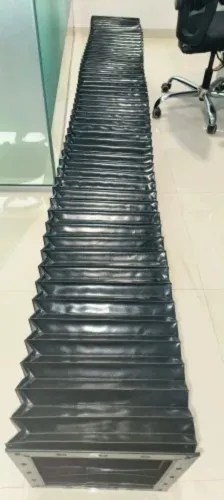
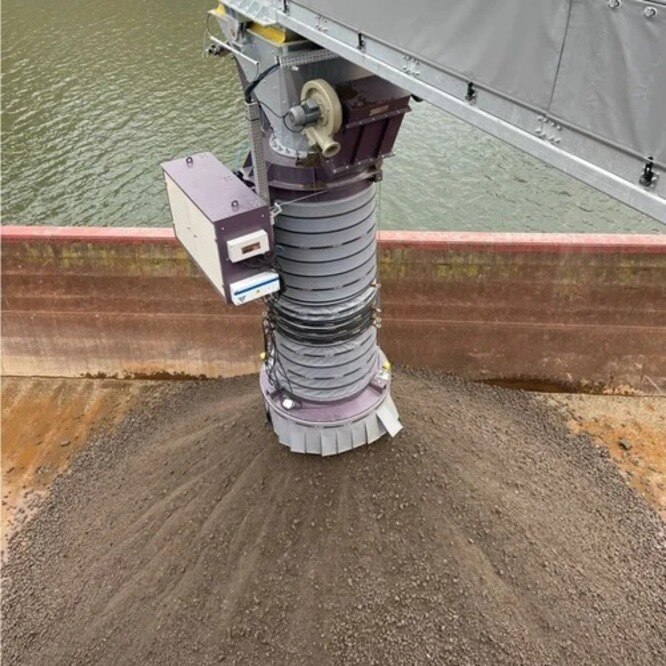
A telescopic loading spout for bellow cover in Coimbatore forms the flexible chute between a fixed silo or discharge point and a truck, wagon, hopper or bag inlet. It extends to the receiving opening, contains falling powder during discharge, then retracts into a parked position after filling.
Gravity-hung cones suit simple vertical loading. Counterweights, cable-and-pulley systems and motorized winches provide progressively greater control or lifting capacity; limit switches define travel, level indication signals filling progress, and a dust-extraction connection removes displaced air. These are separate design choices, not functions supplied automatically by the loading spout bellow cover.
Containment depends on the receiving inlet, a close-fitting skirt or seal, and a venting or suction line. The bellows alone is not a dust-extraction system. A poor seal can release cement, fly ash or fertilizer dust even when the fabric remains intact.
Before selecting the cover, record:
- Permitted lateral offset and angular misalignment between the spout and inlet
- Loading height, discharge rate, and vehicle or hopper opening size
- Fully extended and retracted lengths, cycle frequency, and available headroom
- Outdoor exposure, UV, rainwater and standing-water risks in retracted folds
- Material temperature, moisture, particle size and abrasiveness
This arrangement serves cement, ready-mix, foundry, mineral-processing, fertilizer and grain sites around Coimbatore. A rain collar must protect the upper connection without blocking the vent path during loading.
Choose the cover for the powder, not for the nominal diameter
The powder, not nominal diameter, decides whether a loading spout bellow cover survives. Specify fabric, coating and construction for abrasion, alkali or chemical attack, moisture, UV exposure and operating temperature; tensile strength alone is a poor selector.
| Powder | Suitable construction | Main concern |
|---|---|---|
| Cement, lime and fly ash | Abrasion-resistant coated fabric, reinforced seams and optional internal liner | Alkali attack, fine-dust leakage and moisture caking |
| Clinker, sand and mineral fines | Heavy fabric with a replaceable liner, sacrificial skirt and wear zones | Sharp particles cut lower folds and the first impact area |
| Fertilizer | Chemically compatible coated fabric with sealed seams | Corrosion, hygroscopic moisture and caking |
| Grain, flour and pellets | Lightweight flexible fabric with tensile reinforcement | A grain-grade fabric can fail quickly under abrasive mineral service |
| Other powders | Match coating, liner and temperature rating to the safety data sheet | Chemical incompatibility or static ignition |
Do not make the entire telescopic loading spout cover unnecessarily heavy. Reinforce the lower outlet, first impact zone and adjacent folds, where sharp clinker, sand and mineral fines strike repeatedly; provide replaceable wear sections instead.
Require the supplier to state:
- Minimum fold radius, minimum collapsed length, permitted extension and fold overlap
- Pressure or suction limits, including the effect of caking or damp material
- Temperature range, UV rating, tensile reinforcement and replacement procedure
For combustible grain, flour, polymer or metal dust, obtain the site dust-hazard classification and explosibility information. Request a documented electrical-resistance test result and a bonding path between the cover, structure and receiving vessel; “antistatic” alone proves nothing.
Separate a bulk-loading cover from a machine-tool bellows
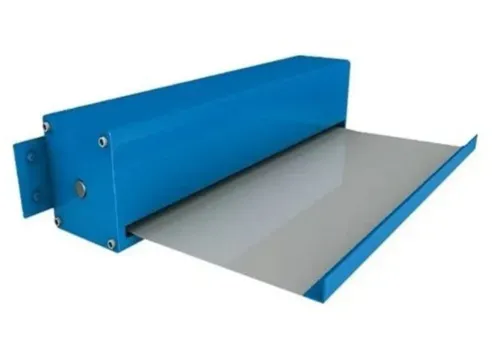
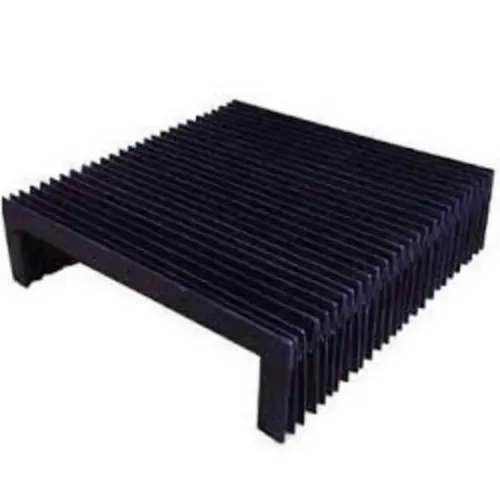
A CNC telescopic cover, round shaft bellow or ball-screw bellow protects ways and translating or rotating components from chips, coolant and oil over a defined stroke. A telescopic loading spout cover is a bulk-transfer component: it handles falling solids, dust release, vertical travel, vehicle movement and repeated loading cycles.
| Option | Cost, flexibility and life | Installation, cleaning and replacement |
|---|---|---|
| Fabric bellows | Lowest purchase cost; highly flexible; life falls with abrasion and heat | Simple fit; folds need frequent cleaning; replacement is usually quick |
| Rubber or elastomer sleeves | Moderate cost; flexible and sealed; coating limits chemical and temperature resistance | Easy installation; smooth surfaces clean quickly; sleeve replacement is quick |
| Segmented steel chutes | Higher cost; rigid, abrasion-resistant; limited flexibility | Heavier installation; inspect joints; cleaning and segment replacement take longer |
| Rigid telescopic loading chutes | Highest cost; precise movement and long wear life | Requires alignment and structure; easier external cleaning; repairs need more time |
| Dust-tight enclosed systems | Highest purchase and installation cost; strongest containment | Access panels and extraction need maintenance; component replacement is slow |
Fabric is the wrong choice for very hot material, severe abrasion, sharp clinker, high-pressure conveying, chemical attack beyond the coating, or any process requiring a rigid chute or metallic expansion joint. Under ISO 12100, assess guarded cables and pulleys, emergency stopping, overload protection, interlocks, maintenance access and a positive parked position.
A locally specified industrial loading spout in Coimbatore still needs duty-cycle, temperature, wear and pressure data before selection; a machine-tool bellows is not a substitute.
Measure the existing spout and specify dust-control interfaces
A diameter alone cannot size a replacement. For a telescopic loading spout for bellow cover in Coimbatore, provide the existing assembly’s geometry, movement and dust-control connections.
- Record fully closed length, maximum extended length, inlet and outlet diameters, flange pattern, bolt-circle diameter, spout travel, fold pitch, overlap, attachment method, connection orientation, lifting points, minimum bend radius, available headroom, and permitted lateral and angular offset.
- Without removing the assembly, record the fixed upper connection and measure to the lowest operating point. Locate the truck or wagon fill opening, then photograph every flange and lifting point.
- Measure clearances at full extension and full retraction, including nearby steelwork, vehicle surfaces and the parked position.
Require a dimensional drawing showing flange sealing, dust-collector or suction-line connections, vent paths and rain collars. Ask for the material datasheet, temperature rating, load and cycle information, replacement procedure and inspection criteria.
Check what happens when the spout is not seated: leakage can escape through an open interface. Confirm that extraction cannot be blocked by a collapsed cover, powder packing or caking, and define the vent route and suction capacity.
The supplier must show the cover’s permitted travel and offsets, not merely label it “dustproof.” Containment must follow the plant risk assessment and local pollution-control conditions, including any requirements for vehicle loading, outdoor rain exposure and collected dust.
Buy, commission and maintain an industrial loading spout in Coimbatore
A Coimbatore buyer should compare an industrial loading spout in Coimbatore by duty, fit and after-sales support, not diameter or price alone. Send site photographs, silo and vehicle drawings, material name, particle size, bulk density, moisture, temperature, abrasiveness, discharge rate, loading cycles, extraction details and all measured dimensions.
Ask each supplier to confirm:
- Delivery time, trial fitting, installation scope, commissioning support, service access and replacement-cover availability.
- Whether a telescopic loading spout for bellow cover in Coimbatore means only a replacement bellows or a complete telescoping assembly.
- Whether a site visit, installation, commissioning and spare lifting hardware are included.
- The temperature range, pressure or suction limit, cycle rating and replacement procedure.
| Supplier comparison | Check before ordering | Failure avoided |
|---|---|---|
| Complete assembly | Includes cables, pulleys, counterweights, limit switches and stops | Exposed retraction hardware |
| Replacement cover | Matches flange pattern, fold pitch, attachment, lifting points and clearances | Misaligned flanges or short reach |
| Commissioning support | Includes trial movement, vehicle alignment and extraction checks | Rubbing, skewing or over-tension |
Set inspection frequency by loading cycles and material severity. Inspect folds, seams, coatings, liners and pinholes; remove accumulated powder; check flange fasteners, cables, pulleys, counterweights, limit switches and parked-position stops; and record extension cycles. Replace the cover before a tear becomes visible dust release.
Kalavijay Engineering should clarify this exact supply boundary before quotation, rather than leaving the buyer to infer it from the product name.
Related product
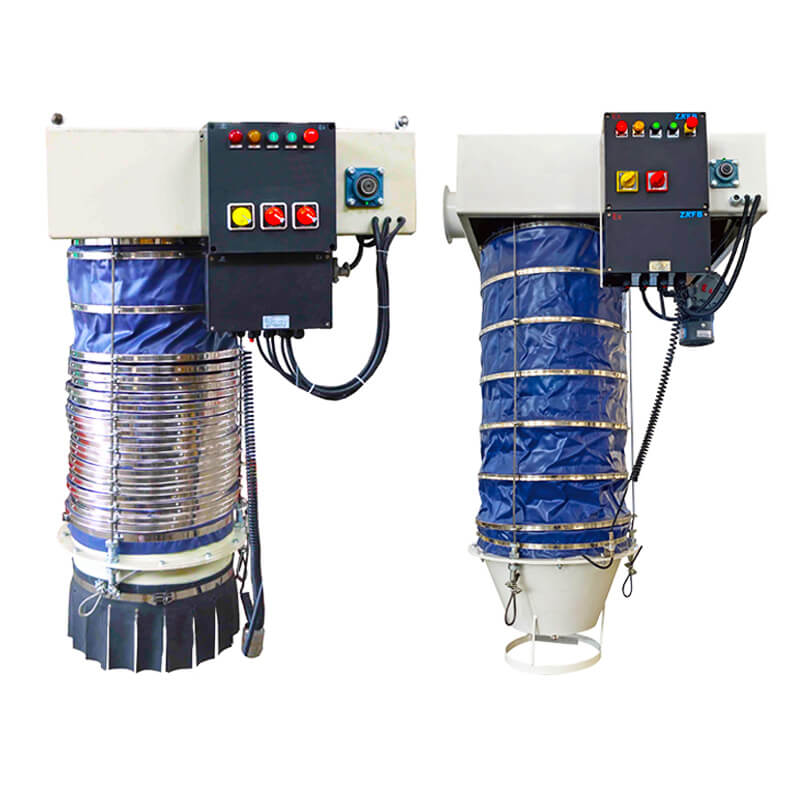 | Bellow Cover Kalavijay Engineering is engaged in manufacturing and supplying a wide range of Cement Plant Loading Spouts Bellow. View product → |
Frequently asked questions
How does a telescopic loading spout transfer material from a silo to a vehicle?
The spout extends from the silo discharge point to the truck, wagon, hopper or bag inlet. Its flexible bellows contain falling material and dust during loading, then retract into a parked position.
How do you choose a loading spout bellow cover for powder?
Specify the cover for the material rather than nominal diameter. Check powder abrasiveness, particle size, moisture, temperature, chemical compatibility, flow rate and the required dust-control interface.
What is the difference between a bulk-loading cover and a machine-tool bellows?
A bulk-loading cover contains falling powders and connects to a silo, vehicle or dust-extraction system. A machine-tool bellows protects moving components from chips, coolant, oil and mechanical wear, so the two applications need different fabrics, construction and interfaces.
What should you measure before buying an industrial loading spout in Coimbatore?
Record the existing spout’s inner and outer diameters, extended and retracted lengths, mounting pattern, fold pitch, material outlet, vehicle opening and available space. Also specify dust-extraction ports, seals, clamps and access for maintenance.