
Metal chips, dried coolant and abrasive dust can enter the overlaps of an SS clad bellow cover long before the damage becomes visible. By following a safe inspection and cleaning routine, recording the cover’s dimensions, and testing its full stroke, you can separate routine care from a repair or replacement decision.
Key takeaways
- Lock out the machine before inspecting folds, guides, wipers or damaged cladding.
- Remove chips with controlled brushing or low-pressure cleaning, not forceful air into folds.
- Replace covers when folds, seams or motion limits compromise protection.
- Require a documented full-stroke test after repair or replacement.
Inspect the cover safely before the next cycle
Lock out the machine before your hands or tools enter the cover area. Good SS clad bellow cover care in Coimbatore starts after heavy coolant use, abrasive machining, high humidity, or a crash—not only at a calendar interval.
1. Stop the machine at a known position, isolate electrical, hydraulic, pneumatic and stored mechanical energy, and apply the site lockout/tagout procedure. Do not reach between folded sections or place fingers beneath a hanging cover.
2. Wait for pressure and motion to dissipate, then support the cover and any removed guard with rated supports. Never force the bellows open or move the axis by hand while the cover can roll, telescope or drop.
3. Inspect from outside the pinch zone using a torch and mirror. Look for pinholes, lifted stainless cladding, cracked welds, torn fabric, corrosion staining, coolant trapped beneath cladding, damaged end frames, loose fasteners and exposed rails or screws.
4. Stop the machine for specialist assessment if the cover hesitates, bunches at one end, sags, scrapes, makes abnormal noise or needs increasing drive force. These symptoms point to blocked guides, distorted mounting, poor leveling or an internal tear.
5. Record closed length, extended length, travel direction, installation height and width, mounting-hole pattern, guide arrangement and the damaged section. A machine bellow cover repair in Coimbatore should begin with these checks, not an immediate patch.
After guards are restored, conduct a controlled full-stroke test from outside the hazard zone. Confirm even travel, no binding or contact, no exposed folds and no abnormal sag before the next production cycle.
Clean chips and coolant without driving debris into the folds
Use suction and gentle brushing, not force, to remove chips before machine motion drives them between overlapping stainless-steel lamellae. For ss clad bellow cover care in Coimbatore, isolate the machine, keep the cover supported, and shield bearings, sensors, wipers and electrical equipment before applying any liquid or air.
- Vacuum loose metal chips from the cover surface and overlap zones with a soft brush attachment. Lift stubborn chips with a nylon pick, never a screwdriver or sharp metal tool; trapped chips can score the cladding and load the bellows fabric.
- Wipe coolant film and dried residue with a lint-free cloth dampened with clean water and a mild, neutral detergent. Work along the lamellae, then wipe again with a clean damp cloth and dry the seams, fasteners and end frames.
- Remove abrasive dust from folds and guides with a soft nylon brush or vacuum. Use controlled low-pressure air only after shielding nearby equipment, and direct it away from folds, guides and wipers.
- Check that no moisture or sludge remains under a lifted edge, around welded seams, or inside a mounting strip. Do not use a pressure washer, steam lance, solvent that attacks the fabric, or a direct high-pressure air jet.
Clean after heavy coolant use, abrasive machining or high humidity, not only at a calendar interval. If chips remain after cleaning, travel feels tight, or scraping starts, stop the cycle; motion can convert a small contamination problem into a torn fold or distorted frame.
Decide whether the damage needs cleaning, repair or replacement
A clean surface does not make a damaged cover safe. Before choosing machine bellow cover repair in coimbatore, record the closed and extended lengths, travel direction, installation height and width, mounting-hole pattern, guide arrangement, and damaged section.
| Defect | Action | Decision |
|---|---|---|
| Metal chips, dried coolant, oil film or abrasive dust | Routine cleaning | Proceed if folds, seams and cladding remain intact |
| Loose fastener, minor guide obstruction or slight leveling error | Correct and retest | Proceed only when the cover completes its stroke without binding or noise |
| Torn bellows element, punctured fabric or failed seam | Remove and rebuild | Replace the affected bellows section or lamella set using verified material, fold geometry and attachment method |
| Lifted or cracked lamellae, distorted frame or internal tear | Remove from service | Rebuild after finding the cause; do not rely on adhesive or a weld over contamination |
| Repeated failure at one travel position, widespread corrosion or loss of safety distance | Complete replacement | Correct the external interference before installing another cover |
A surface patch can hide a tear while repeated folding opens it again. Remove the cover when it bunches, telescopes unevenly, hesitates, sags excessively or demands more drive force; inspect guides, mounting, leveling, acceleration, hose contact and projecting machine parts.
Replace the complete cover when the frame, fabric, cladding and attachment geometry no longer provide a sealed guard. The finished bellow cover maintenance service in Coimbatore must document replaced folds, cladding, guides, seals and fasteners, then prove full-stroke travel without exposed folds, contact or abnormal noise.
Specify a replacement that will survive the machine’s actual motion
Specify a replacement by matching the full motion envelope, mounting geometry, and contamination load—not by cover width alone. Record closed length, extended length, travel direction, speed, acceleration, installation height and width, mounting-hole pattern, guide arrangement, required clearances, and the damaged section.
Add stroke frequency, coolant type, chip size, operating temperature, abrasive dust, humidity, and crash history.
Before approving an ss clad bellow cover for maintenance in coimbatore, confirm:
- Stainless-steel grade and thickness, bellows fabric, fold construction, seam method, end frames, seals, guides, sliding parts, and fasteners suit the coolant and temperature.
- The cladding protects against chips; it is not a sealed, corrosion-proof enclosure. Check protection around folds, welded seams, mounting strips, and guides.
- The cover clears rails, ball screws, tooling, and adjacent guards through the entire stroke without sagging, binding, scraping, or exposing a pinch point.
- The replacement preserves the safety distance and has no sharp edges or detachable parts, consistent with ISO 14120.
Compare protection systems against the machine’s actual duty:
| Option | Confirm before ordering | Choose when |
|---|---|---|
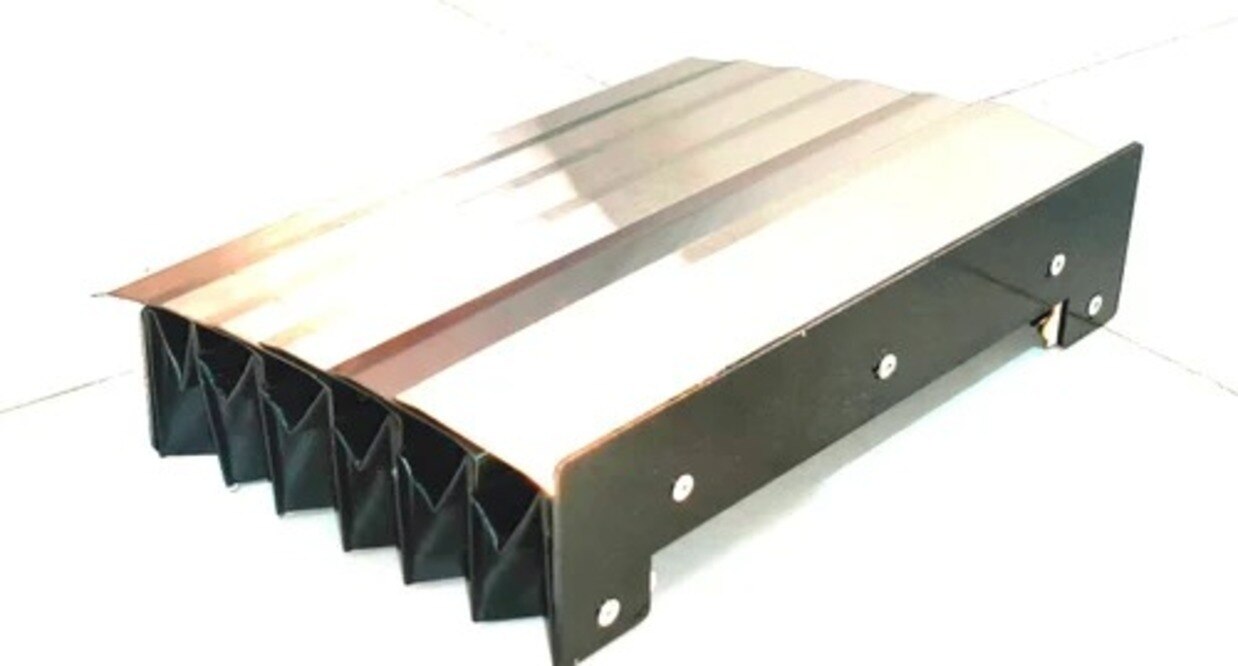
| SS-clad bellows | Lamella overlap, fold material, guides and chip clearance | Chips and coolant require flexible protection |
| Fabric bellows | Fabric coating, temperature and tear resistance | Travel is complex and chips are limited |
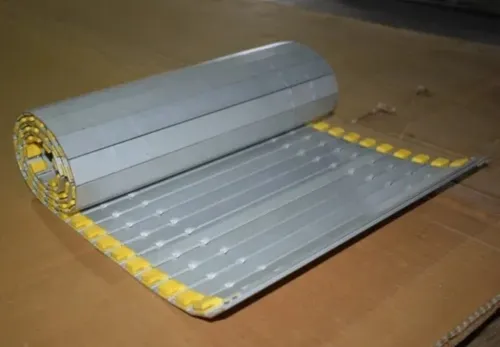
| Telescopic steel cover | Stroke, installation space, scraper seals and weight | Rigid chip protection matters more than compact flexibility |
Require a documented service and full-stroke acceptance test
Do not release the machine until the bellow-cover maintenance service in Coimbatore has produced a signed inspection record and witnessed full-stroke test. The cover is both a contamination barrier and a machine guard, so the acceptance check must confirm safe movement as well as surface condition.
1. Isolate and lock out the machine before inspection. Record closed length, extended length, travel direction, installation height and width, mounting-hole pattern, guide arrangement, and the damaged section’s location.
2. Inspect the stainless cladding, overlapping lamellae, bellows folds, welded seams, end frames, mounting strips, guides, seals and fasteners. Note lifted or torn lamellae, open seams, cracked folds, distorted frames, loose hardware, exposed rails or ball screws, coolant leakage and trapped chips.
3. Record every corrective action. Identify replaced folds, cladding sections, guides, seals and fasteners, and attach photographs showing the damage before and after work. A machine bellow cover repair in Coimbatore should begin with these measurements, not an immediate patch.
4. Check that the repair preserves the intended safety distance, leaves no sharp edge or detachable part, and does not create access to a moving hazard. Use ISO 14120 as the guard-design reference.
5. Run the cover through its complete travel at the machine’s normal operating speed. Confirm that it does not bind, hesitate, telescope unevenly, bunch at one end, scrape, sag excessively, expose folds or contact adjacent parts; record the result and the operator’s sign-off.
Kalavijay Engineering can use this record to distinguish an alignment fault from a cover rebuild before recommending replacement parts. Keep the completed report with the machine’s maintenance history.
Related product
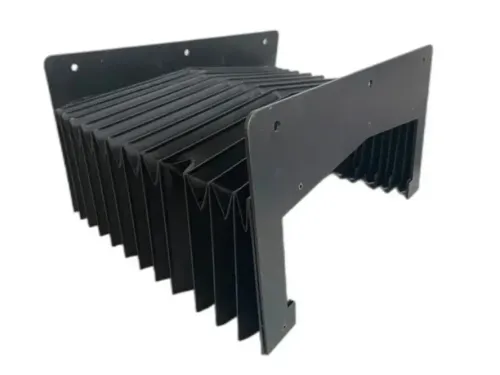
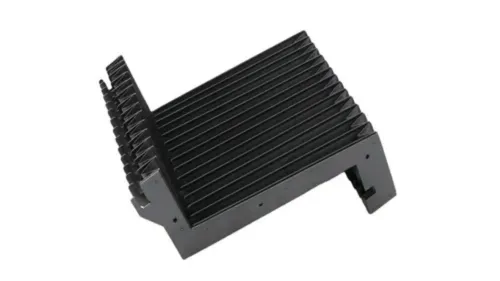
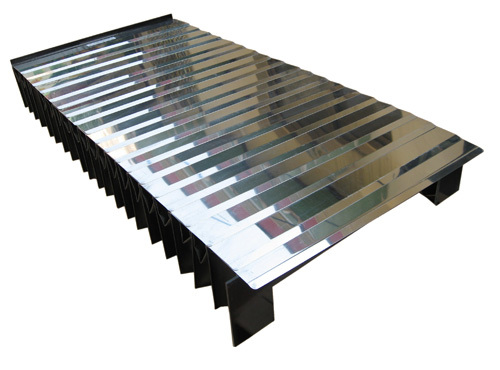 | SS Clad Bellow Cover We are Manufacturing Metal Flap Bellow Cover to prevent your Lm Rails and Ball Screw From metal Chips, Oill, Spatters, Coolant & Dust. View product → |
Frequently asked questions
How should you inspect an SS clad bellow cover before the next cycle?
Lock out the machine, then inspect the cladding, folds, seams, guides, wipers and mounting points for chips, coolant damage, tears, deformation or restricted movement.
How do you clean chips and coolant without damaging the bellows?
Remove loose chips with controlled brushing or careful vacuuming, then clean residue without driving debris into the folds, seams or guide areas.
When does a damaged bellow cover need cleaning, repair or replacement?
Clean contamination when the cover remains structurally sound, repair local damage when protection and travel can be restored, and replace it when folds, seams, cladding or motion limits have failed.
What should you specify when replacing a bellow cover?
Provide the machine’s full stroke, compressed and extended lengths, movement speed, guide arrangement, coolant and chip exposure, temperature, mounting dimensions and required protection.
What should a bellow cover service record and acceptance test include?
Require recorded findings, work performed, replacement details and a full-stroke test that confirms smooth travel, clearances, mounting security and protection throughout the cycle.