
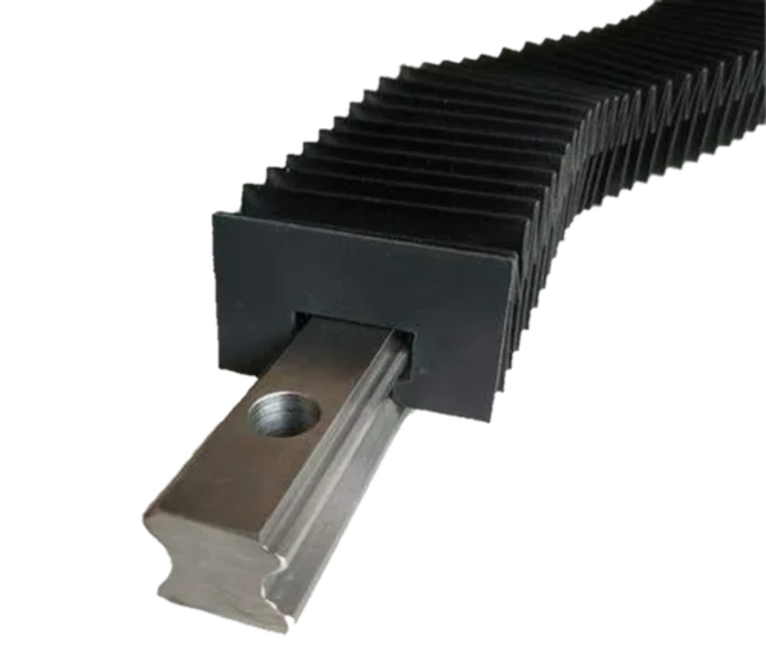
A usable quotation requires more than the rail’s width and axis stroke. By the end, you will know which dimensions, drawings, mounting parts, material requirements and inspection documents to send so the finished cover fits the machine and survives its working conditions.
Key takeaways
- Separate the bellow body, mounting parts and machine-side fabrication.
- Send rail dimensions, travel, stroke, speed and clearance data.
- Approve a fit drawing and movement checks before purchase order release.
- Match fabric, seals and construction to chips, coolant, heat and sparks.
Which parts and documents belong in the order?
An LM rail bellow cover order includes more than the folded bellows body. The quotation must separate supplied parts from machine-side fabrication.
| Supply item | Confirm in quotation | Machine-side check |
|---|---|---|
| Bellows body | Material, fold count or pitch, overall and compressed dimensions | Available folded envelope |
| End plates or frames | Included, dimensions and hole pattern | Interface and bolt access |
| Brackets, clamps and retaining strips | Quantity and locations | Space for fitting |
| Fasteners | Bolt size, grade and quantity | Threaded holes or inserts |
| Guide profiles and sliding supports | Included or excluded | Support across the full stroke |
| Wipers and seals | Included, type and replacement method | Contact with rail and carriage |
Request an approved assembly drawing showing mounting-hole locations, end-face geometry and installation orientation. Ask for material identification, overall length, compressed length, width, height and fold pitch; without these records, a replacement can become a new measurement exercise.
The inspection record must document visual checks of seams and bonding, plus a functional extension-and-compression check through the specified travel. Record the part revision with the result.
Confirm three service points before ordering:
- Can you replace the bellows without changing the end frames?
- Does the rail remain accessible without removing the complete cover?
- How will you clean the cover and lubricate the rail, carriage or lubrication points after installation?
Also state whether the quotation includes only the rail protection or covers the carriage, scale, sensors and end-of-travel hardware.
What information must you send for LM rail bellow cover specifications?
Send a dimensioned information sheet, not only a rail model. Treat “lm rail bellow cover for specifications” as an engineering data request covering the rail, motion envelope, interfaces and protected components.
1. Identify the rail make and model, rail width, rail spacing, rail length and usable travel. Add the fixed-end-to-fixed-end length, expanded length, collapsed length and fold pitch.
2. Record the required cover height and width, plus clearance above and beside the rail. Include rail height, carriage clearance and any adjacent covers.
3. Add the mounting-hole pattern, bolt size and pitch, end-frame dimensions, datum surfaces, machine zero position and maximum position. Attach an assembly drawing or dimensioned interface sketch showing these features.
4. Mark the fixed and moving datums before measuring. Measure rail length separately from axis travel, record the minimum compressed stack, then measure maximum extension and available end space.
5. State whether protection covers only the rail or also the carriage, scale, sensors, lubrication points, screw and end-of-travel hardware. Include the extension direction, fixed end, moving end and mounting orientation.
6. Add maximum speed, acceleration, duty cycle, expected cycle count and working conditions. These values affect fold geometry, guide support and the need for a sliding frame.
This information prevents a nominally matching cover from colliding with the carriage or running out of space at either end. Two covers with identical travel can still require different frames because their mounting interfaces and protected widths differ.
How do you prove the cover will fit and move correctly?
A fit is proven by matching the cover to the machine’s interfaces and sweeping its full motion envelope, not by matching travel alone. The order must state the extension direction, fixed end, moving end, mounting orientation, end-face geometry, and access required to install bolts, frames, clamps and retaining parts.
1. Submit the rail and carriage interface drawing with mounting-hole locations, bolt access, rail spacing, end-face dimensions and datum surfaces. Confirm the cover protects the intended parts: rail, carriage, ball screw, scale, sensors, lubrication points and end-of-travel hardware.
2. Check the folded envelope at maximum compression, including lateral bulging between folds. Check the additional end clearance required at maximum extension; a cover that matches the nominal length can still strike a frame or guard.
3. Sweep the complete stroke while observing the carriage, adjacent rails, ball screw, cable carrier, hoses, clamps, lubrication lines, limit switches, hard stops and existing guards. Record every interference, not just contact with the rail.
4. Add maximum speed, acceleration, duty cycle and expected cycle count to the order. These values determine fold geometry, guide-frame support and whether unsupported travel is acceptable; a custom rail bellow cover may need a sliding frame or stiffer end frame even when its travel matches another cover.
Record horizontal, vertical, inverted or side-mounted installation. Gravity changes fold sag, chip collection and drainage, so a cover designed for horizontal mounting can fail overhead without support or a drainage path.
How should conditions change the construction and alternatives?
A custom rail bellow cover must be specified for the exposure, not selected from the rail name alone. Record dry dust, abrasive milling chips, oil mist, flood coolant, coolant pressure, washdown, welding spatter, laser debris, hot particles, UV exposure, ambient temperature, vibration and installation orientation.
Request a named material or resistance class for coolant, oil, abrasion, flame, sparks and temperature. Also state whether construction is single-layer, multilayer, coated fabric, leather, elastomer or heat-shielded. Define seam method, fold reinforcement, wiper contact and drainage direction; trapped slurry can abrade folds even when the cover looks sealed.
| Cover or alternative | Geometry and exposure it suits | Construction decision |
|---|---|---|
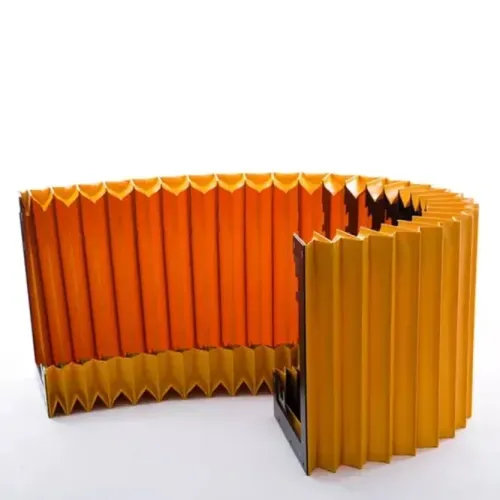
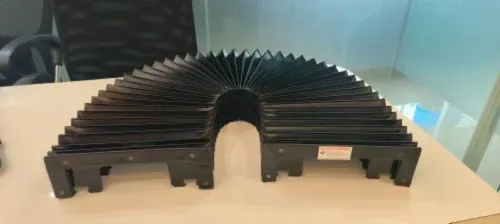
| LM rail bellow cover | Linear guide rail and carriage | Fabric, coating, reinforced folds, wipers and drainage follow chips, coolant and travel |
| Ball-screw cover | Rotating screw and nut | Allow screw rotation, pitch clearance and axial movement |
| Telescopic steel way cover | Broad flat machine ways and heavy chips | Use sliding steel boxes for rigid impact protection |
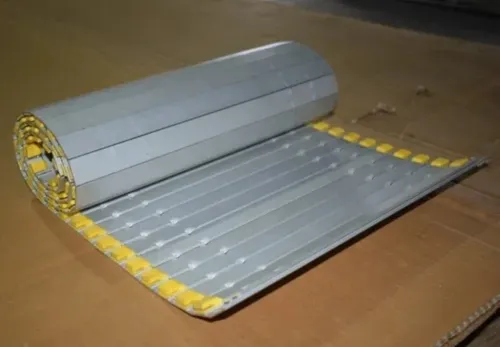
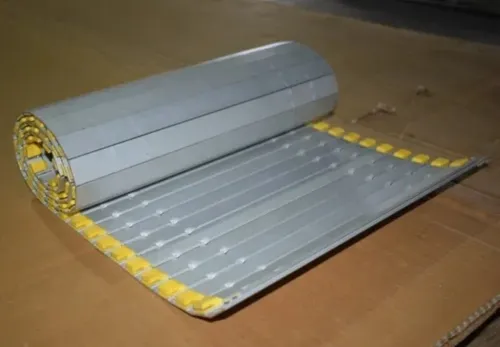
| Metal-flap cover | Severe chips, sparks and hot contamination | Specify overlapping metal elements and heat resistance |
| Round bellow | Cylindrical shafts or rods | Size the internal diameter and stroke, not a rail section |
| Cable carrier | Cables, hoses and bend radius | It guides services; it does not replace a contamination cover |
PU-coated fabric is not automatically suitable for hot laser dross or concentrated radiant heat. A laser machine bellow cover in Surat still needs the laser-axis drawing, assist-gas and debris conditions, heat exposure and required material performance. Vibration and orientation also determine fold support and drainage.
Kalavijay Engineering can review a custom rail bellow cover against those machine conditions rather than a generic rail size.
Related products
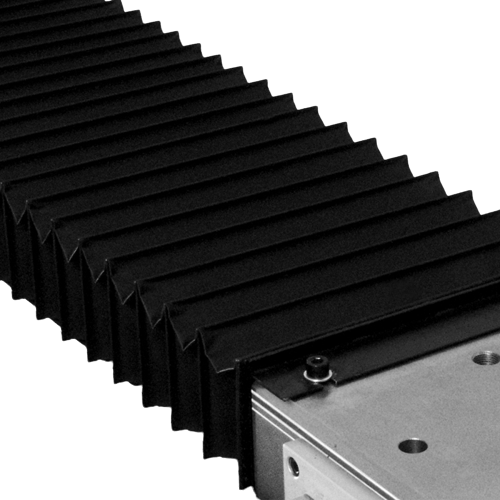 | Bellow Cover We provide LM Rail Bellow Covers to protect your LM Rail from dust, oill and coolant, Spatter etc. View product → |
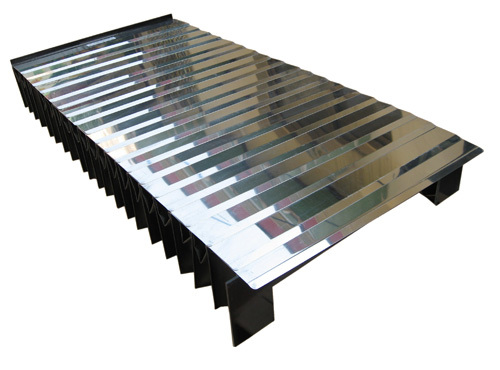 | SS Clad Bellow Cover We are Manufacturing Metal Flap Bellow Cover to prevent your Lm Rails and Ball Screw From metal Chips, Oill, Spatters, Coolant & Dust. View product → |
What should you approve before releasing the purchase order?
Approve the supplier drawing against the machine drawing before releasing the purchase order. Confirm rail spacing, mounting-hole locations, bolt access, end-face geometry, compressed stack, expanded length, cover cross-section and fold pitch.
| Approval item | Confirm on the drawing or quotation | Failure prevented |
|---|---|---|
| Rail interface | Rail spacing, hole locations, bolt access and end-face geometry | Drilling, collision or inaccessible fasteners |
| Motion envelope | Compressed stack, expanded length, cross-section and fold pitch | Binding, bulging or insufficient travel |
| Construction | Single-layer, multilayer, coated fabric, leather, elastomer, lamellae or heat-shielded design | Material failure from heat, coolant, oil, sparks or abrasion |
| Supply scope | End frames, brackets, clamps, fasteners, guide profiles, sliding supports, seals, wipers and retaining strips | Missing installation hardware |
| Service details | Replacement method, cleaning access and drainage path | Difficult maintenance or trapped coolant |
Require stated temperature and resistance limits; never infer them from the material name. Before installation, inspect dimensions and seams, trial-fit the mounting pattern, then repeat full-stroke extension and compression while watching the carriage, cover and nearby services for contact.
Record the part revision, material, dimensions and acceptance results. That record lets you order replacement LM rail bellows without repeating the entire measurement exercise.
Frequently asked questions
Which parts and documents belong in an LM rail bellow cover order?
Specify the folded bellow body, mounting frames or plates, fasteners, wipers or seals, and any machine-side fabrication separately. Request the quotation, dimensional drawing, material details, inspection records and installation instructions.
What information must you send for LM rail bellow cover specifications?
Send rail and guideway dimensions, protected length, compressed length, expanded length, travel, speed, acceleration, mounting points, available clearance, temperature, coolant, chip and spark exposure, and photographs or drawings of the machine area.
How do you prove an LM rail bellow cover will fit and move correctly?
Review a dimensioned approval drawing against the machine, then confirm mounting-hole locations, folded and extended dimensions, travel limits, clearance at full compression, and unrestricted movement through the complete stroke.
How should operating conditions change the construction or alternatives?
Use fabric, coatings, seals, wiper arrangements and support details suited to the chips, coolant, heat, sparks and mechanical wear at the guideway. Compare a custom rail bellow cover with telescopic covers or other guarding when space, speed or contamination exceeds the bellows design.
Related product
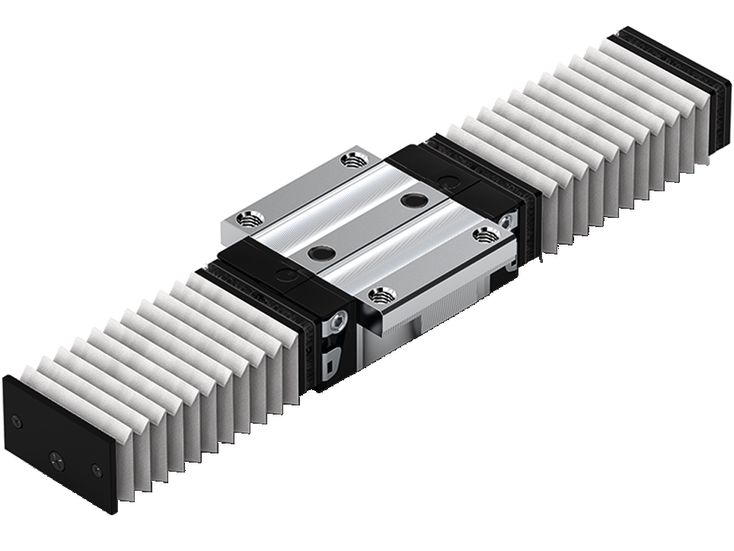 | Bellow Cover We are munufacturer for Custimized LM Rail Bellow Cover. Liner Bearing Bellow Cover If You Want To Protect Your Hiwin, THK, GRI, Linear Bearings And... View product → |