
A Bystronic replacement bellow cannot be reproduced safely from the machine brand or the old cover’s outside dimensions alone. You need the correct axis measurements, material construction, fold geometry, mounting interface and inspection process before fabrication begins; by the end, you will know what to record, what the manufacturer builds, and how to approve the finished cover.
Key takeaways
- Record axis dimensions, fold count, travel direction and machine model before ordering.
- Choose heat-resistant, coolant-resistant fabric with flexible reinforcement for laser-axis movement.
- Approve a drawing showing extended length, compressed length, fold geometry and mounting details.
- Inspect clearances, fasteners and smooth travel before returning the machine to production.
How do you measure a Bystronic machine before requesting a replacement?
1. Start with the machine model, production year if available, axis designation and the cover’s installed location. Record the rail or guideway width and height, available cover width, extended length, compressed length, fold height, number of folds, open height, closed height and direction of movement.
2. Measure the mounting frame, including its length, width, thickness, flange position and bolt-hole pattern. Give hole-centre dimensions rather than hole diameters alone. Photograph the frame and cover with a scale, and add arrows showing the direction of movement.
3. Check the complete stroke at both travel ends. Measure clearance from the laser head, nozzle assembly, cable carrier, carriage, guarding and work envelope; the compressed package must not strike any of them. Record lubrication points, sensors and access panels that the cover must leave clear.
4. Supply an original drawing, dimensioned template, installed-cover photographs, an old-cover sample or an on-site measurement. Do not copy only the old cover’s external length: fold pitch, flange position, frame thickness, corner construction and compressed package determine whether the replacement binds.
This measurement stage explains why a bystronic laser machine bellow cover for manufacturing in surat must be specified by machine interface and axis, not brand name alone. The same information makes a bystronic laser bellow replacement in surat repeatable and prevents a locally made cover from damaging the machine during full-stroke movement.
Which materials and bellow design suit a laser cutting axis?
Choose the bellow from the exposure, axis speed and available installation space—not from the machine brand alone. A conventional coated technical-fabric bellow suits dry dust and light debris when it stays away from direct sparks. Check that the fabric and PVC, polyurethane, silicone or PTFE coating tolerate repeated folding, oils and coolant.
| Construction | Strength | Trade-off and application |
|---|---|---|
| Coated technical fabric | Flexible, light and suitable for dry dust | Use away from direct sparks; confirm folding, oil and coolant resistance |
| Aramid, glass-fibre or heat-resistant textile | Handles hotter spatter with a sacrificial or replaceable spark-resistant outer layer | Adds construction cost and still needs protection from concentrated molten particles |
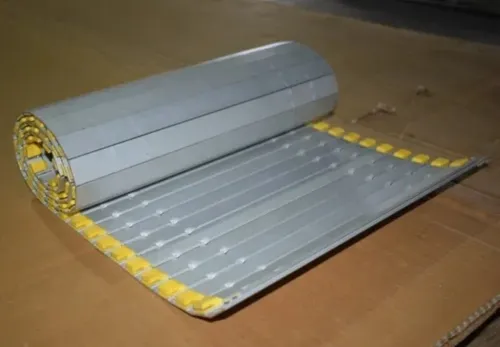
| Stainless-steel lamellae or slats | Improves puncture and heat protection | Adds mass, noise and drive load; a telescopic steel cover suits severe hot chips, rigid containment and large open areas |
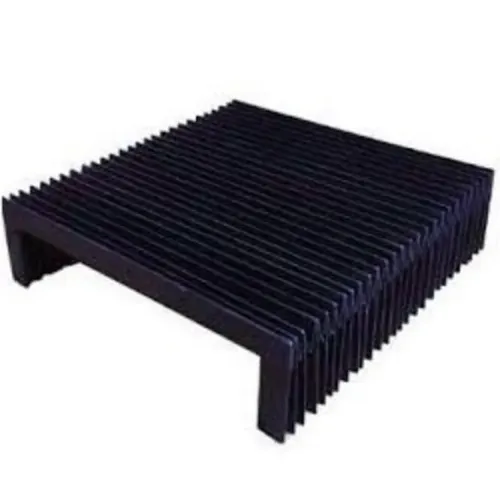
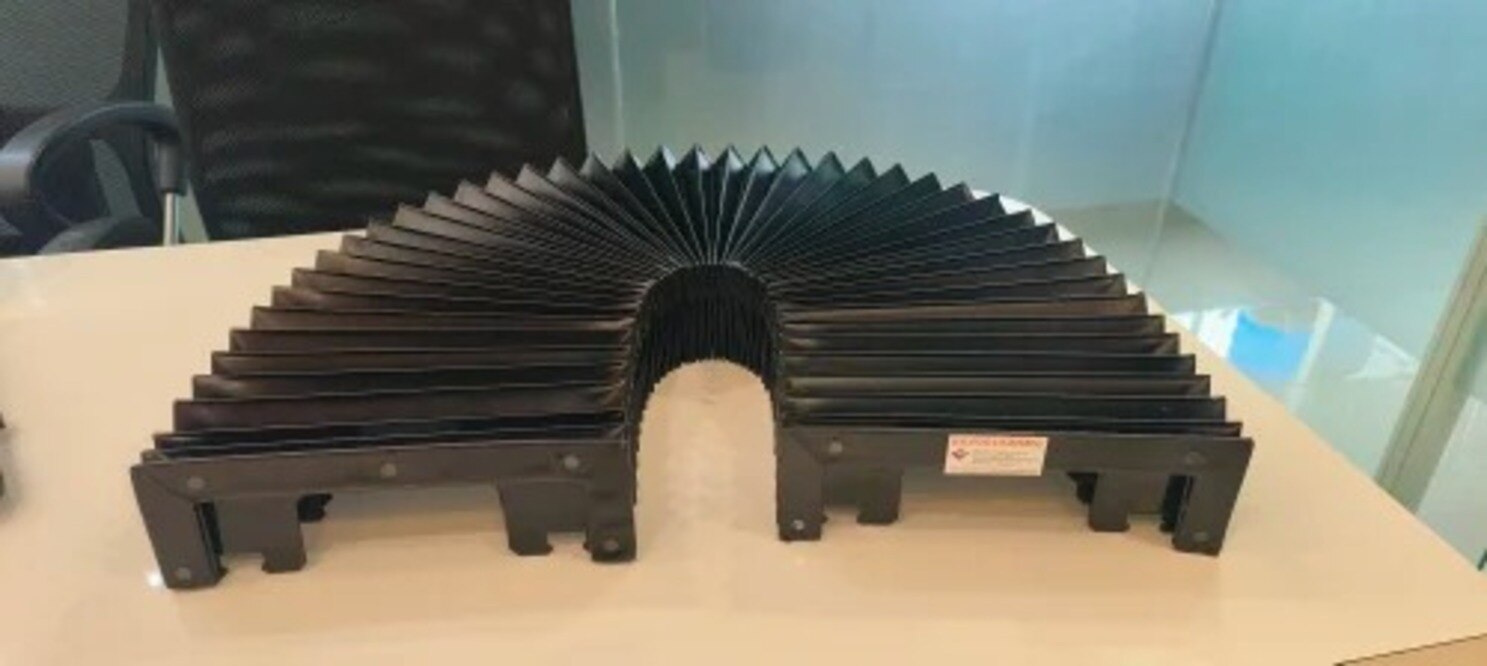
Set fold pitch, bend radius, fold height, frame spacing, seam position and compressed package so high-speed folds neither buckle nor rub. Add wear strips, support strips or framed pleats when sagging threatens the guideway, then check the added inertia and acceleration load.
A scraper or wiper cleans a surface; it does not enclose a moving guideway. Specify drainage where liquid can collect and sealed seams where abrasive debris enters from the fold direction.
A laser machine bellow cover in Surat still needs separate guarding when laser-radiation containment is required: the bellow is not automatically a Class 4 laser enclosure. Review the complete guard against ISO 12100 and ISO 14120.
What are the manufacturing steps from drawing to finished bellow?
The process starts with an approved drawing and ends with a documented, full-stroke inspection. Each stage protects the cover from premature tearing, buckling, twisting or heat damage.
1. Review the drawing for open and closed lengths, fold count, pitch, bend radius, frame spacing, mounting holes, attachment direction and every interference clearance.
2. Select the bellows fabric, coating, reinforcement layers, heat-resistant or abrasion-resistant surface layer, fold-frame material, mounting plates and fasteners. Match the construction to sparks, chips, coolant, oils and folding temperature.
3. Cut coated fabric panels to developed dimensions, including seam allowances, fold geometry and corner details. Incorrect allowances change the finished pitch and closed package.
4. Form equal pleats around a folding former. Do not force a bend radius smaller than the fabric permits, or the coating will crack and the fold will fatigue.
5. Cut, drill and deburr internal guide frames, support strips or slats before joining them to the fabric assembly.
6. Join seams and corners by sewing, bonding, heat-sealing, thermal welding, riveting or mechanical clamping. Choose the method for the coating and service temperature; an incompatible joint can open beside the fold.
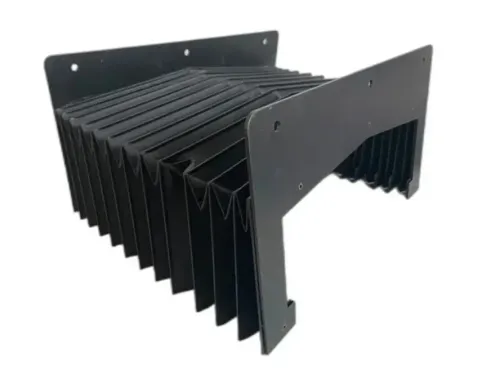
7. Attach end frames or mounting flanges square to the bellow. Close exposed edges, reinforce high-wear corners, remove sharp fastener projections and add a replaceable outer layer where repeated sparks strike.
8. Clean out cutting debris, mark the intended travel axis and record the material construction, temperature limits and installation orientation. Inspect the cover extended and compressed, confirm dimensions and hole centres, then cycle it through full travel to catch rubbing, twisting or interference.
How do you inspect and install the cover without causing a new failure?
Accept the cover only after it passes inspection in both fully extended and fully compressed states. Compare these measurements with the approved drawing:
1. Check overall width, open and closed lengths, fold height, fold count, frame spacing, mounting-hole centres, flange thickness and corner squareness.
2. Examine every seam and corner for gaps, delamination, cracked coating, loose stitches, incomplete welds and punctures. Confirm that no rivet, slat or frame edge can touch the rail.
3. Clean both mounting surfaces before installation. Align the end frames with the guideway, tighten fasteners evenly and keep the bellow square to the direction of motion.
4. Do not force extra folds into the closed package or let the cover compress against the carriage. Confirm clearance from the rail, cable carrier, laser head, nozzle, lubrication points, sensors and maintenance access panels.
5. Cycle the cover manually or on the machine through the complete axis travel before production resumes. Watch for rubbing, snagging, buckling at either travel limit or contaminants pooling inside low folds.
Record the final measurements and photograph the installed interface. That record gives the next replacement a verified mounting pattern instead of an unreliable copy of an aged cover. If any interference appears, stop the machine and correct the fit before production.
What should you request from a Surat supplier before approving production?
Before fabrication, ask a Bystronic machine bellow cover supplier for an approval drawing or inspection sheet. Do not approve a cover from “heavy-duty” alone; the document must define the machine interface, construction and operating limits.
1. Require the Bystronic machine model, axis, fold pitch, fold height, number of folds, open and closed lengths, frame construction, mounting-hole pattern and movement direction. Record material layers, coating, reinforcement, temperature and chemical limits, plus restrictions on spark exposure.
2. Share how the old cover failed. Hot-spatter punctures need a different outer layer from fold-crest abrasion. Coating delamination, torn corners and permanent over-compression may require changed seams, reinforcement, frame geometry or a redesigned compressed package.
3. For a Bystronic laser bellow replacement in Surat, accept local production only after the supplier reproduces the original interface or completes an on-site measurement. A wrong flange or compressed package can damage the machine despite sound textile workmanship.
4. If comparing a laser machine bellow cover in Surat, require full-stroke cycling before production. Check clearance from the cable carrier, nozzle and adjacent guarding at both travel limits, then document the installed fit, dimensions and orientation for repeat procurement.
Treat the cover as one part of the machine’s protection system, not proof of laser safety. Kalavijay Engineering can be compared with other qualified fabricators using the drawing, inspection record and application limits rather than a generic claim.
Related products
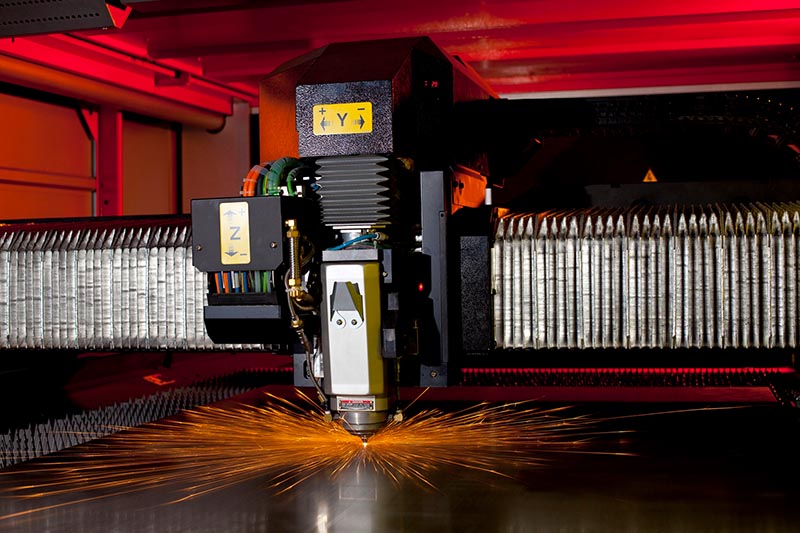 | Bellow Cover Bystronic Laser Machine Bellow Cover We are professtional factory. We sell all consumables and functional parts applicable for most OEM brands including... View product → |
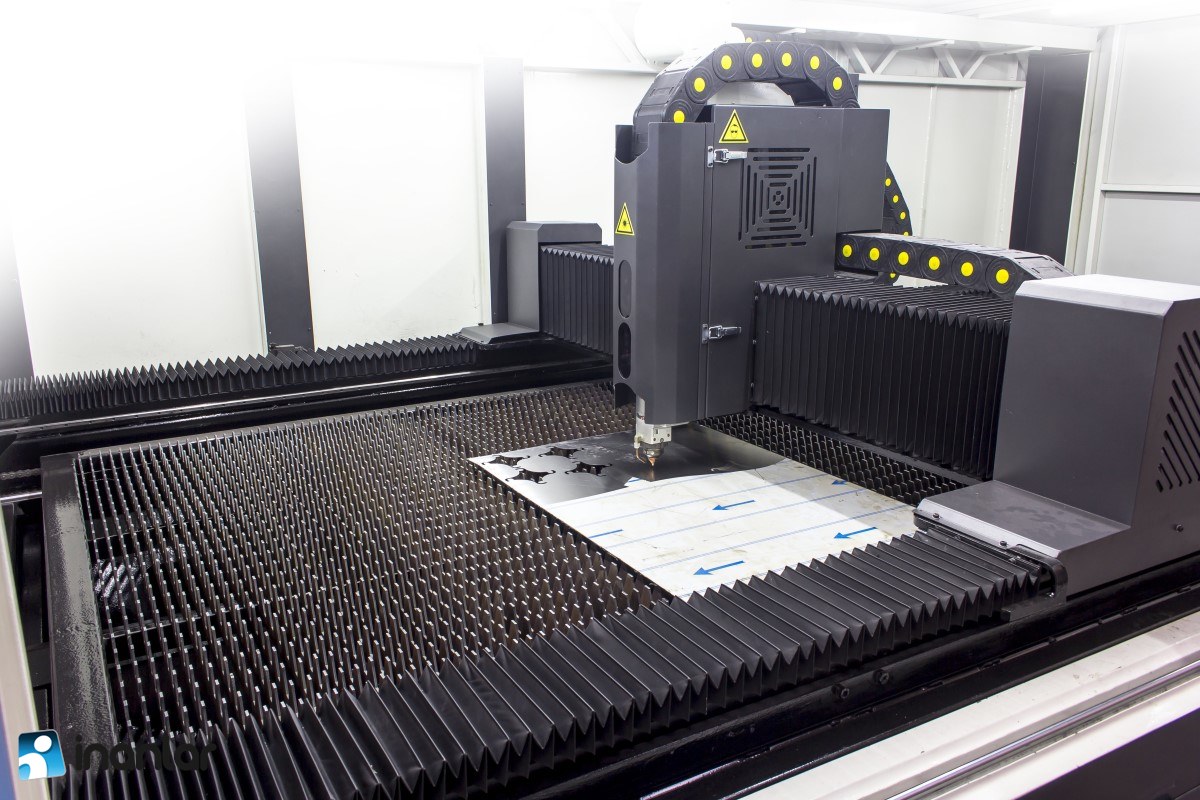 | Bellow Cover We are professtional factory. We sell all consumables and functional parts applicable for most OEM brands including... View product → |
Frequently asked questions
How do you measure a Bystronic machine before requesting a replacement?
Record the machine model, production year, axis designation and installed location. Measure rail or guideway width and height, available cover width, extended and compressed lengths, fold height, fold count, open and closed heights, and movement direction.
Which materials and bellow design suit a laser cutting axis?
Select a flexible cover material that withstands the axis environment, including heat, sparks, coolant, dust and metal chips. Match the fold geometry, reinforcement, mounting method and travel direction to the machine’s available space and motion cycle.
What are the manufacturing steps from drawing to finished bellow?
The process starts with measured dimensions and mounting details, followed by a technical drawing, material selection, cutting, folding or forming, reinforcement, frame and mounting preparation, stitching or bonding, and final dimensional and movement checks.
How do you inspect and install the cover without causing a new failure?
Compare the finished cover with the approved drawing, check fold height and compressed length, inspect seams and attachments, and verify that no surface rubs the guideway or moving parts. Install it in the correct movement direction, then run the axis slowly before full-speed operation.
What should you request from a Surat supplier before approving production?
Request a dimensioned drawing, material specification, mounting details, fold count, extended and compressed dimensions, delivery scope, inspection method and confirmation that the supplier has checked clearance across the full axis travel.
Related product
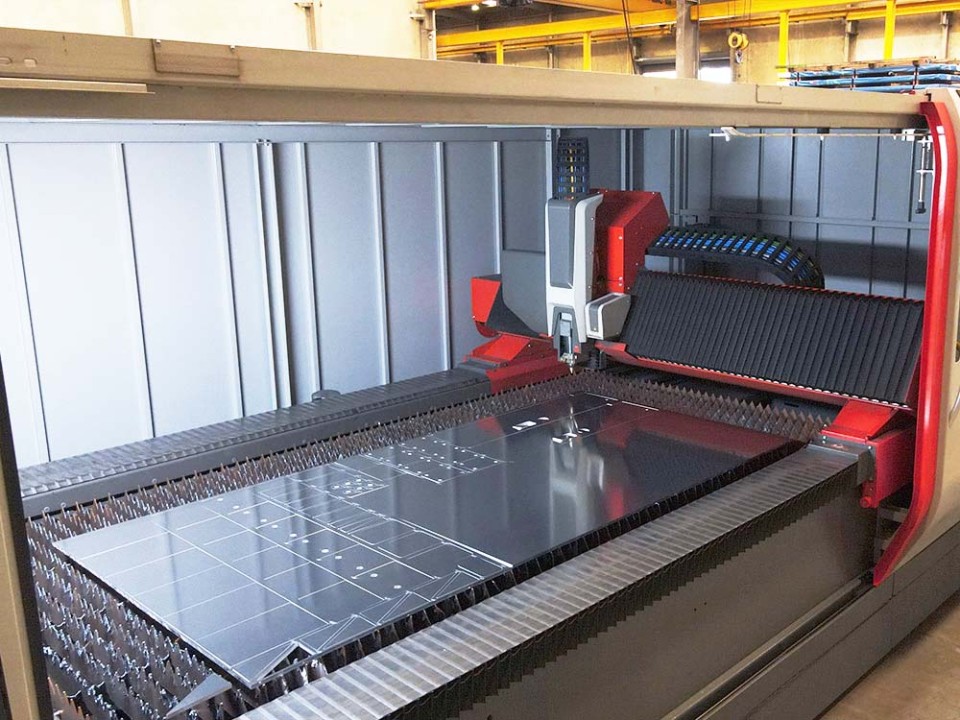 | Bellow Cover Kalavijay has developed steel-clad bellows to meet special requirements. View product → |