
A replacement cover fails when its dimensions, fold movement, materials, or mounting details are guessed from the machine brand alone. By the end, you will understand each manufacturing stage, know what measurements and documents to provide, and have a practical basis for comparing a bellows cover with other machine-protection designs.
Key takeaways
- Identify the exact TRUMPF model, axis, travel, clearance, and mounting pattern.
- Convert measured travel and folded height into a dimensioned manufacturing drawing.
- Specify heat-, coolant-, chip-, spark-, and laser-process-resistant materials for the exposure.
- Require movement, fit, seam, frame, and visual checks before shipment.
What information defines a Trumpf laser machine bellow cover?
A TRUMPF laser machine bellow cover is a custom moving enclosure, not a universal spare part. Confirm the exact machine model, cover location, axis, mounting pattern, travel direction, and whether a cable carrier or laser head shares the clearance zone. The machine brand alone cannot define a safe fit.
- Identify the axis and record its stroke, movement direction, mounting orientation, and both travel limits.
- Measure the cover’s width, height, fully extended length, compressed length, fold pitch, end-frame dimensions, flange holes, and available clearance.
- Describe the exposure: laser power, cutting material, hot-chip and spark direction, smoke, dust, slag, coolant, lubricant, and operating temperature.
- Provide travel speed, acceleration, cycle frequency, guideway or ballscrew position, cable-carrier path, sensors, and optical-component clearance.
| Information to confirm | Why it defines the cover |
|---|---|
| Machine and axis | Establishes the correct geometry and movement |
| Dimensions and mounting | Prevents stretching, fold inversion, rubbing, and loose flanges |
| Operating conditions | Selects coated fabric, aramid reinforcement, stainless-steel lamellae, seams, and heat-resistant construction |
| Safety boundary | Confirms that the bellows protects contamination-sensitive parts but does not replace the laser enclosure, doors, viewing panels, or interlocks |
For reliable TRUMPF machine protection, request a reviewed drawing, material data sheet, dimensional inspection record, and replacement or warranty procedure before production begins.
How are the cover dimensions measured and converted into a drawing?
A damaged cover is evidence, not a production drawing. Measure the machine and inspect the old cover together: wear can stretch fabric, flatten folds, or distort the mounting frame.
- Record the cover location, axis travel direction, and mounting orientation.
- Measure the overall width and height, fully extended length, and compressed length.
- Measure fold pitch, number of folds, fabric thickness, and clearance to rails, cables, sensors, and the laser head.
- Trace each end frame, flange, hole centre, slot, radius, and fixing pattern.
- Mark interference zones and note where sparks, slag, coolant, smoke, or cutting dust strike the cover.
- Photograph the cover installed and fully compressed to confirm the measurements.
The manufacturer converts these measurements into a scaled CAD model, then checks the model against the machine’s available envelope. The drawing defines the unfolded and folded geometry, fold count, pitch, material layers, reinforcement, frame dimensions, hole positions, seam locations, and dimensional tolerances.
It must also show the travel direction; reversing the folds can make the cover buckle or rub during motion.
For a Trumpf laser machine bellow cover for manufacturing process, request the drawing for approval before cutting material. Compare its mounting points and compressed height with the machine, not merely with another Trumpf laser bellows cover. Approve a revision-controlled drawing, because production based on an unmarked sketch can repeat the original fit error.
How are materials, folds, frames, and seams assembled?
A measured sample or approved drawing controls every cut. The manufacturer marks the extended and compressed lengths, fold pitch, mounting holes, clearance zones, and travel direction before cutting coated fabric, aramid reinforcement, stainless-steel lamellae, or other specified layers.
Cutting machines produce repeatable panels and end pieces; a wrong fold allowance can make Trumpf laser bellows buckle or drag against the guideway.
The assembly sequence usually follows these steps:
- Fold lines are formed to the specified pitch, either by controlled pressing, pre-forming, or fixture folding. Consistent valleys and crowns prevent uneven compression.
- Reinforcement strips, wear layers, and heat-resistant inserts are positioned where sparks, chips, coolant, or repeated bending create the greatest load.
- Plastic or metal slats, anti-collapse guides, and internal frames are installed between folds. They preserve the bellows shape, stop layers rubbing together, and keep the cover away from rails, cables, and the laser head.
- End frames or mounting flanges are aligned to the machine’s hole pattern, then fixed with sewn, bonded, riveted, or clamped joints specified by the construction.
- Seams are thermally welded or heat sealed when compatible coated fabrics require a continuous barrier. Heat, pressure, dwell time, and tool temperature must match the material; excessive heat can shrink fabric or weaken the coating.
The finished assembly must compress without sideways migration and extend without frame distortion. This is what makes the cover useful for TRUMPF machine protection: it blocks dust, slag, sparks, lubricant, and coolant from moving components without becoming a new obstruction.
How is a finished bellows cover tested before packing?
The finished TRUMPF laser machine bellow cover must prove three things before packing: full travel without distortion, resistance to its specified hazards, and clearance from every moving machine part.
1. Compare packed, extended, and compressed lengths, fold pitch, width, height, end-flange positions, and frame alignment with the approved drawing. A dimensional mismatch predicts installation trouble even when the fabric looks sound.
2. Install the cover on the machine or a representative test rig and cycle it through the complete stroke at the specified speed and acceleration. Check both travel limits and intermediate positions for rubbing, fold inversion, stretching, buckling, loose stitching, seam opening, or frame collapse.
3. Observe clearance while the cable carrier, guideway, ballscrew, sensors, and laser head follow their own paths. Stop the test if a fold enters a rail, catches a cable, contacts an optical component, or reduces clearance at either limit.
4. Expose the finished cover to the specified cutting dust, chips, slag, sparks, coolant, lubricant, smoke, and heat. Inspect coated fabric, aramid reinforcement, lamellae, heat-sealed seams, and mounting joints for scorching, swelling, cracking, delamination, or leakage.
5. Attach the dimensional inspection record, material data, and cycle-test result to the shipment. This evidence completes the TRUMPF laser machine bellow cover for manufacturing process and distinguishes a compatible TRUMPF laser machine bellow cover from a visually similar replacement.
Which protection design and supplier evidence fit your machine?
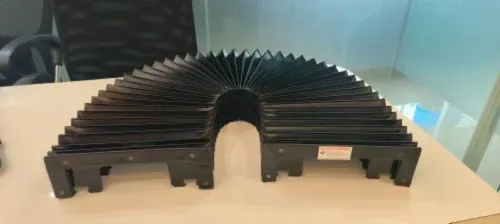
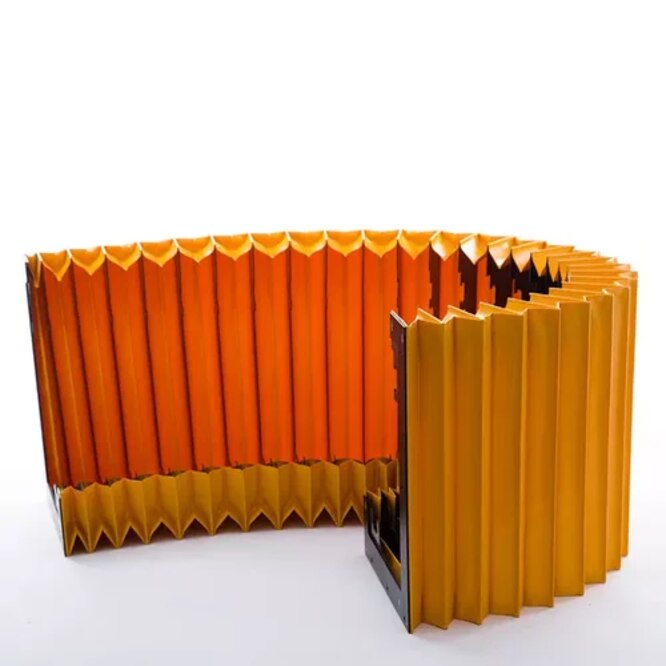
Choose a bellows cover when the axis needs flexible, low-mass protection around changing geometry, tight clearances, or a moving laser head. It shields guideways, ball screws, sensors, and cable carriers from dust, coolant, sparks, slag, and cutting debris.
| Option | Best fit | Limitation |
|---|---|---|
| Bellows cover | Irregular clearances, frequent travel, compact axes | Needs correct fold pitch, frame guidance, and heat-resistant construction |
| Telescopic steel cover | Rigid, exposed guideways with room for stacked sections | Heavier; needs space and accurate alignment |
| Stainless-steel-clad bellows | Sharp hot particles, sparks, and abrasion | Costs more and adds weight |
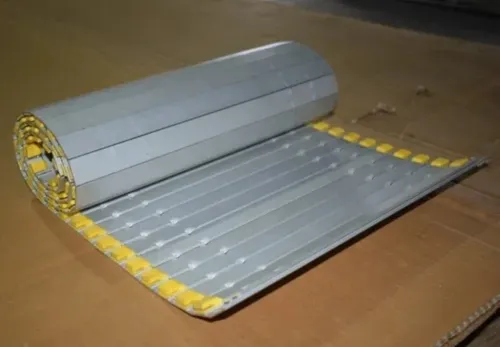
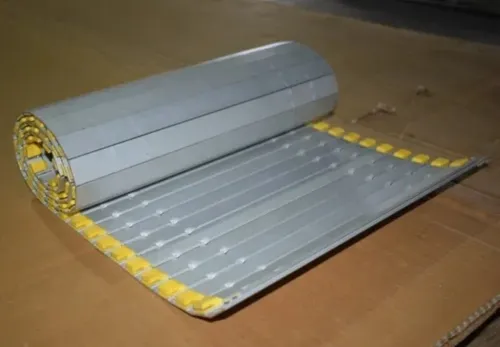
| Roller blind | Long, straight travel where compact retraction matters | Less suitable for heavy debris or complex mounting |
| Exposed wiper | Clean axes with light dust only | Not adequate for laser-cutting debris, sparks, or coolant |
For a laser machine bellow supplier in Surat, request the approved drawing, material data sheet, dimensional inspection record, and written replacement or warranty procedure. The drawing must show mounting holes, extended and compressed lengths, fold direction, travel, clearance, and interference zones; “TRUMPF” alone proves nothing.
Ask how the supplier checks repeatability between covers and handles damage during service. Kalavijay Engineering is worth comparing on that evidence, not location. Remember that trumpf machine protection is not automatically laser safety: the enclosure, doors, viewing panels, interlocks, and controls need separate assessment under ISO 14120 and laser-specific requirements.
A trumpf laser bellows protects machinery, not people from laser radiation.
Related product
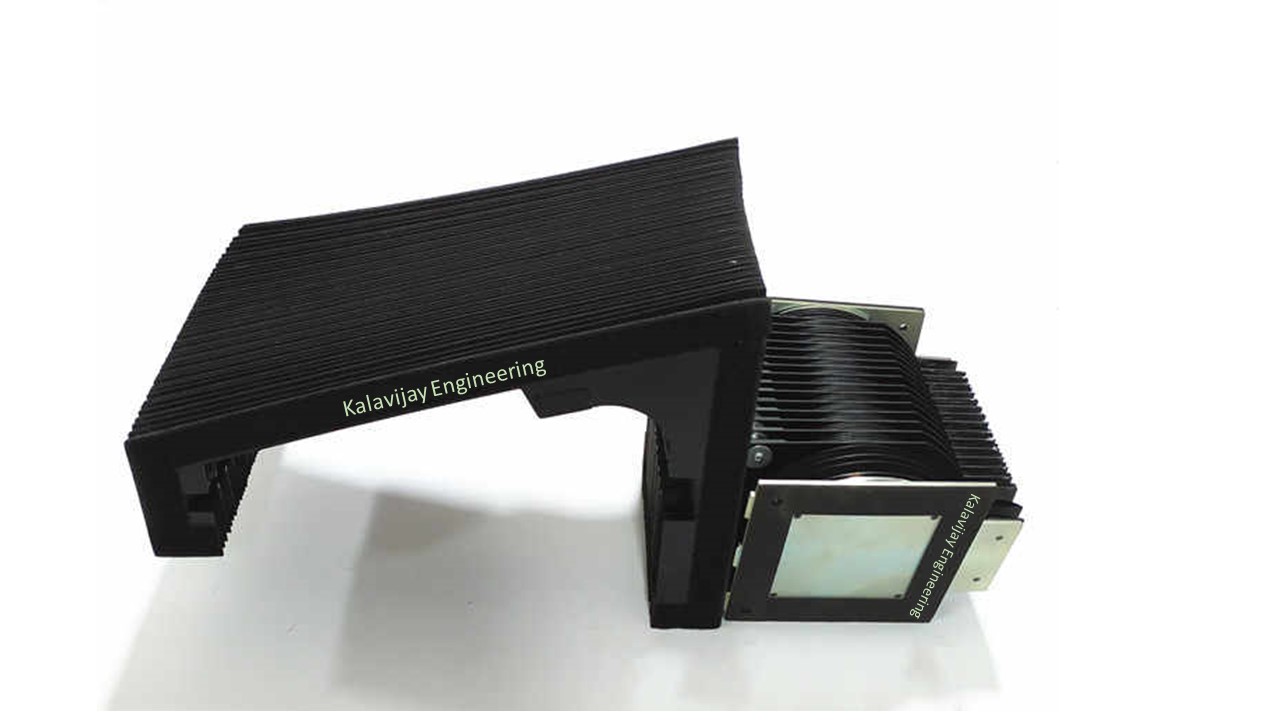 | Laser Machine Bellow We offer Trumpf Laser Bellows made specifically for your Trumpf laser machine. View product → |
Frequently asked questions
What information defines a TRUMPF laser machine bellow cover?
Record the exact machine model, cover location, axis, travel direction, mounting pattern, folded and extended lengths, and nearby cable carriers or laser-head clearances.
How are TRUMPF laser bellows dimensions converted into a drawing?
Measure the available envelope, mounting faces, travel, compression space, and clearance points, then transfer those values into a drawing showing overall dimensions, fold pitch, frame details, and attachment points.
How are materials, folds, frames, and seams assembled?
Select the outer fabric, internal support, fold geometry, frame material, and seam method for the chips, coolant, heat, sparks, and motion present at the machine location.
How is a finished bellows cover tested before packing?
Inspect dimensions, mounting holes, fold consistency, seams, frame alignment, surface defects, and full extension and compression through the required travel.
What supplier evidence fits a TRUMPF machine protection requirement?
Ask for a dimensioned drawing, material details, photographs of comparable covers, inspection records, repair capability, and clear confirmation of the machine model and mounting arrangement.