
Choosing by width and price alone can leave a machine with cable abrasion, excessive sag, chip ingress or a carrier that cannot survive its acceleration profile. By the end, you will be able to compare carrier construction, size the usable interior, verify dynamic load limits and request the supplier data needed for a defensible selection.
Key takeaways
- Choose split, enclosed, or open chain by chips, coolant, heat, and access needs.
- Set bend radius from the largest cable’s manufacturer specification, not the chain width.
- Keep cable fill near 60% and leave room for free movement.
- Ask suppliers for load, travel, material, bend-radius, and inspection details.
Which plastic drag-chain construction fits the machine environment?
Choose the carrier by the dominant hazard, not by width or price. These plastic drag-chain options suit different machine environments:
| Option | Construction | Best fit | Main trade-off |
|---|---|---|---|
| Standard open | Open links with visible cables | Easy inspection, chip shedding, low mass | Less protection from falling debris |
| Chip-resistant enclosed | Covered links or hinged cover | Chips and falling debris | Debris can accumulate inside; not automatically liquid-tight or IP-rated |
| Low-noise | Reduced-contact or damped links | Textile, packaging and high-cycle machines | Check speed, wear and noise data |
| Cleanroom-oriented | Low-particle materials and controlled surfaces | Clean manufacturing areas | Higher selection cost and stricter contamination limits |
| Bridge-style | Open support bridges over the cable bundle | Ventilation, access and moderate debris | Less shielding than fully enclosed construction |
| Fully enclosed | Continuous cover around the bundle | Heavy chip exposure and falling coolant | Inspection and cleaning take longer |
For a plastic cable drag chain in Surat, assess the complete path: cable exits, end connectors, mounting brackets and the machine interface. A polyamide carrier for humid service also needs moisture-conditioned ratings; absorbed moisture changes dimensions and mechanical behaviour.
A fixed-radius model holds one set curvature. A bend-radius model must match the cable or hose’s minimum dynamic bend radius. Modular chains allow link or length changes; assembled chains reduce installation work.
Plastic brings lower mass, lower noise and corrosion resistance, but choose steel or a specialised carrier for hot swarf, radiant heat, impact, aggressive chemicals or heavy unsupported loads.
How do you size the carrier interior, bend radius and cable fill?
Start with every cable and hose outside diameter, then calculate the bundle around the separators. Add clearance between lines, between the bundle and chain walls, and around each separator; a tight sum leaves no room for movement or heat dissipation.
Use the carrier’s usable internal height and width, not its outer dimensions. As a planning limit, keep cable occupation near 60% of the usable interior, then replace that figure with the carrier maker’s stated fill limit when one is available. Outer dimensions alone can make a plastic cable drag chain comparison in Surat misleading.
The largest cable or hose sets the bend requirement. Take its manufacturer-stated minimum dynamic bend radius, select a chain radius equal to or greater than that value, and confirm both manufacturers use the same reference: inside radius, centreline radius or outside radius. A fixed-radius chain imposes one curvature; a bend-radius option offers selectable curvature.
Their nominal radius numbers are not comparable until the reference convention matches.
Request these figures for a defensible machine cable carrier comparison:
- Chain pitch and exact internal and external height and width
- Radius options and radius reference convention
- Permissible cable fill, payload and unsupported-length chart
- Material grade, including moisture-conditioned polyamide ratings, and temperature range
- Separator dimensions, mounting hardware and replacement-link availability
Do not substitute fixed-installation PVC cable for continuous-flex cable. Verify the cable’s dynamic bend radius, stroke, speed, acceleration and expected cycle count; the cable can fatigue, abrade or damage its shield while the carrier remains intact.
How do travel, load and motion determine the right chain?
A chain is suitable only if its span, payload and motion match the actual axis. Record travel length, unsupported length, mounting orientation, cable-and-hose payload, usable internal height and width, minimum bend radius, speed, acceleration, reversing frequency, stroke length and cycle frequency before comparing plastic drag chain options.
Use the manufacturer’s load-versus-span chart at the actual added load, then check the permitted travel limit. Width alone misleads: a wide carrier filled with hydraulic hoses can sag sooner than a narrow carrier carrying control cables.
| Machine cable carrier comparison | What to check | Failure risk |
|---|---|---|
| Control-cable load | Unsupported span at payload and travel limit | Sag, rubbing and unstable movement |
| Hydraulic or pneumatic load | Hose stiffness, bend radius and added load | Higher sag and link stress |
| High-duty axis | Acceleration, reversals, stroke and cycle count | Premature wear despite the rated maximum speed |
Maximum speed is incomplete as a rating. Acceleration, frequent reversals, stiff cables, short strokes and high cycle counts can determine service life. Fit separators or horizontal dividers for different diameters and stiffnesses, strain relief and end connectors at both ends, guide channels, and a support roller for long travel.
Strain relief carries cable pull-out forces; the chain guides the moving loop.
Choose steel or a specialised high-temperature carrier for high radiant heat, hot swarf, chemical exposure, impact or unusually heavy unsupported hose loads. Plastic is not automatically safer in those conditions.
What should you ask a plastic cable chain supplier in Surat?
Send a plastic cable chain supplier in surat a written duty sheet before asking for a price. This turns a machine requirement into comparable quotations instead of a choice based on width alone.
1. Record the application: travel, unsupported span, mounting orientation, payload, each cable and hose outside diameter, largest dynamic bend radius, speed, acceleration, cycle frequency, ambient temperature, dust, chips, coolant and humidity. For a plastic cable drag chain in surat, request humidity-conditioned ratings for polyamide service; moisture can change dimensions and mechanical behaviour.
2. Ask for chain pitch, minimum bend radius, usable internal height and width, permissible fill and load, unsupported-length charts, travel limits, noise characteristics, temperature range, material grade, mounting hardware and replacement-link availability. Select the chain radius from the largest cable or hose manufacturer’s dynamic bend radius, then confirm both suppliers use the same radius reference.
3. Require the quotation to identify the construction: open, enclosed, bridge-style, fully enclosed, low-noise or cleanroom-oriented. Ask whether the price includes separators, horizontal dividers, end connectors, strain relief, guide channels and support rollers.
4. Request the assembled length, exact internal and external dimensions, and an installation drawing showing mounting interfaces and clearances. A quote listing only width, length and price cannot support a defensible machine-protection decision.
Kalavijay Engineering can use this checklist to distinguish application-fit hardware from a nominal chain price and to document replacement-link requirements before installation.
Related products
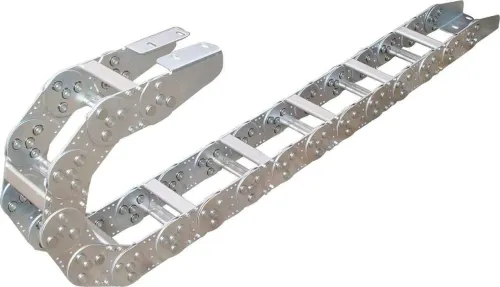
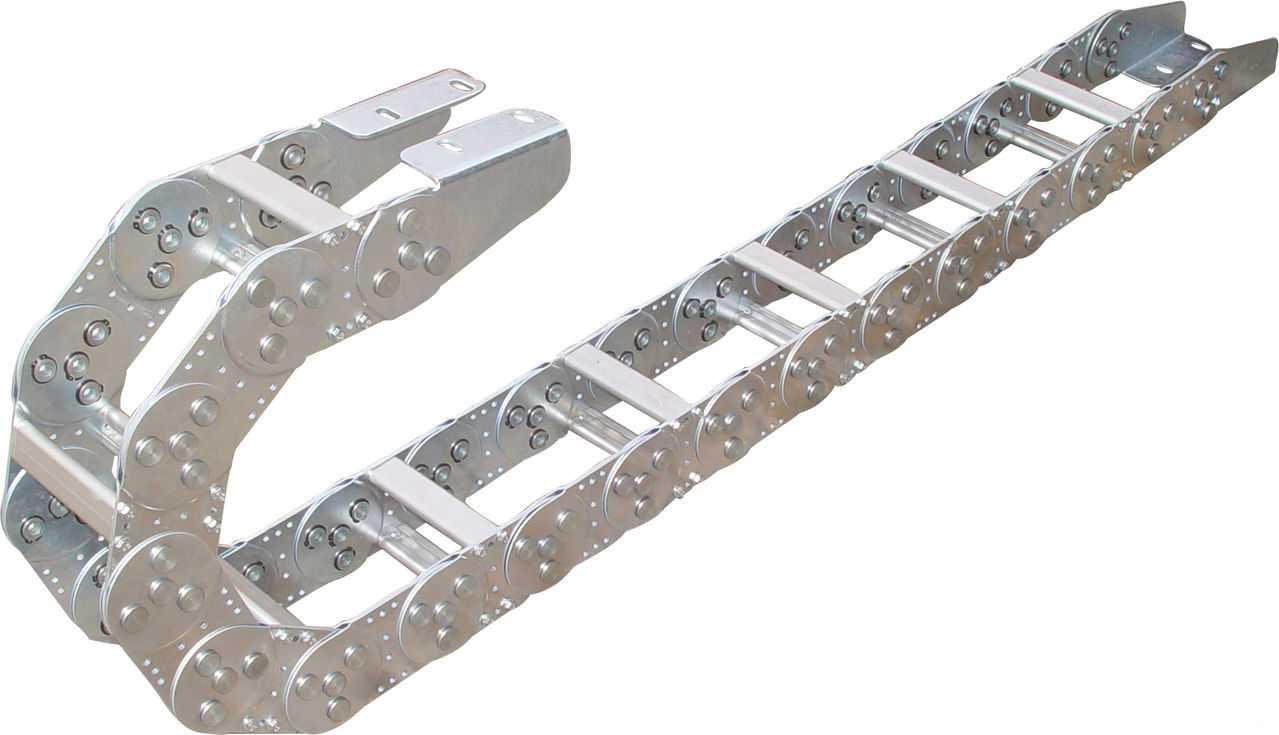 | Metal Cable Drag Chain We are offering Stainless Steel Cable Drag Chains used for steel industries, foundries and metal treatments. View product → |
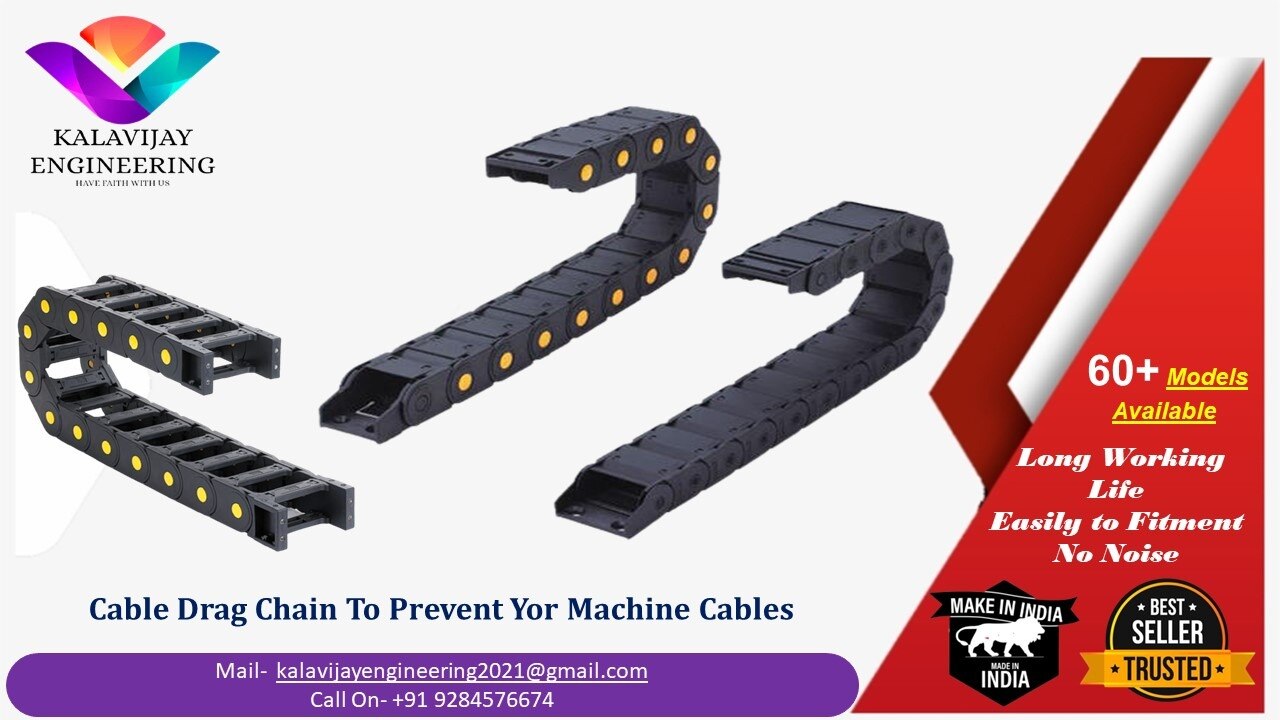
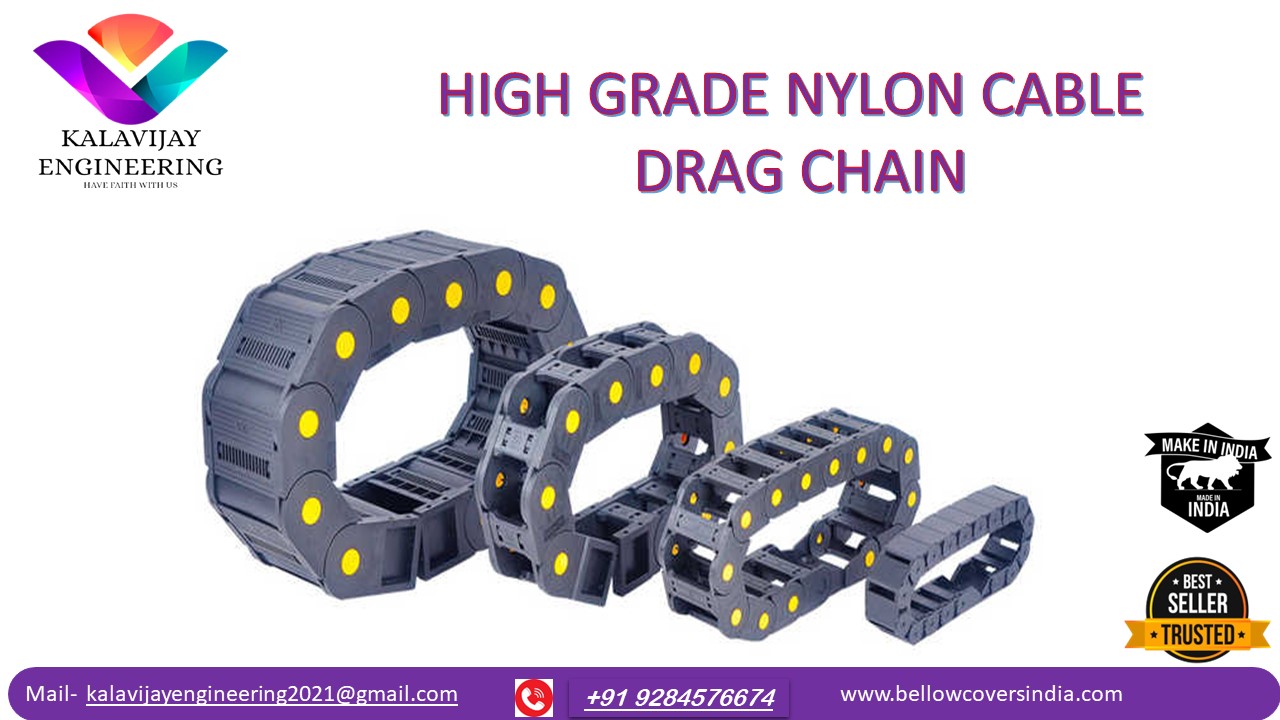 | Drag Chain ➢ Material -reinforced nylon, with high pressure and tensile load, good toughness, high elasticity and wear resistance, flame retardant, stable... View product → |
How should you install and inspect the carrier in a Surat workshop?
An acceptable carrier fails after installation when the bundle is twisted, overpacked or forced against the bend. Lay cables and hoses parallel, leave the specified bend slack, anchor every cable at both ends, and never clamp the moving bundle inside the bend.
For a plastic cable drag chain comparison in Surat, complete the installation checklist:
- Use separators when power, signal, pneumatic and hydraulic lines differ in diameter or stiffness.
- Align mounting brackets, prevent side-loading, and confirm the moving loop has full clearance.
- Check end strain relief so the chain guides movement without carrying cable pull-out forces.
- Set inspection intervals by duty cycle and contamination. Shorten them in dusty, chip-heavy or coolant-heavy CNC, grinding and fabrication areas; extend them only after records show stable wear.
plastic cable drag chain in Surat inspections should compare each observation with the commissioning baseline.
| Condition | Inspection response |
|---|---|
| Cable rubbing or damaged jacket | Remove the cause and inspect terminations |
| Side loading or excessive sag | Check alignment, payload and unsupported span |
| Seized or cracked links | Stop the machine and replace damaged parts |
| Chips or coolant deposits | Clean debris without forcing it into joints |
| Loose brackets or fasteners | Tighten and verify the mounting interface |
At every inspection, check jackets, terminations and fasteners, then compare sag and noise with baseline readings. Record chain length, bend radius, payload and condition so the replacement matches the installed duty rather than the width alone.
Frequently asked questions
Which plastic drag-chain construction fits a machine environment?
Use an open carrier for easy access and light debris, a covered carrier for chips and coolant, and a reinforced design for higher loads or longer unsupported spans. Check heat, sparks, chemicals, and impact before choosing the material.
How do you size a plastic cable drag chain?
Measure every cable and hose, add clearance between lines, and select an interior width that keeps total fill near 60%. Set the chain bend radius at or above the largest cable manufacturer’s specified minimum.
How do travel, load, and motion determine the right chain?
Match the carrier to travel length, unsupported span, moving mass, speed, acceleration, and cycle frequency. Confirm the manufacturer’s load chart instead of selecting by cable width alone.
What should you ask a plastic cable chain supplier in Surat?
Ask for material grade, operating temperature, bend-radius options, allowable load, travel limits, link and mounting dimensions, delivery scope, and replacement-part availability.
How should you install and inspect the carrier in a Surat workshop?
Anchor both ends squarely, keep cables parallel without twisting, maintain the specified bend radius, and inspect links, separators, mounts, and cable jackets for wear after commissioning and at planned intervals.
Related product
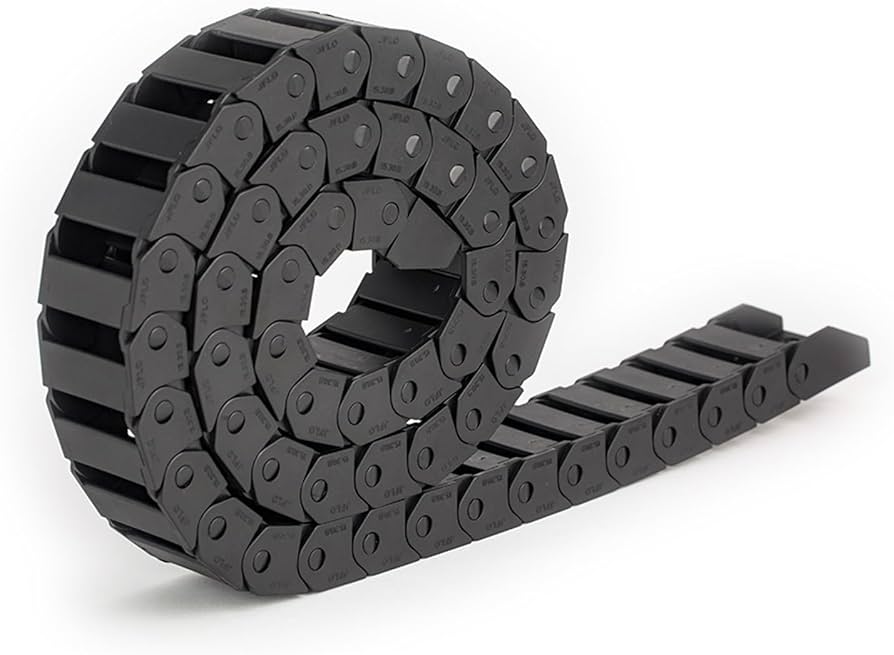 | Cable Carrier ➢ Material -reinforced nylon, with high pressure and tensile load, good toughness, high elasticity and wear resistance, flame retardant, stable... View product → |