
Pinholes, cracked fold roots and coolant appearing on a guideway indicate more than a cosmetic defect: the cover may no longer protect precision components. You will be able to identify the failure, decide whether to clean, repair or replace the cover, and prepare the measurements needed for a reliable replacement in Surat.
Key takeaways
- Inspect folds, coating, seals, mounting points, and exposed guideways.
- Clean the cover before deciding whether damage needs repair or replacement.
- Reject covers with failed attachment, exposed guideways, or unsafe structural damage.
- Measure travel, compressed length, expansion, and mounting details before ordering.
How to Recognise CNC Bellow Cover Wear and Its Causes
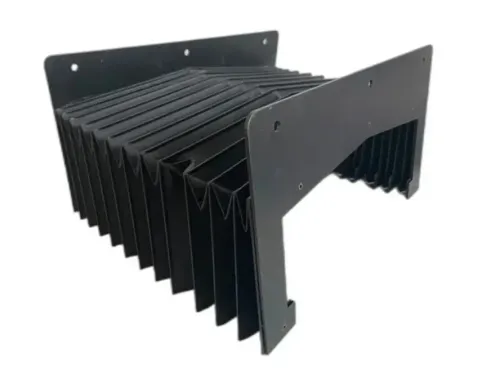
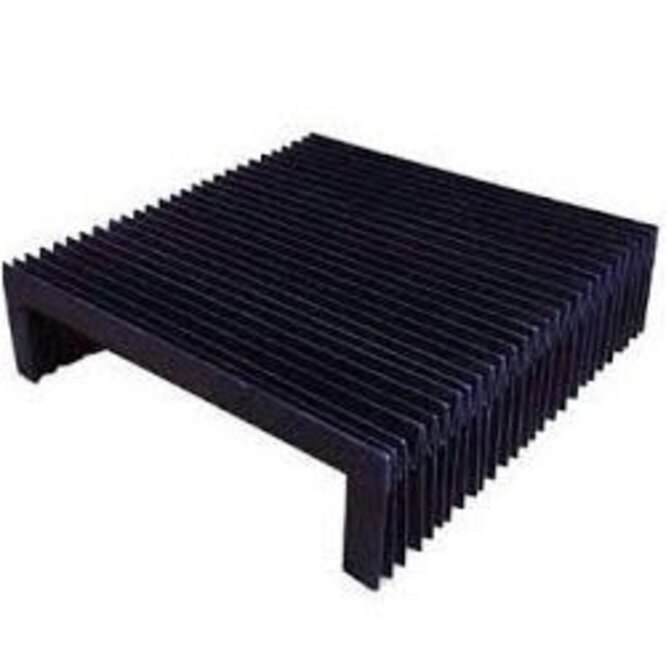
CNC bellow cover wear means any loss of sealing, flexibility, strength or secure mounting. It includes pinholes, cracking, delamination between fabric and coating, frayed folds, stiff or collapsed pleats, coolant leakage, exposed guideways and damaged mounting points.
A sound outer face does not prove the cover is healthy: chips and coolant collect in fold valleys, while flexing exposes the underside to thinning and pinholes.
- Inspect every fold root, valley, underside, seam and end frame with the cover locked out and backlit. Move it through its full safe travel; a pleat that no longer opens evenly, hardens, swells or collapses is damaged, even without a visible hole.
- Match the failure to its cause. Abrasive chips wear the coating; hot swarf and sparks scorch or melt it; alkaline or oil-based coolant and cutting oil attack fabric, adhesive and coatings. Repeated flex-fatigue cracks fold roots, while excess travel bottoms out pleats.
- Check installation and history. Poor mounting, lifted fasteners, incorrect storage folds and unsupported hose or cable-carrier loads distort the cover. Repeated rubbing against a casting, cable carrier or adjacent cover indicates interference or misalignment, not normal service wear. One-sided scuffing is the clearest warning; replacing fabric without correcting contact will repeat the failure.
- Record the failure location, axis position during rubbing, coolant type and concentration, chip type, relevant temperature observations and each repair date. That evidence separates contamination from material failure and guides recovery.
The Diagnostic Sequence: Clean, Repair, or Remove from Service
A cover that looks dirty is not automatically worn, but a cover that still leaks after cleaning has failed its protective function.
1. Lock out the machine, isolate stored energy and obtain safe access before touching the cover. Remove chips with a soft brush or vacuum; a scraper or metal hook can turn trapped swarf into a puncture.
2. Inspect every fold with a light behind it, then move the cover through its full travel where safe. Check both compressed and extended positions for pinholes, separated coating, exposed stitching, cracked creases, hardening, swelling, lifted mounting strips and folds that open unevenly.
3. Choose cleaning only when the material regains its shape and sealing after dried coolant and chips are removed. Persistent holes, coating separation or damaged stitching require a local repair if the defect is isolated and the surrounding folds remain flexible.
4. Choose partial replacement when damage affects several adjacent pleats or a detachable section, but the frames, mounting points and remaining geometry stay sound. Specify complete replacement when folds are broadly embrittled, collapsed or swollen, mounting strips are lifting, or the cover cannot seal throughout its stroke.
A worn cover can remain in limited service only when it still seals, travels freely and keeps debris away from protected surfaces. Stop production if chips or coolant reach guideways, guide trucks, ballscrews, linear scales, encoders or lubrication paths. Continued running can cause contamination, damaged guide trucks and unplanned downtime.
Treat the defect as machine-protection failure, not cosmetic damage.
CNC Bellow Cover Maintenance Checklist for Surat Workshops
Inspect a CNC bellow cover after chip-heavy runs or whenever coolant carries onto the folds; do not rely on a fixed calendar interval. Long, sharp chips and heavy spray demand more frequent checks than dry cutting with fine, non-abrasive dust.
1. Lock out the machine and clear access. Remove chips with a soft brush or vacuum, not a scraper or metal hook.
2. Examine every pleat and fold root for pinholes, cracking, fraying, stiffness, collapse, delamination and coolant leakage. Check the underside after cleaning; a sound outer face can hide thinning at fold valleys.
3. Check wipers, fasteners, end plates, stitching, adhesive joints and mounting strips for lifting, looseness, distortion or separation.
4. Confirm guideway clearance with the cover compressed and extended. Move through the full stroke where safe, watching for rubbing, sag, trapped folds or restricted movement. Record the axis position whenever rubbing occurs.
5. Record the failure location, coolant type and concentration, chip type, relevant measured temperatures, and every repair or replacement date. Fold-root cracking points to flex fatigue; one-sided scuffing points to interference or misalignment.
6. Keep cable-carrier loads, hose drag and unsupported external weight off the bellow unless its design includes those loads. They distort folds and damage seams or frames.
A way-protection bellow blocks chips and coolant; it is not a machine guard. Fixed and movable guards must still prevent access to hazardous moving axes under the applicable machinery-safety requirements.
Repair Options and the Point at Which Repair Becomes Unsafe
A single, isolated puncture can receive a compatible fabric patch and adhesive as an emergency recovery. Clean and dry the area first, then accept the patch only after it restores sealing and survives short-term flexing without immediate lifting or leakage.
| Failure | Matching recovery | Acceptance focus |
|---|---|---|
| One small puncture | Compatible patch | Seal holds; short flexing causes no lifting or leakage |
| Damaged pleat or detachable section | Replace the pleat or section | Original travel and fold shape return |
| Exposed or failed seam | Restitch with compatible thread and backing | Seam remains closed through movement |
| Separated fabric or coating | Rebond with compatible adhesive | Bond stays attached during flexing |
| Bent or damaged end frame | Replace or straighten the frame after inspection | Mounting is square, secure and sealed |
Patching becomes unsafe when damage extends across several folds, the coating has turned brittle, stitching is failing, or end frames are bent or loose.
Do not patch over distorted geometry: if the original folds cannot open symmetrically, or the seal cannot be restored across the full stroke, the cover can leak chips and coolant onto the guideway.
In a request for a cnc machine bellow cover for repair in Surat, state whether you need emergency patching, a partial rebuild with replacement pleats or detachable sections, or complete new manufacture.
A temporary repair is judged by sealing and short-term flexing; a new cover also requires dimensional confirmation, material compatibility, travel clearance and expected service life.
How to Measure and Approve a CNC Bellow Replacement
A machine model is not enough to specify a replacement. For cnc machine bellow replacement in surat, provide a dimensioned drawing or physical sample because identical models can have different travels, retrofits and mounting clearances.
1. Record the movement envelope: compressed length, extended length, stroke, fold count, fold pitch, cover height and width, mounting-frame dimensions, hole pattern and end-plate thickness. Missing compressed length or fold pitch can make the bellow bottom out before the axis reaches full travel.
2. Add operating conditions: travel direction, machine-axis orientation, guideway clearance, speed, acceleration, installation position, coolant and oil type or exposure, chip type, and measured chip or coolant temperature. State whether the cover faces hot swarf, continuous spray or abrasive chips.
3. Request a pre-fabrication confirmation drawing showing folded geometry, mounting points, clearances and travel limits. Approve it only after checking maximum compression, maximum extension and an intermediate position: the folds must move freely, avoid adjacent parts, show no sag or interference, mount securely and protect the full way.
4. At receipt and installation, compare the cover with the approved drawing and run the axis through its safe stroke under lockout-controlled testing. Record rubbing location, axis position, fitment result and any leakage; this evidence is more useful than a material claim alone.
Evaluate Kalavijay Engineering or any Surat supplier on that evidence, the defined repair scope, material compatibility and acceptance checks. In a request, distinguish an emergency patch, detachable-section replacement and complete new manufacture; each requires a different approval standard.
Related products
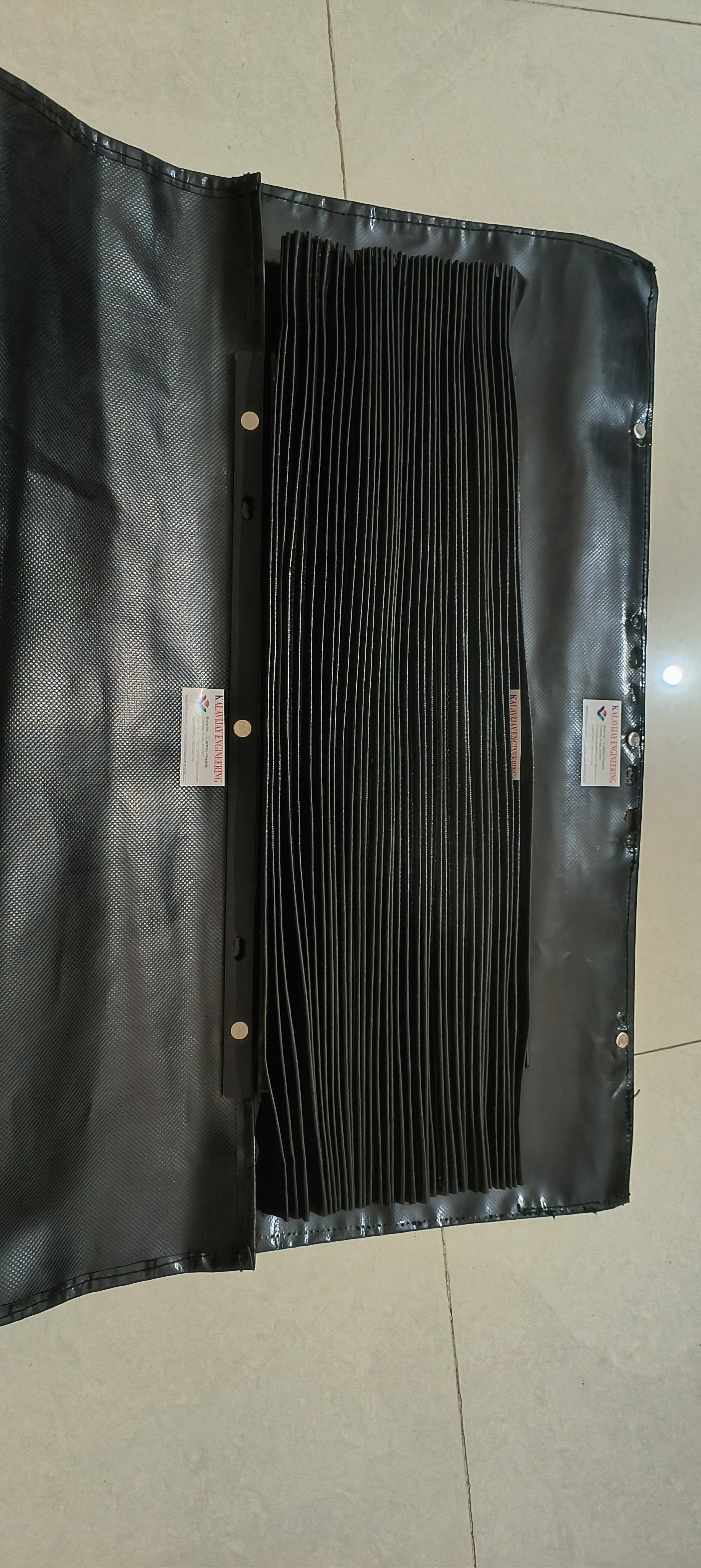 | Bellow Cover Kalavijay Engineering Manufacturing the Heavy Duty Milling Machine Bellow Cover. View product → |
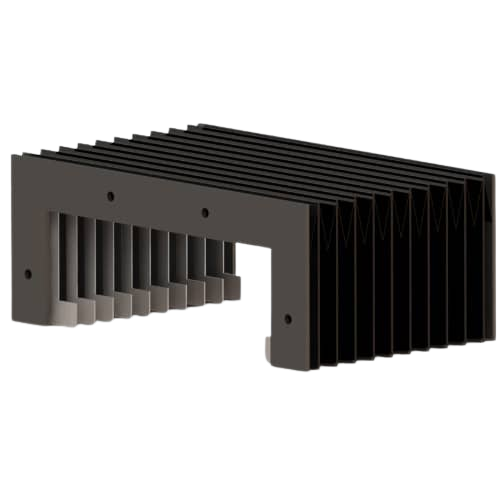 | Bellow Cover Some machines like the 5 axis grinding machine in the tool manufacturing industry require protection of the rails and ball screws from hundreds of... View product → |
Frequently asked questions
How do you recognise CNC bellow cover wear?
Look for pinholes, cracking, coating delamination, frayed folds, stiff or collapsed pleats, coolant leakage, exposed guideways, and damaged mounting points.
Should you clean or repair a worn CNC bellow cover?
Clean the cover first, inspect every fold and attachment, then repair only damage that does not compromise sealing, flexibility, strength, or secure mounting.
When is CNC bellow cover repair unsafe?
Repair is unsafe when the cover has widespread cracking, failed fabric or coating, collapsed pleats, exposed guideways, or mounting damage that cannot hold securely.
What measurements are needed for a CNC bellow replacement in Surat?
Record travel length, compressed length, expanded length, folded height, width, pleat dimensions, mounting-hole locations, material requirements, and clearance around moving parts.
Related products
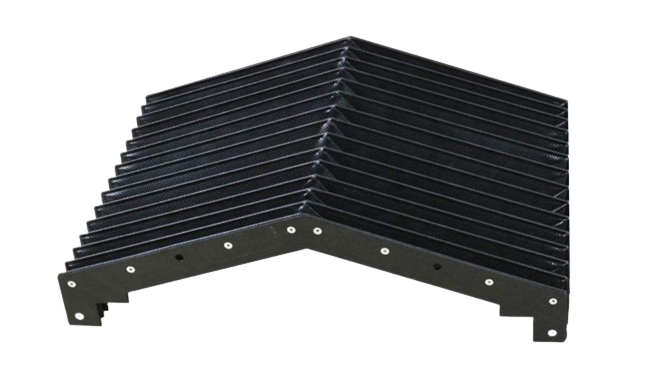 | Bellow Cover We are considered a well-known name in the business that manufactures and supplies CNC Bellow Cover. View product → |
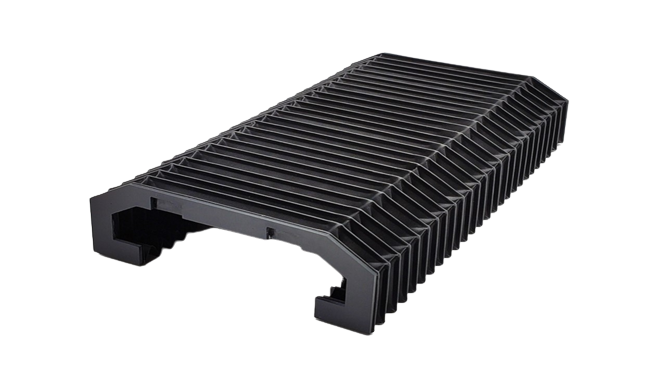 | Bellow Cover Marble Cutting Machine Bellow Cover We are offering a broad collection of Bellow Cover is used in a variety of machines to prevent dust particles, metallic chips and foreign particle. View product → |
 | Telescopic Cover We are a leading manufacturer of CNC Machines Telescopic Cover. The offered product is manufactured using optimum quality raw materials. View product → |
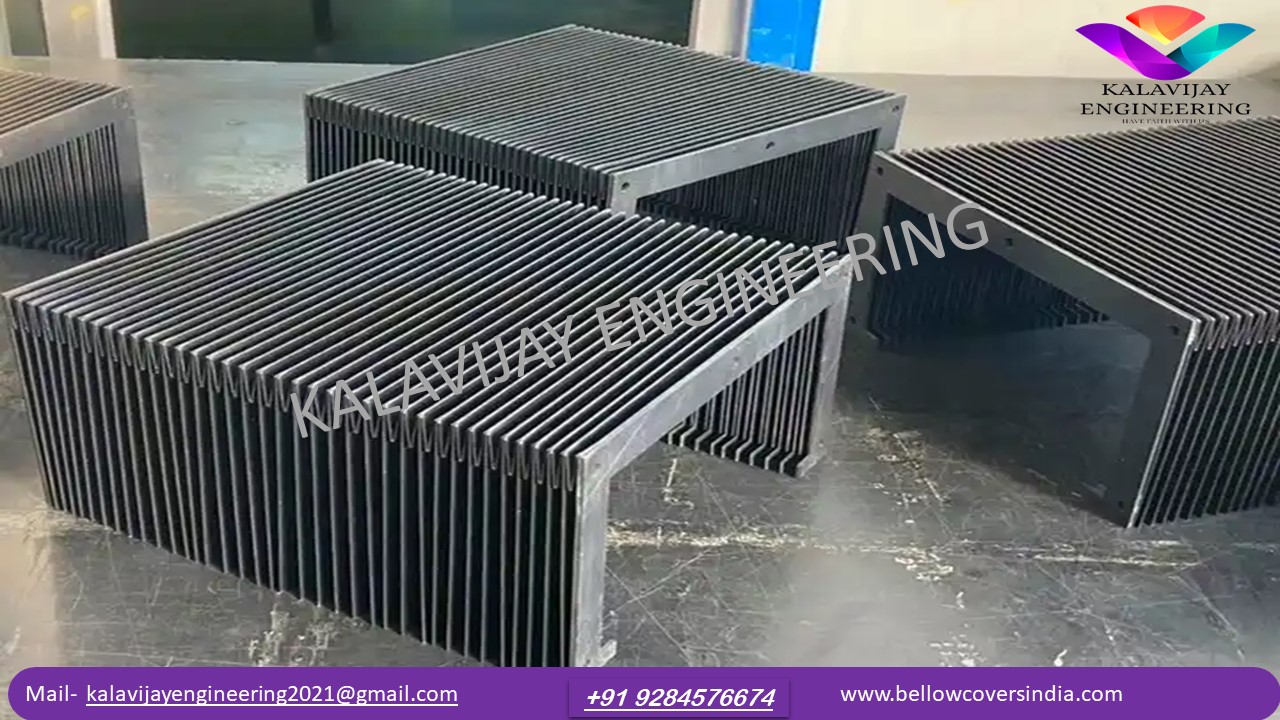 | Bellow Cover Stone Engraving Machine Nylon Bellow Cover Kalavijay Engineering, we are here to present an unparalleled assortment of Stone Engraving Machine Nylon Bellow Cover. View product → |