
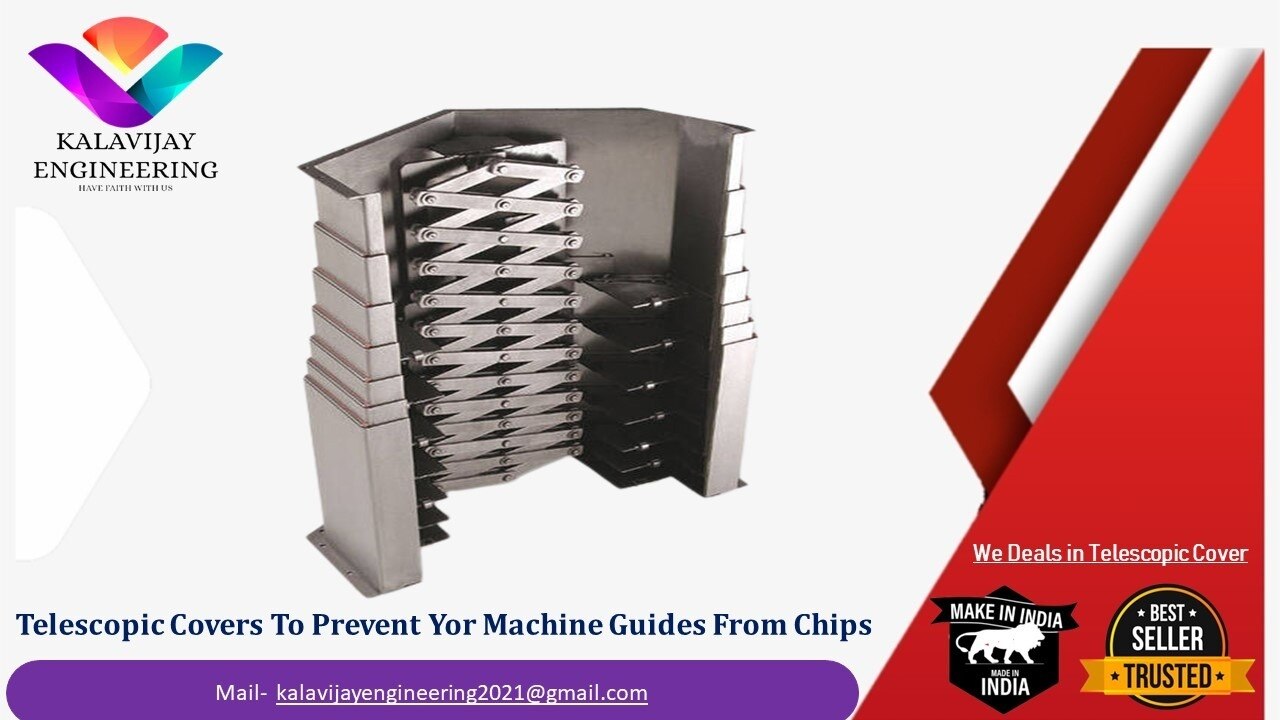
The wrong cover can restrict axis travel, trap chips between sliding boxes, overload a mounting face or fail after repeated coolant exposure. You will be able to measure the machine, specify the cover, compare materials and wipers, and approve a supplier drawing before placing an order.
Key takeaways
- Measure axis limits, usable stroke, guideway dimensions and mounting orientation.
- Compare cover sizes by closed length, extended length and movement clearance.
- Match sheet, coating and wipers to chips, coolant, heat and sparks.
- Give suppliers drawings, travel data and interface details before requesting a quote.
Start with the axis, stroke and machine envelope
Identify whether the cover serves the X, Y or Z axis, then record maximum and minimum axis positions, usable stroke, guideway width and height, mounting orientation, and nearby moving parts.
Measure available space at both end positions, not only the exposed guideway; the spindle, table, tool changer, chip conveyor, coolant hoses, lubrication lines and cable carrier can occupy the clearance envelope.
Record these dimensions before requesting a CNC telescopic cover in Surat:
- Closed-length limit and required extended length
- Cover width, cover height and guideway dimensions
- Mounting-face size, hole pattern and available service access
- Clearance around the spindle, table, tooling and cable carrier
- Cover mass, centre of gravity and removal path
A dimensioned sketch should show the cover’s position at both travel limits, including mounting plates and any interference points. A horizontal cover and a vertical cover with the same stroke face different loading conditions, so also record rapid-traverse speed, acceleration, deceleration, cycle frequency and stroke direction. Speed alone does not define motion capability.
Treat the cover as a machine-component protection device for guideways, ball screws and axes, not as a complete personnel guard. Assess access to hazardous motion separately through the machine’s risk assessment and guarding arrangement.
Compare CNC telescopic cover sizes by movement, not nominal width
A cover fits and moves correctly only when its full motion envelope matches the machine, not when its nominal width matches the guideway. Request a dimensioned general-arrangement drawing showing extended length, retracted length, stroke, width, height, box count, overlap, mounting-face dimensions, hole pattern, total mass and centre of gravity.
| Dimension | What to verify | Failure if ignored |
|---|---|---|
| Extended and retracted length | Clearance at both machine end positions | The cover bottoms out or blocks tooling |
| Stroke and box count | Enough travel, with usable overlap between boxes | Boxes separate, bind or expose the guideway |
| Width, height and overlap | Guideway coverage and chip-sealing margin | Chips enter through gaps or the cover strikes nearby parts |
| Mounting face and hole pattern | Exact datum, fastener and plate locations | Forced installation distorts the boxes |
| Mass and centre of gravity | Support stiffness and axis loading | The cover sags, vibrates or overloads the drive |
CNC telescopic cover sizes are not a width-by-length catalogue category. Two covers with the same nominal width can require different box counts, guide arrangements, overlaps and closed lengths; more boxes support a long stroke but increase the retracted package, alignment interfaces and possible chip-entry points.
Check the drawing against maximum and minimum positions, adjacent tooling, cable carriers, lubrication lines and the service-access path. Confirm removal without dismantling major assemblies. Require limits for mounting distortion, squareness or parallelism, plus permitted speed with acceleration, orientation, stroke direction and test conditions. Reject any approval based on one overall dimension or an unscaled photograph.
Choose sheet, coating and wipers for the actual cutting environment
A painted mild-steel cover that survives light coolant can fail quickly under hot steel chips, abrasive cast-iron dust or wash-down cleaning. Describe the contamination before selecting sheet thickness, box support and wipers.
| Exposure | Construction response | Specify before approval |
|---|---|---|
| Hot steel chips | Heat-tolerant sheet, supported boxes and wipers that resist cutting | Chip temperature, sheet thickness, wiper material |
| Cast-iron dust | Abrasion-resistant surfaces, rigid box support and replaceable wipers | Dust load, surface treatment and guide-element wear |
| Glass or ceramic particles | Hard-wearing finish, protected sliding interfaces and chip-shedding geometry | Particle size, box support and replacement method |
| Heavy coolant flow | Sealed interfaces with drainage from horizontal surfaces | Coolant chemistry, flow direction and drainage path |
| Wash-down or saline exposure | Corrosion-resistant material or a documented coating system | Cleaning chemicals, humidity, storage and salt exposure |
Ask whether the construction uses 304 or 316 stainless steel, painted steel or another coated steel. Choose 304 or 316 only after checking coolant chemistry, humidity, storage and saline exposure; request surface preparation, coating layers and repair instructions, not “painted finish.”
Wipers must tolerate coolant, cleaning chemicals, chip temperature and abrasion while following box movement. Obtain the wiper material, replaceable arrangement and spare-part number.
Inspect nested boxes for pockets that drag chips inward and cause scratches or jamming. Specify how rollers, guide elements or sliding shoes resist wear, and select a custom CNC telescopic cover with separate consumable part numbers.
Give a custom-cover supplier enough information to design the interface
Use a custom CNC telescopic cover when a catalogue design cannot fit the machine’s geometry or operating load. Choose custom fabrication for an unusual stroke-to-closed-length ratio, restricted installation space, vertical or inclined travel, nonstandard mounting faces, severe heat, abrasive dust, unusual coolant flow, or interference from tooling and cable carriers.
Send the supplier:
- Machine make and model; X, Y or Z axis; axis travel; horizontal, vertical or inclined orientation; maximum and minimum positions; and mounting direction.
- Guideway width and height, datum surfaces, mounting-face dimensions, hole pattern, hole tolerances, fasteners, and available clearance at both end positions.
- Closed-height and extended-height limits, required cover width and height, travel limits, and the machine’s clearance envelope.
- Material preference, coolant type, chip size and temperature, abrasive-dust exposure, drainage direction, and wiper arrangement.
- Rapid-traverse speed, acceleration, deceleration, cycle frequency, cover mass limit, and nearby tooling, hoses or cable carriers.
Provide a dimensioned 2D interface drawing and a 3D machine-interface model when available. Require the drawing to show extended and retracted length, stroke, box count, mounting faces, wear-component replacement method and allowable mounting distortion. Ask for alignment requirements and permitted mounting error in writing.
A cover cannot correct guideway misalignment, uneven mounting or machine deflection; those faults cause rubbing, leakage and box collisions.
Compare Surat suppliers using an approval and acceptance checklist
Evaluate a CNC telescopic cover supplier in Surat by approved evidence, not the lowest quote. Request a dimensioned general-arrangement drawing from every shortlisted supplier before comparing prices. For a CNC telescopic cover in Surat, record each supplier’s answers in the same comparison sheet.
| Check | Supplier A | Supplier B | Acceptance basis |
|---|---|---|---|
| Extended/retracted length, stroke, box count | Record values | Record values | Matches the machine envelope |
| Mounting holes, mass, centre of gravity | Record drawing references | Record drawing references | Fits without excessive mounting distortion |
| Material, thickness, coating, wipers, guides | Record specifications | Record specifications | Suits chips, coolant and cleaning chemicals |
| Drainage, spares and service access | Record details | Record details | Works in the actual coolant direction |
Ask Kalavijay Engineering to confirm these details in writing, just as you should ask every shortlisted supplier. Put these acceptance tests in the purchase order:
- Smooth travel through the full stroke, with no interference with the spindle, table, tool changer, hoses or cable carrier.
- Correct mounting dimensions and specified squareness or parallelism at the relevant faces.
- No visible damage after a representative motion test at the intended speed, acceleration and cycle frequency.
- Defined leakage or drainage behaviour for the actual coolant direction.
Obtain part numbers and replacement intervals for wipers, sliding shoes, rollers, seals and fasteners. Separate those consumables from the complete cover, then confirm installation support, replacement-part lead time and service access before calculating total cost.
Related products
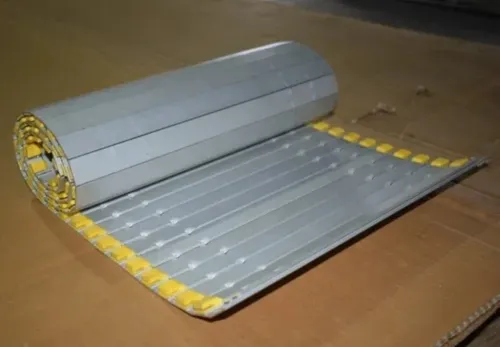
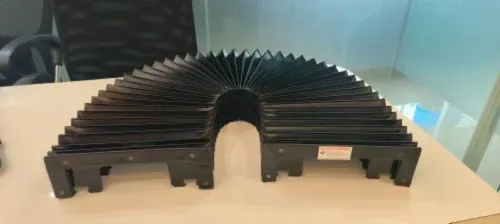
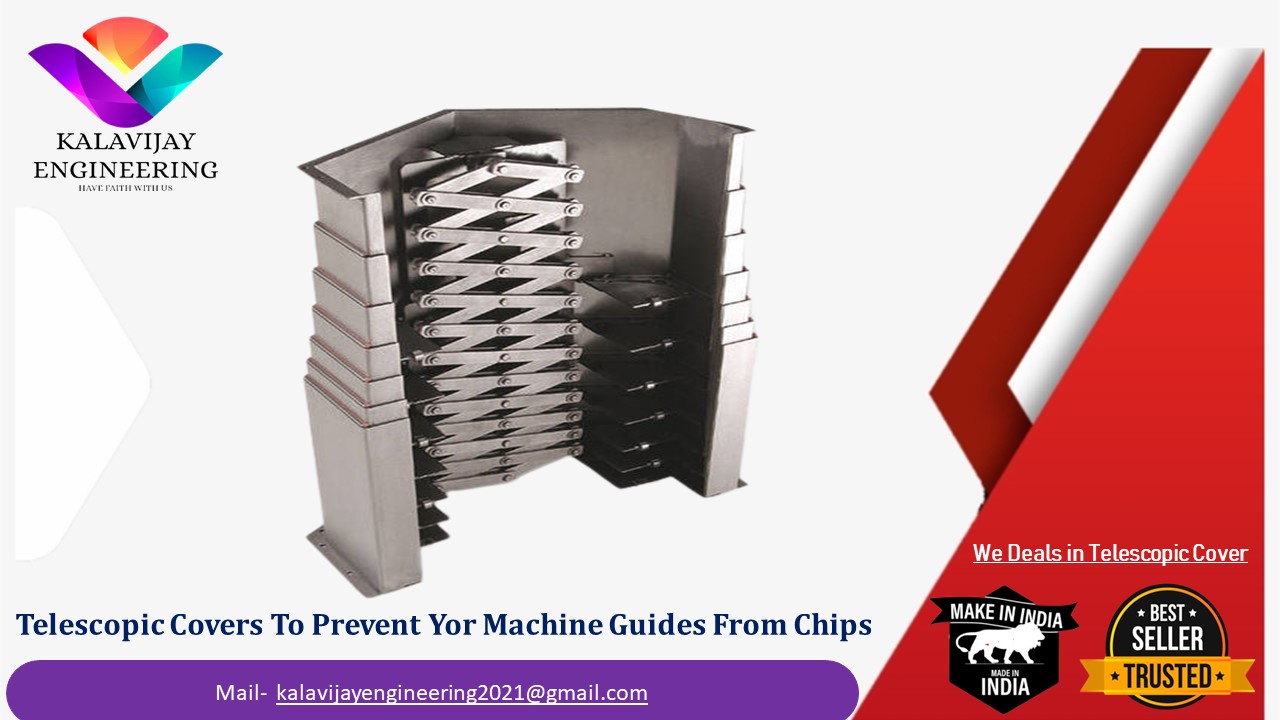 | Telescopic Cover We are a leading manufacturer of CNC Machines Telescopic Cover. The offered product is manufactured using optimum quality raw materials. View product → |
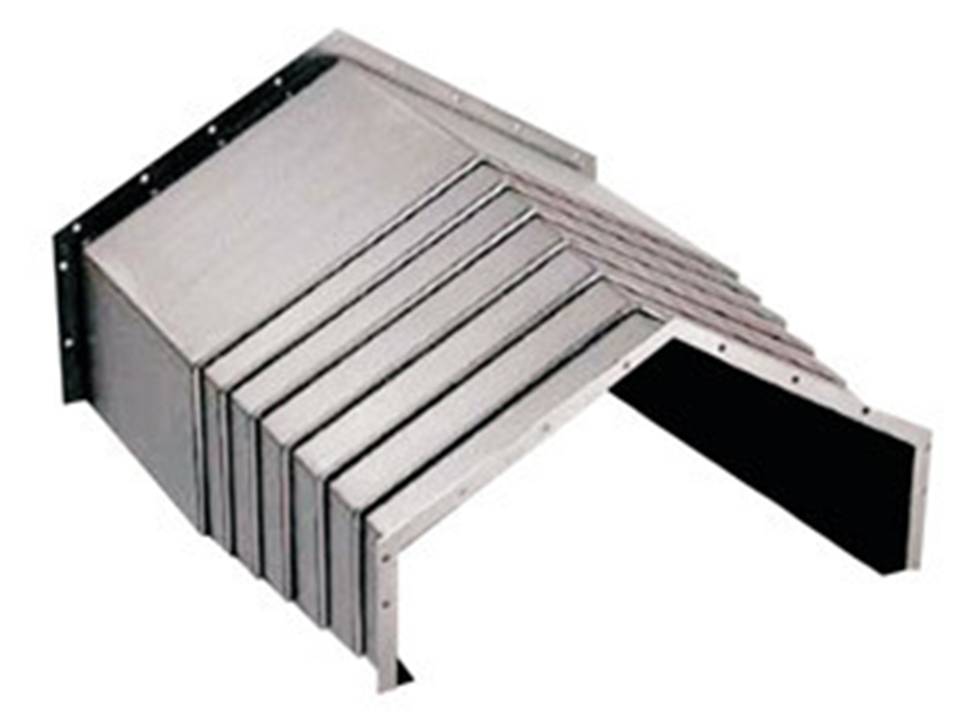 | Telescopic Cover Telescopic Cover For VMC Machine Telescopic covers will protect your Ball Screw from Metalic chips, Dust etc........... View product → |
Frequently asked questions
What measurements do you need before choosing a CNC telescopic cover?
Record the X, Y or Z axis, maximum and minimum positions, usable stroke, guideway width and height, mounting orientation, and nearby moving parts.
How should you compare CNC telescopic cover sizes?
Compare closed length, extended length, usable stroke, stage movement, guideway coverage and clearance from adjacent machine components instead of relying only on nominal width.
How do cutting conditions affect telescopic cover selection?
Choose the sheet material, coating and wiper design for the actual chips, coolant, heat, sparks and abrasive dust produced by the machine.
What information should you send a custom CNC telescopic cover supplier?
Send axis travel limits, guideway dimensions, mounting faces, bolt patterns, machine drawings, nearby clearances, operating speed and details of the cutting environment.
How can you compare a CNC telescopic cover supplier in Surat?
Ask each supplier to confirm dimensions, materials, wipers, mounting interfaces, drawings, inspection points, delivery scope and acceptance criteria in writing.
Related products
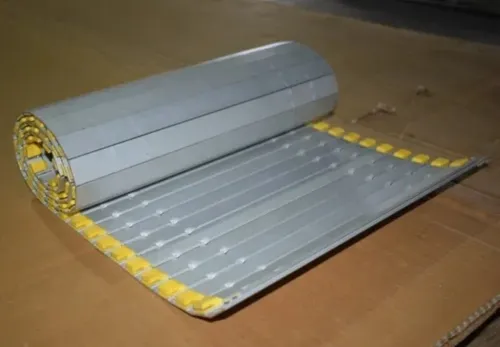
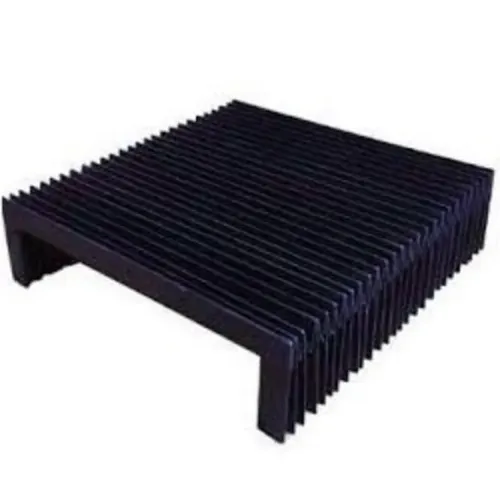
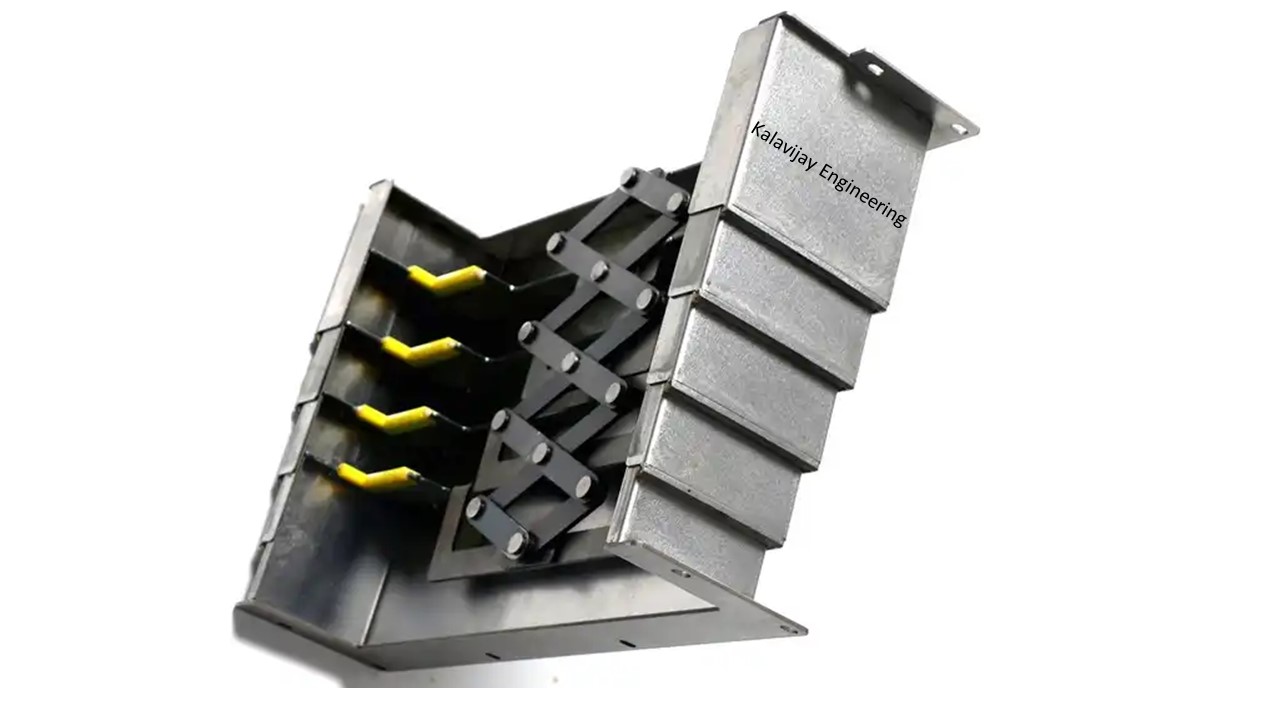 | Telescopic Cover Wherever guideways on machines have to be protected, we have a suitable solution. View product → |
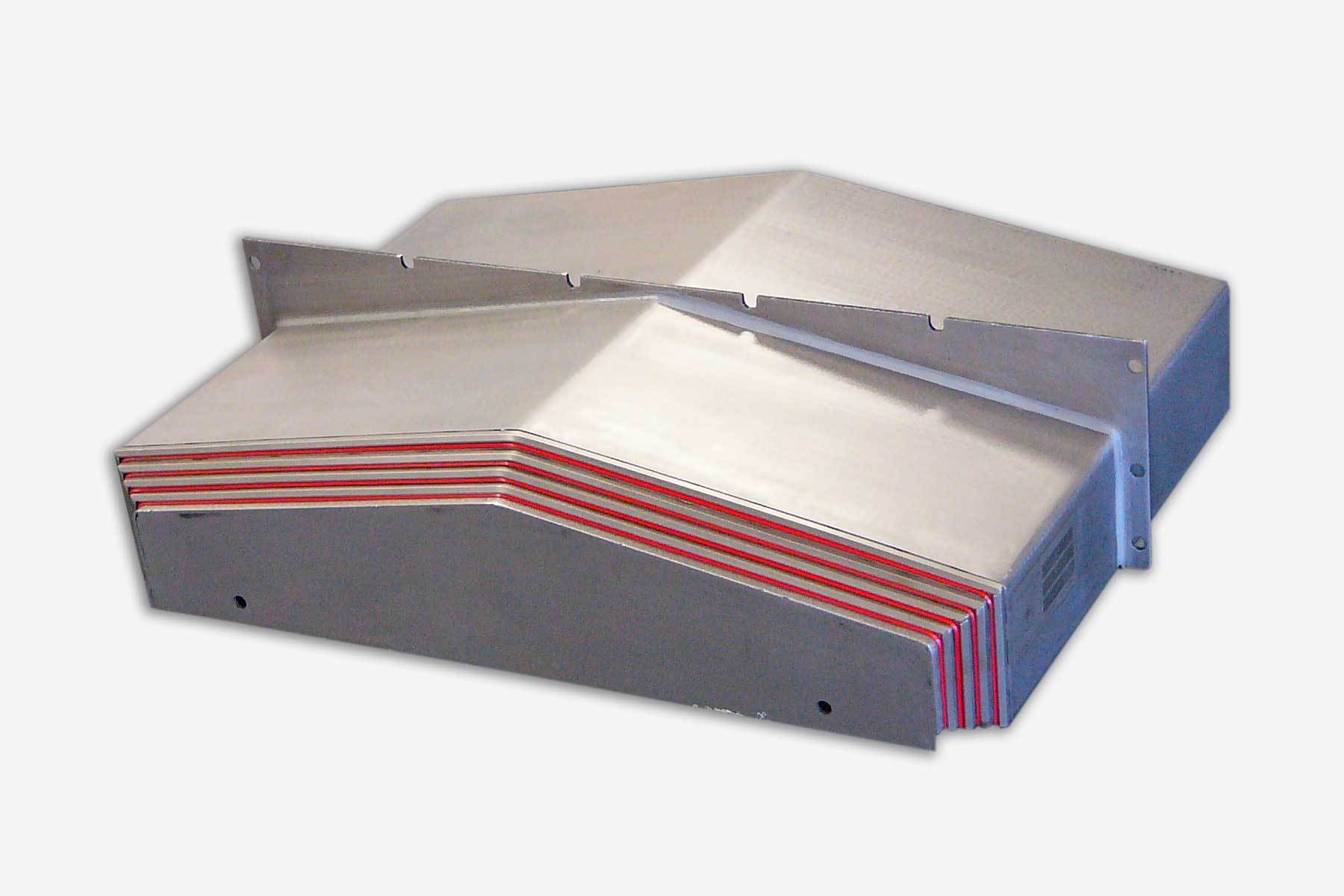 | Telescopic Cover BFW VMC Machine Telescopic Cover Wherever guideways on machines have to be protected, we have a suitable solution. View product → |