
A reliable custom bellow cover starts with the machine’s full movement envelope, not a single guideway measurement. You will learn which dimensions to record, how manufacturers turn an irregular opening into pleated geometry, how they choose construction materials, and how to approve the finished cover before it reaches production.
Key takeaways
- Measure complete axis travel, including fully extended and compressed positions.
- Design around motion, interference points, mounting, and the machine’s full envelope.
- Match fabric, coatings, frames, and reinforcement to chips, coolant, heat, or sparks.
- Record dimensions, materials, and test results before approving the first cover.
Measure the machine through its complete axis travel
A reliable custom bellow cover starts with the machine’s complete kinematic envelope, not the guideway’s outside dimensions. Measure the protected travel length and record the cover’s fully extended and fully compressed lengths; a mid-travel measurement alone can hide interference at the limits.
1. Isolate and lock out the machine before measuring. Remove guards, tooling, chips, or other obstructions only where permitted, mark the fixed-axis datum, and move the axis manually or under controlled jog conditions to both limits.
2. At each limit, record the opening width, height, and depth; fold height and fold pitch; mounting-face dimensions; guideway clearance; travel direction; lateral offsets; and every attachment-hole location. Mark hole centres from fixed datums, not from a movable edge.
3. Measure clearance to the tool, swarf conveyor, lubrication lines, adjacent axes, fasteners, pleat valleys, and maintenance access points. Confirm that technicians can remove the cover or reach lubrication fittings without obstructing travel.
4. Do not copy the outside envelope. The design must include end-frame thickness, compressed pack height, minimum fold radius, and enough allowance for the axis to reach its limit without bottoming out. Shallow folds save compressed height but increase fold stress; deep folds need more surrounding clearance.
5. Supply the drawing inputs for a custom shape bellow cover for manufacturing in Surat: axis speed, acceleration, operating temperature, coolant and chip exposure, cleaning method, mounting orientation, and required service life. Include marked photographs or a machine drawing when seeking a quotation; a custom bellow cover cannot be sized from a product name alone.
Turn the machine envelope into a shape that can move
1. Compare the machine drawing with photographs, measured positions, travel direction, lateral offsets, mounting faces, and clearance around tooling, lubrication lines, conveyors, and adjacent axes. Convert that kinematic envelope into a flat pattern or three-dimensional layout; never copy the guideway’s outside dimensions alone.
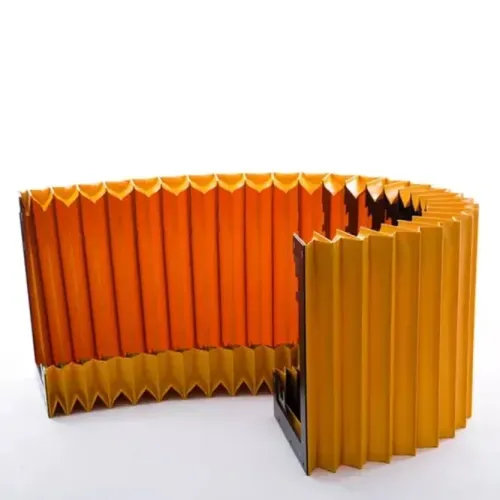
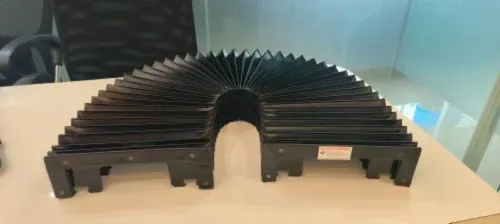
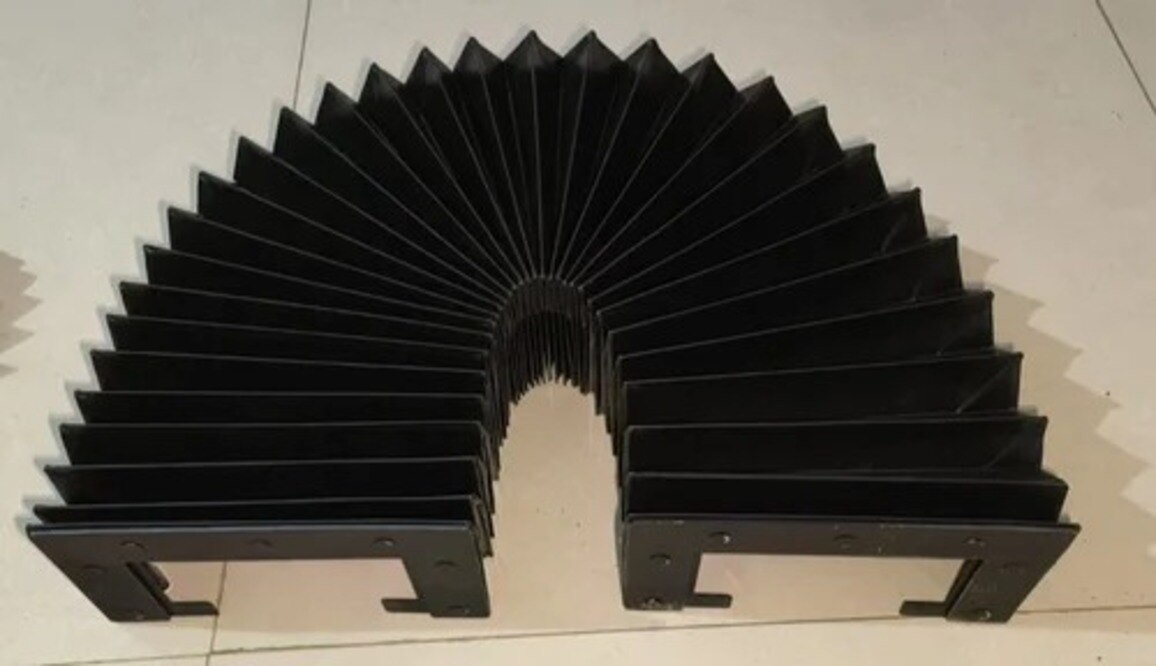
2. Select the section that fits the available space: rectangular for a boxed opening, flat for a shallow exposed surface, octagonal or multi-sided for angled obstructions, and a custom shape bellow cover for irregular envelopes.
A C-shaped bellow cover wraps around a guideway or moving member on three sides; point its open side away from the main chip and coolant path, or add a wiper, skirt, or secondary shield.
3. Calculate pleats from usable stroke divided by allowable fold pitch, then check end-frame thickness and compressed pack height. Shallow pleats reduce folded height but increase fold stress and can limit stroke; deep pleats improve stroke-to-length ratio but need more clearance and consistent forming. Check unsupported span, friction, fold stress, and high-speed flutter before approval.
4. Match the protection to the moving part. Guideway covers need sliding support and sealing; ball-screw covers need clearance around the screw and often guide strips; cable-carrier covers must tolerate repeated bending; complete machine openings need end flanges, frames, internal supports, or wipers.
Add these when the opening is wide, unsupported, or exposed from the sides and ends.
Select materials and build the pleated cover
Approve the drawing before cutting a custom bellow cover. Select a woven base fabric for tensile strength, then specify a PVC, polyurethane, silicone, rubber, PTFE, or glass-fibre coating for the actual coolant, chip, heat, UV, and cleaning exposure.
- Cut the panels, fold-line reinforcement, wipers, and end allowances from the approved flat pattern.
- Form the pleats to the specified pitch and depth; add reinforcement where fold stress or unsupported spans demand it.
- Join seams using compatible HF/RF, hot-air, or impulse welding, adhesive bonding, sewing, or vulcanization.
- Attach rigid steel, aluminium, or moulded end frames to establish the mounting datum and transfer motion without tearing the fabric.
- Inspect the finished shape bellow cover for uniform pleats, sealed seams, frame squareness, and free movement.
| Construction | Strength and limitation | Suitable exposure |
|---|---|---|
| HF/RF-welded PVC or polyurethane | Sealed seams and repeatable fabrication; welding requires a compatible thermoplastic coating | Oil-based or water-soluble coolant, chips, and routine industrial service |
| Sewn coated fabric or leather | Flexible and repairable; needle holes need sealing, while leather has limited chemical and temperature resistance | Moderate abrasion, low heat, and applications where flexibility matters |
| Silicone or rubber fabric | Requires suitable adhesive or vulcanization rather than thermoplastic welding | High or low temperatures, UV, hot surfaces, or specialised chemical service |
Specify alkaline wash-down, laser heat, welding spatter, and continuous versus intermittent temperature separately. “Dust-proof,” “fire-proof,” and “spatter-proof” describe tested conditions and material limits, not immunity to every flame, solvent, impact, or temperature. Add a sacrificial outer layer or another protection system for heavy spatter, sharp chips, direct laser exposure, or severe abrasion.
Fit, test, and approve the first custom cover
1. Start with the machine owner’s drawing package or arrange an on-site survey. Check mounting faces, hole locations, travel direction, compressed and extended lengths, minimum fold radius, fold symmetry, mounting orientation, end-flange sealing, lubrication access, and clearance from fasteners and pleat valleys. Install the first custom shape bellow cover before approving production.
2. Test the sample through its full stroke at intended speed, acceleration, direction reversals, and motion limits—not by manual extension alone. Inspect for buckling, rubbing, twisting, fold inversion, flutter, noise, frame movement, blocked lubrication, and contact with tooling or adjacent axes.
Record seam continuity, pinholes, coating delamination, pleat pitch, frame squareness, hole locations, dimensional conformity, spray or leak exposure, attachment security, and interference at both maximum compression and extension.
3. Change the inspection focus to the protected mechanism. A guideway needs shoulder, wiper, and chip-clearance checks; a ball-screw cover needs clearance around the screw, nut, lubrication fittings, and rotating parts; a cable-carrier cover needs bend-radius, carrier-motion, and cable-access checks; a complete opening needs perimeter sealing and support across the span.
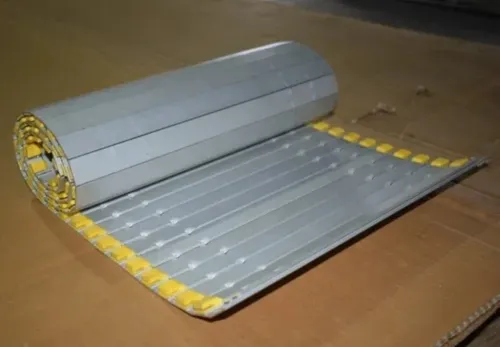
For a machine bellow cover in Surat, reject a design that leaves a rigid opening unsupported or faces heavy impact, extreme abrasion, or exposed heat; telescopic steel covers, roll-up covers, flexible curtains, or another system may fit better. Record revisions before release.
Specify, maintain, and reorder the cover after installation
Send a quotation enquiry for a machine bellow cover in Surat with the machine’s actual motion and exposure data, not only the guideway size.
1. State the machine make and model, axis name, travel, speed, acceleration, travel direction, and required service life.
2. Give the compressed and extended envelope, opening width, height and depth, fold height, fold pitch, mounting orientation, and attachment-hole pattern.
3. Attach the mounting drawing or marked photographs. Include end-frame dimensions, hole locations, guideway clearance, and space around tooling, lubrication lines, swarf conveyors, adjacent axes, and service access.
4. Describe coolant chemistry and concentration, chip type, cleaning agents, operating temperature, cleaning schedule, heat or spark sources, UV exposure, and whether the cover faces continuous spray, welding spatter, or abrasive debris.
5. Request an on-site survey when drawings are missing, the opening is irregular, several axes interact, or access is restricted. Drawings, measurements, and videos can support a quotation when the complete envelope is clear.
6. Confirm the prototype fitting and approval process. A custom shape bellow cover for manufacturing in Surat must be checked through full-stroke motion, reversals, operating speed, and limit positions before production.
Kalavijay Engineering can review measurements, develop a custom shape, arrange prototype fitting, and support repair or replacement when those records are available.
After installation, remove chips before they enter folds, use the approved cleaning method, and never drag tools across coated surfaces. Inspect seams and frames at scheduled intervals; document cycle count and damage. Retain the final drawing, material construction, fold pitch, frame details, hole pattern, and revision number for the next order.
Related products
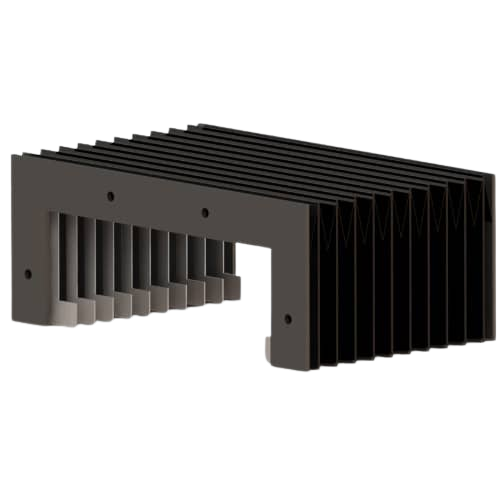 | Bellow Cover Some machines like the 5 axis grinding machine in the tool manufacturing industry require protection of the rails and ball screws from hundreds of... View product → |
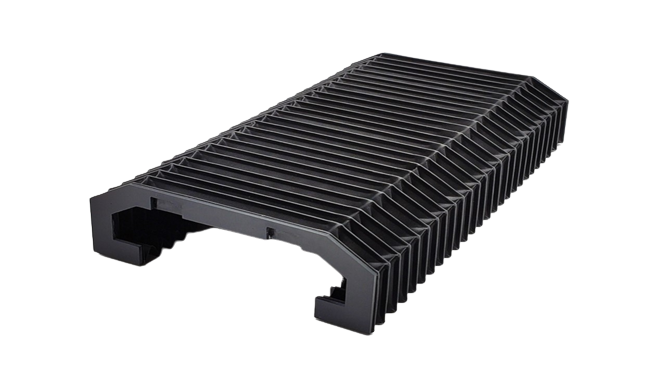 | Bellow Cover Marble Cutting Machine Bellow Cover We are offering a broad collection of Bellow Cover is used in a variety of machines to prevent dust particles, metallic chips and foreign particle. View product → |
Frequently asked questions
What measurements are needed for a custom bellow cover?
Measure the complete axis travel, protected length, fully extended length, fully compressed length, mounting dimensions, clearances, and interference points at both travel limits.
How do you turn a machine envelope into a movable shape bellow cover?
Convert the machine’s travel and clearance limits into a pleated geometry with the required mounting shape, compression ratio, fold depth, and guidance features.
How are materials selected for a custom bellow cover?
Select the bellows fabric, coating, reinforcement, frames, and fasteners according to exposure to chips, dust, coolant, heat, sparks, and ultraviolet radiation.
How is the first custom bellow cover tested?
Fit the cover to the machine, cycle it through complete axis travel, inspect compression and extension, check for rubbing or interference, and approve it after correcting faults.
What information helps maintain and reorder a machine bellow cover?
Keep the drawing, measurements, material specification, mounting details, installation date, test record, and photographs so the cover can be serviced or reordered accurately.
Related products
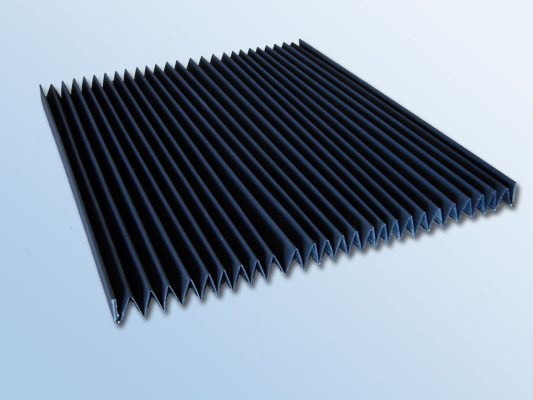 | Bellow Cover Kalavijay Engineering We Manufacturing Flat Bellow Covers in Customizes Width & Length. View product → |
 | Bellow Cover We, " KALAVIJAY ENGINEERING" are masters in manufacturing and supplying excellent quality of Bellows covers. View product → |
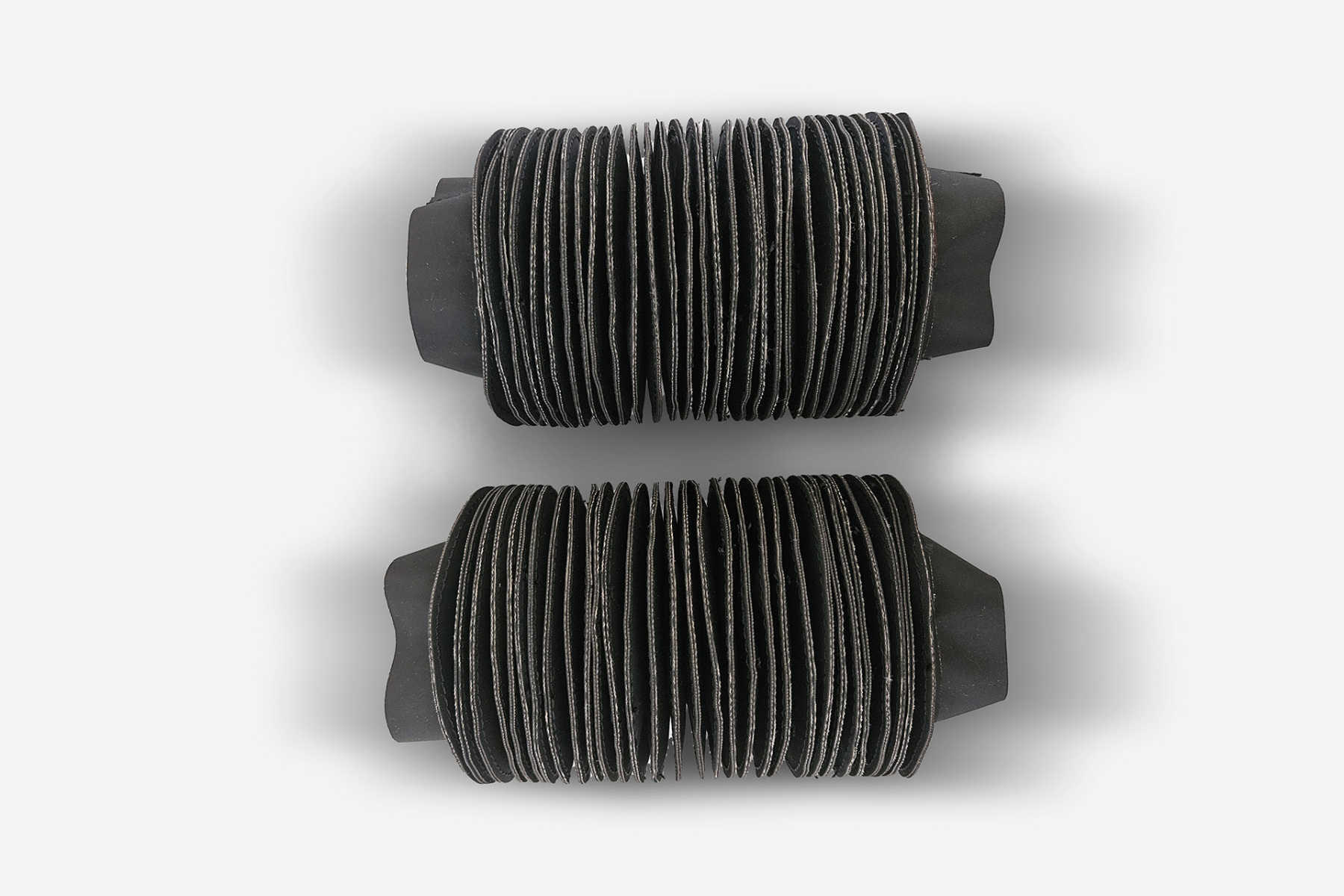 | Bellow Cover Many applications in the industry require customized sewn fabric products for covering specific objects of the machinery. View product → |
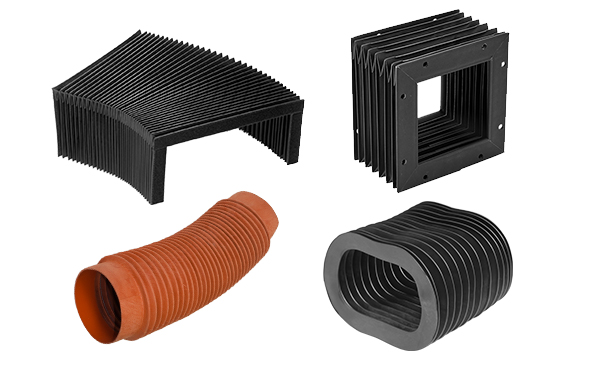 | Bellow Cover We Are manufacturing Different types of Bellow Covers, In Different Sizes and shapes. View product → |