
Jerky travel, rattling panels, coolant leakage and incomplete closing do not identify one fault on a BFW VMC telescopic cover. By separating travel, sealing, alignment, contamination and interlock issues, you can inspect the cover safely, decide whether to repair or replace it, and give a supplier the measurements needed for a matching solution.
Key takeaways
- Classify jerky travel as contamination, alignment, sealing or interlock failure.
- Clean telescopic covers with controlled chip removal and protected wipers.
- Replace the cover when corrosion, distortion or repeated repairs threaten reliability.
- Match cover materials and seals to chips, coolant, heat and axis movement.
Match the symptom to the actual BFW telescopic-cover fault
Jerky opening, uneven extension and failure to close are travel or alignment faults until inspection proves otherwise. Before changing servo settings, classify these BFW telescopic cover problems on a VMC machine in Pune as travel, sealing, alignment, contamination or control-interlock issues.
| Symptom | Likely cause | Check first |
|---|---|---|
| Jerky travel or rising drive force | Packed aluminium chips, broken hardened chips, seized rollers, obstruction, side loading or poor parallelism | Clean boxes; inspect rollers, guides and mounting height |
| Uneven gaps, scraping or panel collision | Bent boxes, loose fasteners, mounting misalignment or incorrect panel overlap | Check parallel guideways, brackets and box alignment |
| Rattle or vibration | Excessive acceleration or an unsuitable cycle profile | Compare rapid-traverse speed, acceleration and cycle frequency |
| Coolant leakage | Nozzle pressure, spray direction, worn or damaged wipers, incorrect overlap or blocked drains | Redirect jets; check wiper contact and drain paths |
| Won’t close or trips the machine | Mechanical obstruction, distorted panels or a guard/interlock fault | Separate cover movement from guard status and interlock signals |
Packed chips can wedge between boxes; broken hardened chips can score guides and seize rollers. A leaking joint does not prove a hole: high-pressure coolant aimed at the overlap can defeat worn wipers. These BFW telescopic cover problems require checking travel and sealing before altering controls.
The telescopic cover moves with the axis; the machine guard and its interlock confirm safe access, and neither function substitutes for the other.
Inspect and clean the cover without creating a new failure
Do not force a BFW VMC machine telescopic cover that stops partway. Isolate the machine before inspection: stop the cycle, switch off and lock out electrical power, shut and lock pneumatic or hydraulic supplies, release pressure, and account for gravity, spring force and stored movement.
Wear cut-resistant gloves and protect your hands from sharp sheet-metal edges.
- Verify zero energy and prevent unexpected axis movement. Keep the key under your control, confirm pressure gauges read zero, and never place fingers between panels.
- Remove chips mechanically with a brush, hook or vacuum. Do not drive high-pressure air or coolant into joints, wipers, rollers, guideways or electrical components.
- Inspect panel gaps, wiper contact, box corners, rollers, guides, fasteners, overlap and drain paths. Look for corrosion, bent edges, packed aluminium chips, abrasive sludge and standing coolant.
- Move the cover only as permitted by the machine’s isolation procedure. Record the exact panel and travel point where binding begins; do not force panels or change servo settings.
- Clean only with the cover supplier’s approved agent. Unapproved solvents can swell or harden wipers, while excess grease attracts chips.
Remove chips daily. Schedule a close inspection weekly, or more frequently for heavy cycles, abrasive debris or high-pressure washdown. Inspect after long idle periods, especially during Pune monsoon humidity or condensation, when stagnant coolant can create corrosion and abrasive sludge.
Check coolant concentration, tramp oil, biological contamination and corrosion. Lubricate rollers or sliding interfaces only to the cover supplier’s compatibility specification; the VMC way-lubrication schedule does not automatically apply.
Decide whether cleaning, repair or a replacement cover is justified
Adjustment is enough when loose fasteners, blocked drains or removable chip packing cause the fault, the boxes remain straight, and the wipers retain continuous contact. Tighten, clear and realign; do not increase servo acceleration to hide binding. That is the sensible first response to many BFW telescopic cover problems.
| Option | What it means | When it applies |
|---|---|---|
| Original OEM cover | Supplied to the machine maker’s specification | Choose it when exact interchangeability, documented fit and original spare support matter |
| Cover made to an approved drawing | Newly manufactured assembly built from verified dimensions and agreed materials | Choose it when the OEM part is unavailable or a drawing-approved substitute is acceptable |
| Repair of existing assembly | Existing boxes are cleaned, adjusted and fitted with selected replacement parts | Choose it when the frame is sound and damage is limited to wipers, fasteners, rollers or guides |
Fit new wipers when strips are hardened, cut, flattened, chemically damaged or no longer spring against the panels. Replace panels, realign the assembly or rebuild it when boxes are dented, cracked, warped or repeatedly collide; rollers or guides are worn; or alignment faults return after adjustment.
Replacing rubber alone will not cure a bent box or excessive gap.
Before requesting a quote, record:
- Exact BFW machine model and nameplate, cover position and axis, closed and extended lengths, usable travel, panel count, box width and height, mounting-hole pattern, guideway geometry, clearances above and beside the cover, wiper material, coolant type, chip shape and operating cycle.
Request the drawing, material and seal details, permissible speed and acceleration, warranty, lead time, spare-panel availability and installation requirements. Kalavijay Engineering can use this information to judge whether repair or a made-to-measure replacement is practical.
Related products
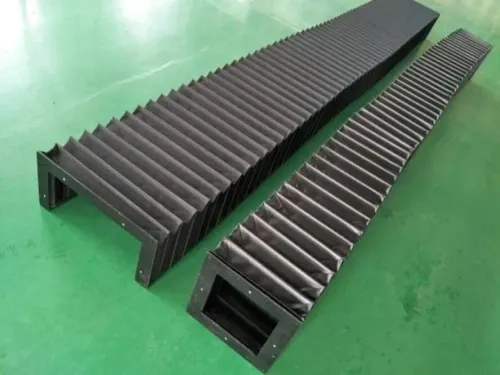
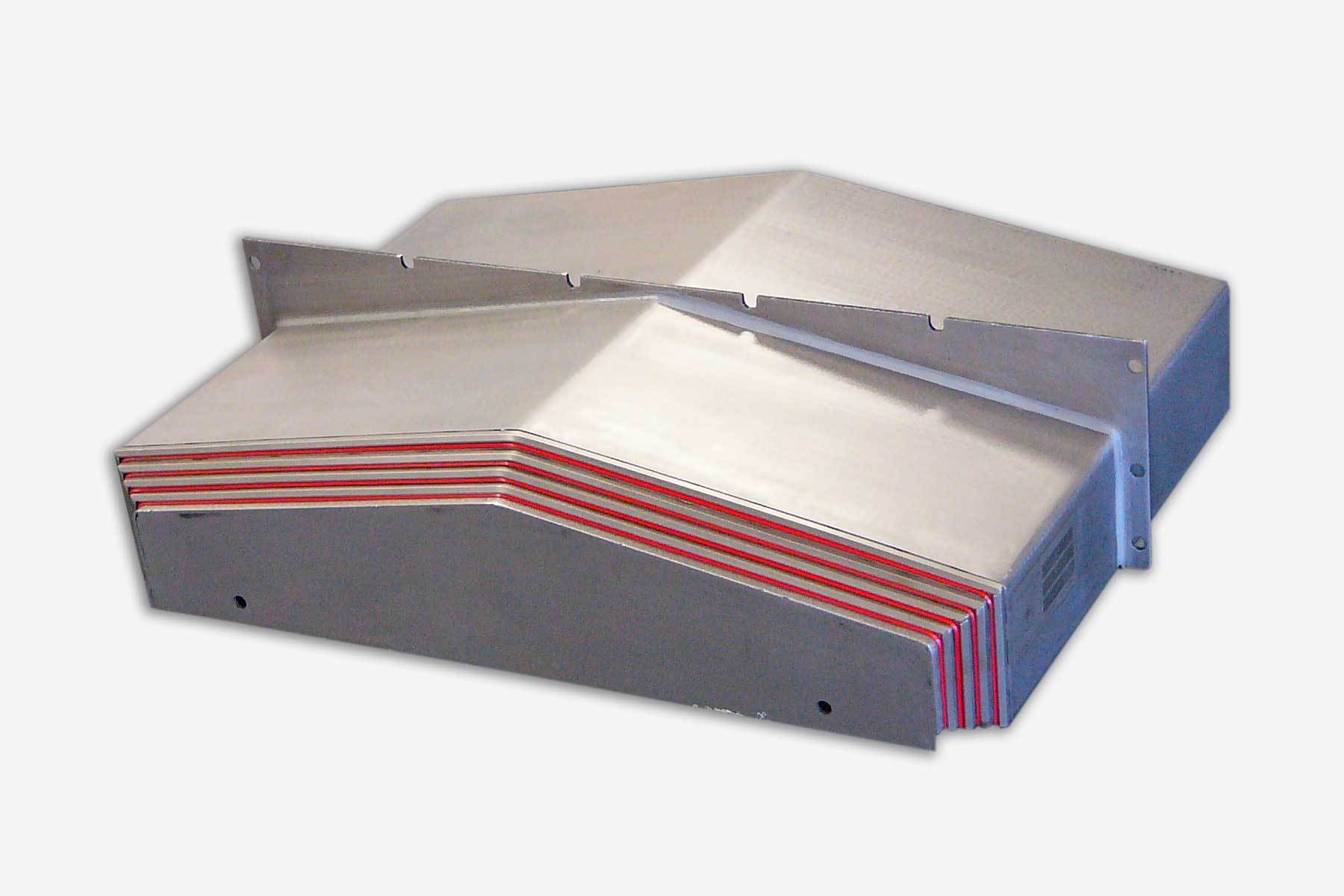 | Telescopic Cover BFW VMC Machine Telescopic Cover Wherever guideways on machines have to be protected, we have a suitable solution. View product → |
 | Telescopic Cover Telescopic Cover For VMC Machine Telescopic covers will protect your Ball Screw from Metalic chips, Dust etc........... View product → |
Choose protection that fits the chip, coolant and axis environment
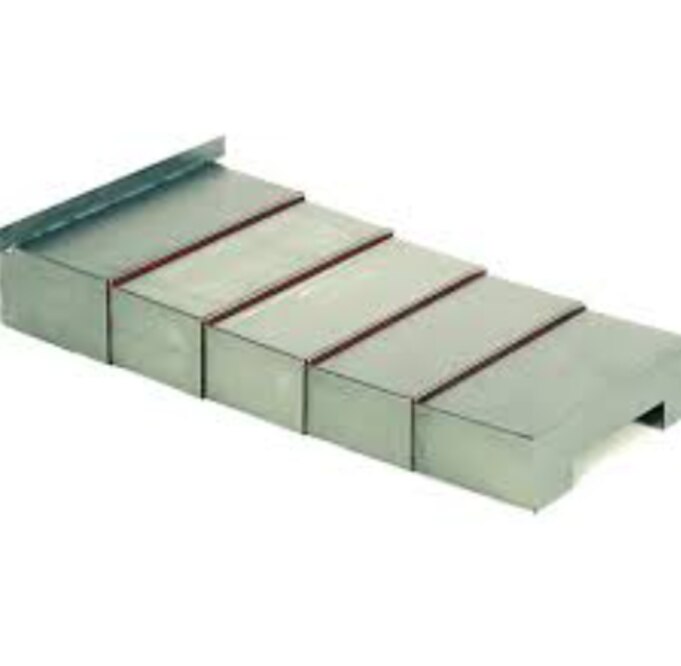
A BFW telescopic cover for VMC use is the right choice when steel boxes can deflect rigid chips, tolerate coolant exposure and slide along a compact axis with adequate clearance and a stable mounting path.
| Option | Best fit | Main limitation |
|---|---|---|
| Steel telescopic cover | Heavy chips, coolant spray and compact sliding axes | Fine abrasive dust, severe impact, hot broken inserts or insufficient clearance |
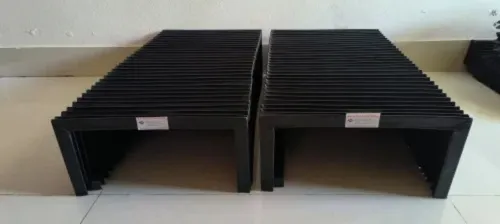
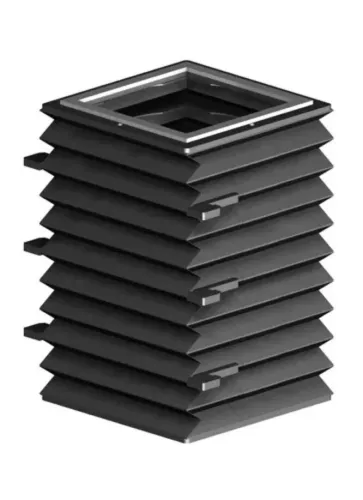
| Bellows | Light debris, unusual shapes and restricted access | Abrasion, sharp chips and impact can tear or puncture the fabric |
| Roller cover | Long, flat travel paths | Needs support, a straight path and space for winding |
| Hybrid arrangement | Mixed hazards or a difficult axis envelope | Requires careful transitions, mounting and drainage design |
Long stringy aluminium chips can hook around wipers and pack between nested boxes. High acceleration, frequent cycling or a short extension ratio can also create resonance and rattling, even when spindle speed looks acceptable.
Choose another arrangement when the axis geometry is irregular, space is limited, or chips include hot inserts and fine abrasive dust. A roller cover needs winding space; a bellows needs clearance from sharp edges. Do not expect any cover to replace a chip conveyor, enclosure or chip-flushing arrangement.
Specify the actual operating environment:
- Rapid-traverse speed and acceleration
- Stroke, cycle frequency and extension ratio
- Chip temperature, coolant pressure and nozzle direction
“High sealing capacity” proves nothing without those figures.
Plan installation, alignment and acceptance testing around production downtime
For BFW telescopic-cover problems on a VMC machine in Pune, schedule repair as a controlled shutdown, not a quick panel swap. Reserve time for cleaning, removal, installation and alignment; book lifting or access equipment, edge protection, installation labour, replacement fasteners, spare wipers and spare panels before stopping production.
1. Send the supplier photographs of the complete cover, both ends, mounting brackets, damaged wipers, guideway, nameplate and clearances above and beside the assembly. Add the machine drawing and a worn roller, wiper or fastener sample when possible. Include closed and extended lengths, usable travel and the machine axis.
2. Isolate electrical, pneumatic and hydraulic energy, then account for stored movement. Remove chips and coolant before removal; trapped aluminium chips or abrasive sludge can distort inspection and cut hands on sharp sheet metal.
3. During fitting, verify parallelism, mounting height, box-to-box gaps, drain orientation and freedom from side loading. Do not connect or validate an altered guard or interlock actuator until the mechanical installation is correct and the machine’s safety validation is complete.
4. Run several complete cycles at low speed, normal speed and rapid traverse. Record noise, vibration, drive load or current, end-of-travel shock, coolant escape, gap consistency and full closing.
5. Recheck the BFW VMC machine telescopic cover after the first production shift and after a coolant washdown. Treat recurring binding as an installation or geometry fault before increasing acceleration.
Frequently asked questions
What causes jerky movement in a BFW telescopic cover on a VMC?
Check for packed chips, damaged wipers, distorted boxes, poor alignment and travel obstructions before changing servo settings.
How should you inspect and clean a BFW VMC machine telescopic cover?
Lock out the machine, inspect each box, wiper and guide surface, then remove chips without forcing debris into seals or telescopic joints.
When should you repair or replace a BFW telescopic cover?
Clean the cover when contamination is the fault; repair damaged wipers or alignment when practical; replace it when corrosion, distortion or repeated failures remain.
How do you choose a telescopic cover for a VMC?
Match the cover, wipers and seals to chip size, coolant exposure, heat, sparks, axis speed and available installation space.
How should replacement-cover installation be planned?
Schedule access during a planned stoppage, verify mounting and axis alignment, then test smooth travel, closure, sealing and machine interlocks before production.
Related products
 | Telescopic Cover We are a leading manufacturer of CNC Machines Telescopic Cover. The offered product is manufactured using optimum quality raw materials. View product → |
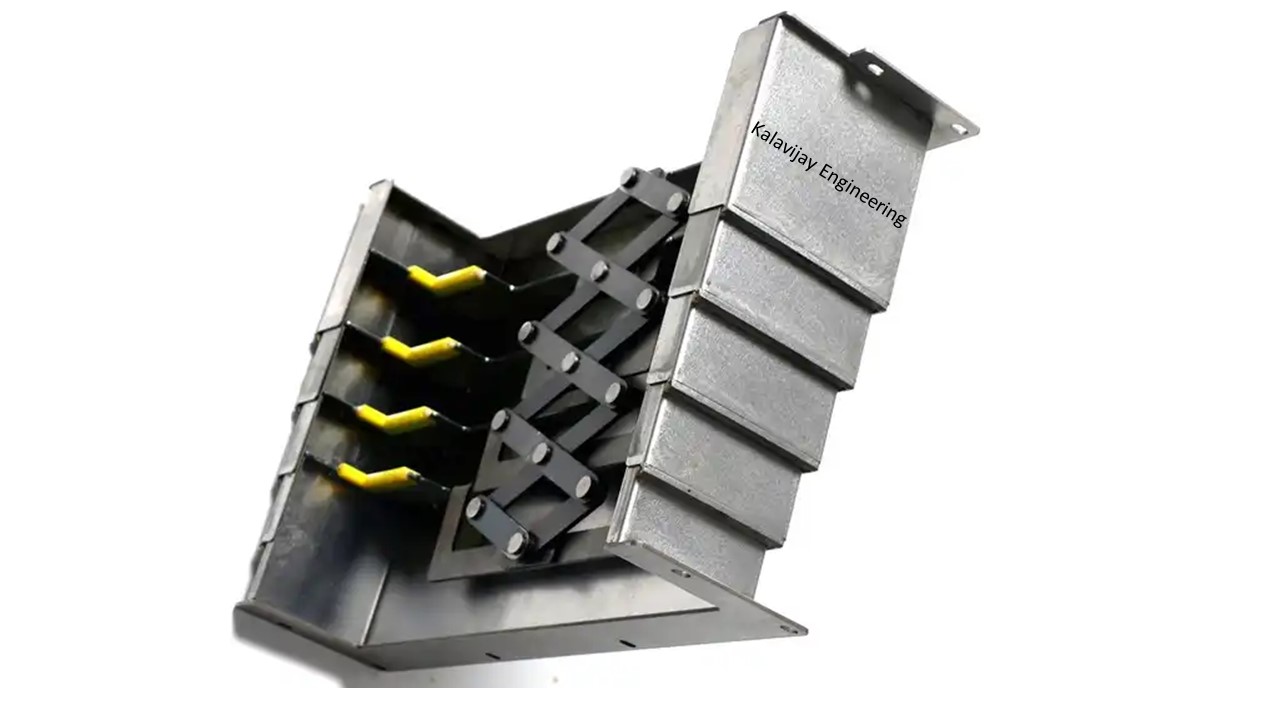 | Telescopic Cover Wherever guideways on machines have to be protected, we have a suitable solution. View product → |