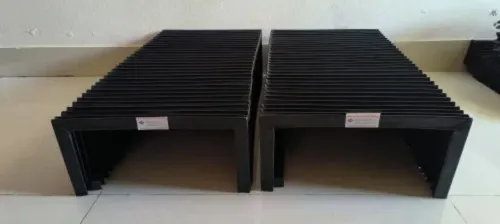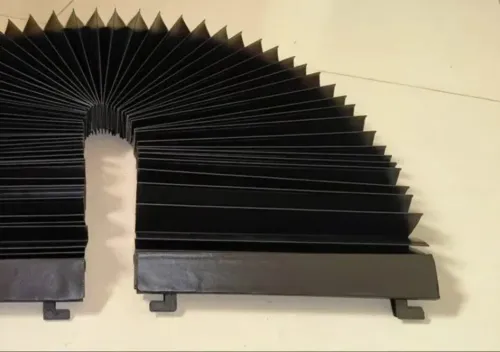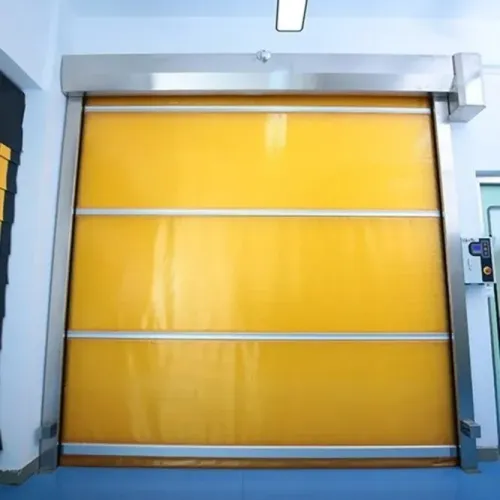

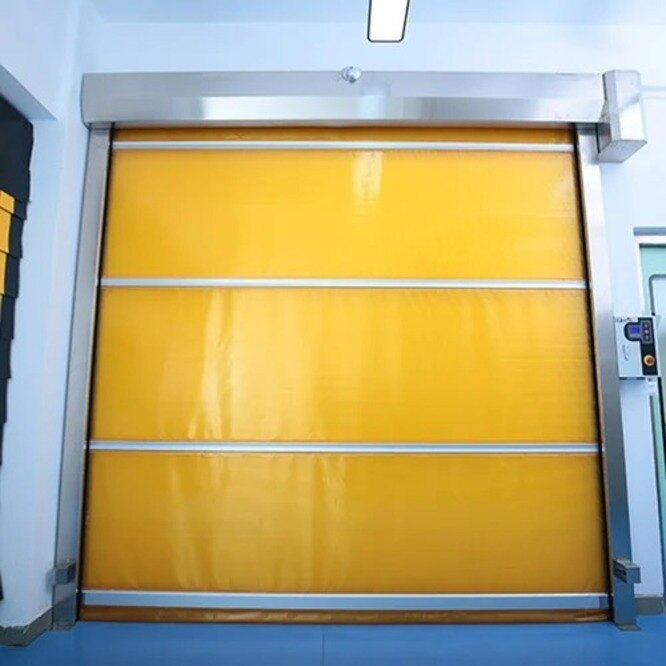
A fixed curtain costs less and has fewer failure points, but it can obstruct loading routes and remain open when production access is needed. A motorized system earns its extra cost only when you define the opening, safety logic, optical performance and maintenance requirements precisely.
Key takeaways
- Choose fixed curtains for low-access cells and lower installation complexity.
- Use motorized curtains when loading, fixture changes or crane access happen frequently.
- Treat the curtain as arc screening, never as the robot safety safeguard.
- Specify optical performance for the welding process, opening size and travel path.
Compare the real cost of fixed and motorized curtains
A fixed overlap curtain usually delivers the lowest purchase cost and simplest installation. Choose a motorized welding curtain for robot cell access when operators frequently load parts, change fixtures or need crane clearance; otherwise, the motor adds complexity without improving production.
| Option | Purchase and installation | Access, downtime and service |
|---|---|---|
| Fixed overlap curtain | Lowest hardware cost; mount the track and hang the overlapping panels | Slowest access; no motor or controls to fail, so unplanned downtime is low |
| Motorized retractable curtain | Higher cost for the motor, controls, limit devices, wiring and motion guarding | Fast, wide access; requires inspection, adjustment and replacement of wear parts |
| Rigid interlocked door | Highest structural and installation effort | Strong access control, but door swing or travel space can slow material movement |
Use access frequency and opening size as your decision test. A fixed curtain suits a cell opened only for planned maintenance or occasional part changes. A motorized system earns its cost when repeated manual movement delays each cycle, or when a clear opening is essential for tooling and overhead handling.
Budget for more than the curtain. Motorized equipment needs pinch and shear protection, monitored end positions, a safety-rated stop when opening exposes hazardous motion, and integration with the cell safety circuit. A simple open signal to the PLC is not enough.
Compare the welding booth curtain options against downtime, not purchase price alone. A failed motor, control fault or damaged track can immobilize the cell; a fixed panel usually stays usable until its fabric or suspension needs repair. Neither arrangement replaces perimeter guarding, gate interlocks, emergency stops or the robot manufacturer’s safeguarding requirements.
Treat the curtain as an arc screen, not the robot safeguard
A robot cell welding curtain controls arc radiation; it does not safeguard people from robot motion. Keep a risk-based perimeter guard, restricted access, or a validated presence-sensing system that stops the robot before anyone can reach the hazard.
When an opening uses a motorized curtain, retain these safety functions:
- A monitored guard interlock that initiates a safety-rated stop when access exposes a person to robot or fixture motion. A basic limit switch that only reports “open” to the PLC is not equivalent.
- Emergency-stop devices positioned where operators can reach them, with the robot manufacturer’s safeguarding requirements included in the safety circuit.
- Guarding around rollers, belts, chains and curtain edges to prevent crushing or shearing during travel.
- A stopping-distance assessment. If someone can pass through or around the curtain before the robot stops, add separation, an interlocked gate, presence sensing or a different guard; extra curtain width does not solve the reach problem.
The curtain also does not replace welding helmet, face, skin or respiratory protection for anyone entering the cell. It protects people outside from direct arc radiation, not workers inside from the process.
Treat laser welding, laser cladding and hybrid laser processes separately. A conventional arc-welding curtain is not proof of wavelength-specific laser attenuation or enclosure performance. Require a separate laser-safety assessment before selecting the screen.
Specify optical performance for the actual welding process
A curtain is suitable only when its fabric and viewing window are rated for your process, not merely labelled “welding grade.” Match the specification to arc radiation, heat, spatter and the conditions under which people view the cell.
1. Record the process, amperage, voltage, duty cycle, electrode or wire type, viewing distance and whether operators must look toward the arc. Use these facts to obtain the curtain’s stated shade or optical classification, wavelength coverage and transmission limits. Colour and darkness alone prove nothing.
2. Check the window separately from the fabric. Request its optical data for the process and arc range, and reject a window described only as tinted, dark or UV-resistant.
A conventional arc curtain is not evidence of protection for laser welding, laser cladding or hybrid laser processes; those require a separate laser-safety assessment covering wavelength-specific attenuation and enclosure performance.
3. Specify the thermal and mechanical exposure. State the preheated-part temperature, arc-to-curtain clearance, expected spatter volume and exposure frequency. Repeated concentrated heat or hot spatter can deform, embrittle or perforate thin flexible PVC, leaving gaps that defeat the screen.
4. Confirm that the specification protects people outside the cell from direct arc radiation. Workers entering the cell still need the process-appropriate eye, face, skin and respiratory protection.
Among welding booth curtain options, choose the material and window from documented test data for your exact process, then inspect them after commissioning and after any burn-through, distortion or loss of transparency.
Check the opening, travel path and cell layout before ordering
Measure the opening width and height, the curtain’s travel distance, and every obstruction around the robot cell before selecting a motorized welding cell door. A door that fits the aperture can still fail if its rolled or stacked curtain blocks a crane path, tooling cart, service panel, or emergency escape route.
1. Record the clear opening, not the structural frame size. Measure between finished posts, from the finished floor to the lowest overhead obstruction, and include any uneven floor, curb, beam, cable tray, or exhaust duct.
2. Mark the full travel path on the layout. Show the curtain’s rolled-up or folded package, side guides, drive unit, counterbalance, and maintenance access. Keep this zone clear of robot reach, fixture rotation, pallet transfer, crane hooks, hoses, and weld-spatter exposure.
3. Check the robot’s maximum envelope with the largest fixture and workpiece installed. The robot cell welding curtain must not rub against moving axes, snag cables, or enter the pinch zone during loading, unloading, or a tooling change.
4. Measure traffic and handling clearances. Confirm that the opening accommodates the widest pallet, component, forklift, or overhead load, while the closed curtain still overlaps adjoining screens and leaves no line of sight to the arc.
5. Map the door controls, emergency-stop devices, access gates, and safety controller. Opening access must create the validated safety stop required by the risk assessment; a basic open-limit signal to the PLC is not enough.
6. Define loss-of-power, obstruction, failed-limit, and manual-release positions before ordering. If the motorized layout cannot provide supported, controlled movement and safe service access, choose a fixed or sliding arrangement instead.
Choose the access arrangement and write the acceptance checklist
Choose a fixed curtain when access is infrequent and the opening can remain covered; choose a motorized welding curtain for robot cell access when loading, tooling or crane movement would make manual panels a production bottleneck. Do not select on curtain price alone.
| Option | Strength | Main exposure |
|---|---|---|
| Fixed overlap or sliding panels | Lower controls and maintenance burden | Slower access and more manual handling |
| Motorized welding cell door | Fast, repeatable clear opening | Motor, limits, pinch points and open-cell failure |
| Rigid interlocked safety door | Strong access control and defined safeguarding | Higher installation effort and less flexible handling |
Require the supplier to provide these items before purchase and sign-off:
- A layout drawing showing curtain travel, end gaps, bottom clearance, overlap, nearby structures and every possible reach-through route.
- A risk-assessment interface stating how the arrangement works with perimeter guarding, gate interlocks, emergency stops and robot stopping distance. A curtain is an arc screen, not the robot safeguard.
- The fabric and window’s shade or optical classification, wavelength coverage, transmission limits, process rating and heat or spatter limits.
- Control documentation covering safety-circuit integration, guarded rollers and pinch points, limit devices, fault behaviour, emergency opening and manual recovery.
- Commissioning records proving complete arc screening, correct travel, stopping performance and safe access control under loss of power.
- A maintenance schedule naming inspections, cleaning method, replacement criteria, motor service points, spare parts and response steps after fabric damage.
Ask Kalavijay Engineering for these documents in the quotation and retain the approved drawings, test records and revision numbers for future service.
Related products
 | Welding Booth Curtain Robot Cell Door Motorized Welding Curtain We are Manufacturer of Motarized Rolling Curtains for Welding Curtain Booths or welding Curtains cells. View product → |
 | Curtains for welding Cell Motorized Rolling Curtains for welding Cell We are Manufacturer of Motarized Rolling Curtains for Welding Curtain Booths or welding Curtains cells. View product → |
Frequently asked questions
When should you choose a motorized welding curtain for a robot cell?
Choose a motorized curtain when operators frequently load parts, change fixtures or need crane clearance. Use a fixed overlap curtain when access is infrequent and the layout stays stable.
Does a welding curtain replace the robot cell safeguard?
No. The curtain screens welding arc radiation and helps contain sparks, but it does not replace the robot safety system, interlocked gates, emergency stops or risk assessment.
What optical performance should a robot cell welding curtain provide?
Specify optical performance for the actual welding process, including arc intensity, welding method, curtain material and the required viewing protection. Do not select by colour alone.
What must you check before ordering a motorized welding cell door?
Measure the clear opening, curtain travel path, overhead clearance, crane route, fixture envelope, robot reach and maintenance access. Confirm that the curtain will not obstruct tooling or safety devices.
Related products
 | Threaded Yellow Welding Curtain Threaded Yellow Welding Curtain Roll Threaded yellow welding curtain of size 1.8mtr x 30 mtr x0.9mm thick. Also available in small roll of 15 Mtr to 50 Mtr. View product → |
 | Welding Curtain Designed with durable PVC strips, this door protects individuals outside the welding area from harmful spark, spatter, and arc flash while permitting... View product → |