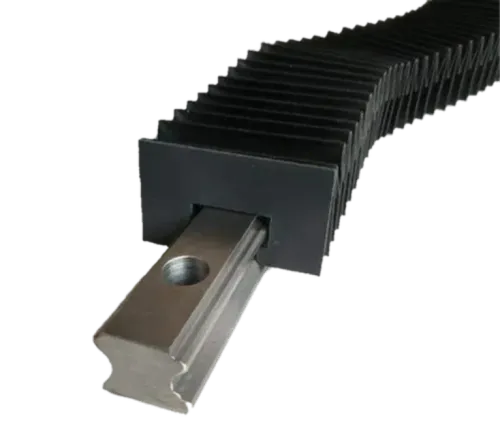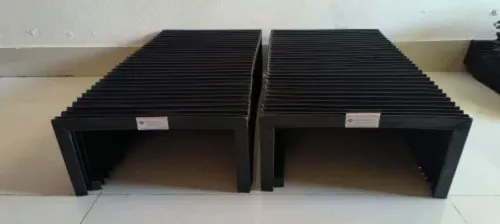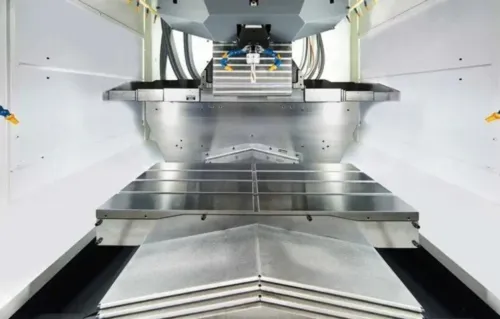

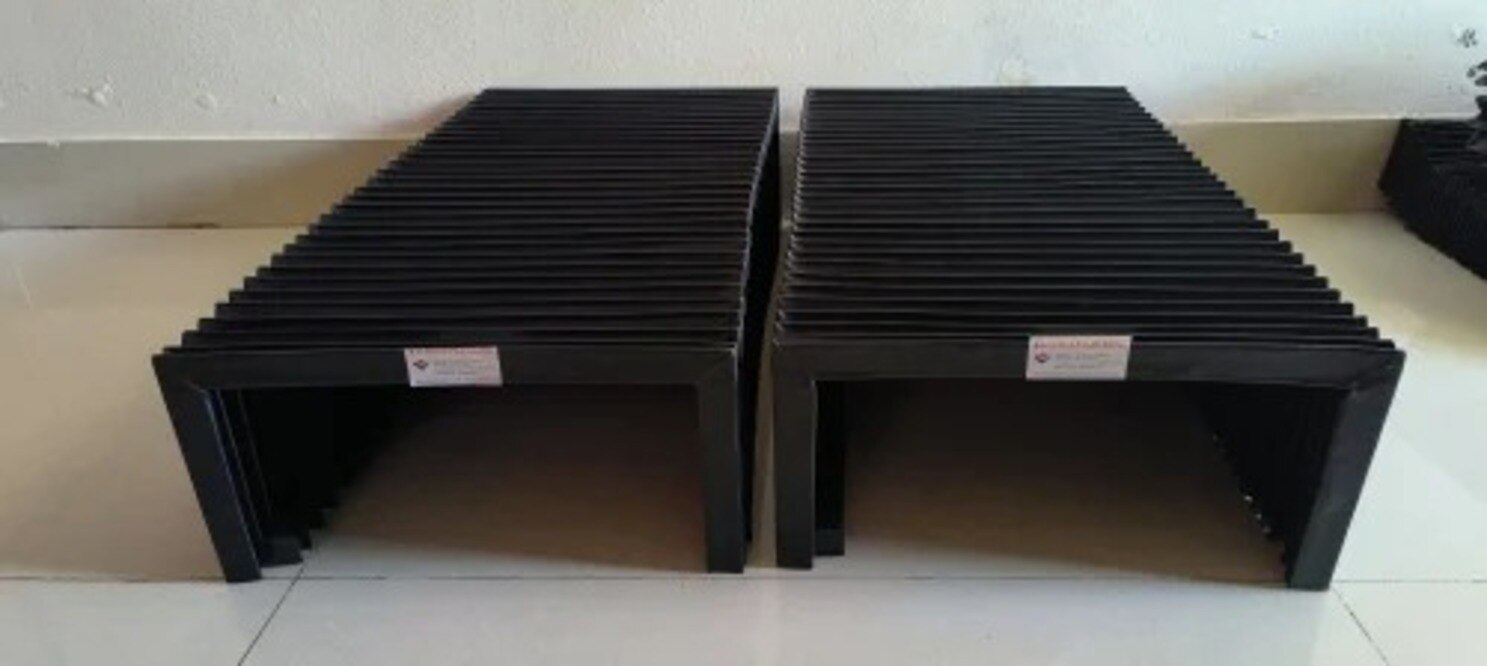
A damaged CMM bellow cover can do more than collect dust: it can rub against the table, add resistance to a moving bridge, contaminate scales, and introduce probing or repeatability faults. You will learn how to identify each failure type, inspect the cover safely, decide between repair and replacement, specify the correct dimensions, and verify the machine before returning it to inspection work.
Key takeaways
- Treat torn creases, separated seams, and rubbing marks as accuracy risks.
- Inspect folds and fasteners with the CMM isolated and moving parts secured.
- Repair stable, localized damage; replace covers with distorted geometry or widespread wear.
- Record dimensions, material, mounting details, and travel limits before ordering replacement.
Which CMM bellow-cover problems can affect measurement accuracy?
CMM bellow cover damage affects measurement accuracy when it changes folding geometry, adds resistance, or lets contamination reach moving and measuring components. A surface stain is cosmetic; a torn crease, separated seam, loose flange, detached fastener, collapsed pleat, or rubbing mark can cause real metrology faults.
| Fault or location | What can happen during measurement |
|---|---|
| Torn fabric or separated bonded or stitched seam | Dust, coolant, and moisture reach scales, guideways, cables, or guides |
| Loose mounting flange, end frame, or detached fastener | The cover pulls unevenly, shifts under travel, or exposes components |
| Collapsed pleat or damage at a parked-end stop | Folds collide, increase drive resistance, or prevent full axis travel |
| Rubbing mark or damaged wiper interface | Abnormal motion, snagging, friction, and poor measurement repeatability |
| Oil or coolant ingress | The fold pack stiffens and traps abrasive particles against moving surfaces |
| Contamination inside folds | Bonded grit acts like an abrasive and accelerates coating, seam, and guideway wear |
Inspect fold creases, seams, mounting flanges, end frames, wipers, and compression stops more closely than an isolated scuff. The cover must never touch the granite table, scale, probe head, bridge, carriage, or another moving structural member.
In Hyderabad, open doors, construction dust, seasonal outdoor dust, humidity, and monsoon moisture increase the importance of checking trapped grit, bonded contamination, damp folds, and corrosion at end fittings. A cover that rubs or pulls unevenly can disturb bridge positioning even without a visible tear.
How do you inspect a CMM bellow cover without creating another fault?
Use this sequence to inspect a CMM machine bellow cover for problems during inspection work in Hyderabad without creating a new fault.
1. Isolate machine power according to the CMM manufacturer’s procedure, then prevent unexpected axis movement. Do not reach into the travel path until the machine is secure.
2. Remove tools, gauges, packaging, and workpieces from the moving envelope. Never use a partially folded bellows as a shelf; a trapped object can puncture a fold or impose a hidden lateral load.
3. Move the machine through its travel range only under the approved manual or low-speed procedure. Inspect the cover at full extension and full compression, stopping if it snags, rubs, or pulls unevenly.
4. Check every visible and underside surface, including each fold, the parked end, both end mounts, mounting rails, clamps, fasteners, wipers, guide rollers, stops, and debris channels. Look for tears, split seams, detached attachments, cracked coating, oil or coolant paths, moisture, abrasive particles, and trapped objects.
5. Clean only with a method approved for the fabric or coating. Avoid aggressive solvents and high-pressure air, which can attack seams or drive dust into seals and guide tracks.
6. Before removal, photograph the failure from several angles and record its exact location, compressed and extended dimensions, fold pitch, material, seam construction, and adjacent hardware condition. Note whether the evidence points to abrasion, over-compression, chemical attack, contamination, or misalignment. Include the post-inspection travel result in the maintenance record.
When is CMM bellow cover repair safe, and when is replacement necessary?
A small, localized tear away from a fold, flange, seam, or attachment point is a candidate for CMM bellow cover repair; structural damage calls for replacement.
| Option | What it means | When it applies |
|---|---|---|
| Repair | Flexible patch or restored attachment | Small isolated puncture, or loose attachment without distortion |
| Replace | New cover matched to the machine | Multiple tears, degraded coating, damaged supports, or structural damage |
Choose patch material compatible with the existing fabric, coating, coolant, oil, and temperature exposure. Use adhesive when the original cover is bonded; use stitching when it was stitched, with thread and stitch placement that preserve flexibility.
Replace damaged mounting strips, and repair an end frame only if it will not create a hard edge in the moving envelope.
Avoid rigid patches, excess adhesive, raised fasteners, and stitches that catch on nearby rails, wipers, rollers, or cable hardware. Cycle every repair through full compression and extension. Stop if the patch stiffens a fold, changes travel, rubs, or adds friction.
Replace the cover when you find:
- Multiple tears, cracked or embrittled coating, or delamination
- Broken internal supports, distorted end frames, permanently collapsed folds, or lost tension
- Damage at a structural attachment or a split fold
Do not continue operating if the cover snags, pulls the axis unevenly, exposes a scale or guideway, or increases drive resistance. Repairing fabric cannot correct a bent rail, burr, damaged wiper, or misaligned stop; fix that hardware before installing or repairing the cover.
What information is needed for a correct CMM bellow cover replacement?
A correct cmm bellow cover replacement starts with measured attachment points, not the nominal dimensions in a machine catalogue. A damaged cover may have stretched, collapsed, or lost its original fold pitch, so it cannot provide a reliable pattern by itself.
1. Record the CMM make, model, axis travel, and machine drawing where available. Measure the cover length fully compressed and fully extended, width, height, fold pitch, and maximum compressed pack height.
2. Measure the fixed and moving attachment points. Document the mounting-hole pattern, bolt size, end-frame geometry, mounting strips, material, seam construction, and any internal supports.
3. Map the clearance envelope around scales, cables, cable carriers, guideways, table edges, stops, and structural members. Note any restricted space at the parked end.
4. Check the proposed dimensions through complete axis travel. Confirm the minimum bend radius, mounting alignment, fold interference, clearance from scales and carriers, and drag at both ends; correct overall length does not prevent a wrong pack height from over-compressing.
5. Send a quotation request with photographs before removal, drawings, measured compressed and extended dimensions, mounting details, and the operating contamination, such as dust, coolant, oil, chips, or welding spatter.
Kalavijay Engineering can assess a custom cover more accurately when this evidence accompanies the request. Ask the specialist to confirm that no fastener, adhesive, fold, or end frame enters the moving envelope before approving fabrication.
Related product
 | Bellow Cover We, " KALAVIJAY ENGINEERING" are masters in manufacturing and supplying excellent quality of Bellows covers For CMM & VMM Machine Bellow Covers. View product → |
How should you commission and document a repaired or replaced cover?
Do not return the CMM to dimensional inspection until the repaired or replaced cover passes a mechanical acceptance check and any required measurement verification.
1. Inspect every fastener, mounting strip, end frame, clamp, wiper, guide rail, stop, and debris channel. Remove burrs and correct misalignment; do not expect a new cover to tolerate defective adjacent hardware.
2. Cycle the axis manually where the manufacturer permits it, then at low speed, through complete travel in both directions. Watch for rubbing, snagging, fold collision, over-compression, uneven pulling, drag on the guideway or table, and adhesive or fasteners protruding into the clearance envelope.
3. Confirm that the cover reaches neither its travel limit before the CMM axis nor a condition that pulls the moving bridge or carriage at either end. A visually smooth cycle alone is not an acceptance result.
4. If the work disturbed a bracket, wiper, cable carrier, or measuring structure, follow the CMM manufacturer’s maintenance procedure and complete the quality system’s required verification. Select the applicable ISO 10360 length-measurement or probing performance check; ISO 10360 evaluates CMM performance, not bellows condition.
5. Record failure photographs, dimensions, material, seam construction, known cause, repair or replacement details, and the post-installation travel result. Note any remaining defect and the person who accepted the machine.
Frequently asked questions
Which CMM bellow-cover problems can affect measurement accuracy?
Torn creases, separated seams, loose flanges, detached fasteners, collapsed pleats, and rubbing marks can add resistance or expose moving components to contamination. A surface stain alone is cosmetic unless it hides structural damage.
How do you inspect a CMM bellow cover without creating another fault?
Isolate the CMM, follow its lockout procedure, and support or secure moving covers before touching them. Check every pleat, seam, flange, fastener, and clearance path without forcing folds or moving an unsecured axis.
When is CMM bellow cover repair safe, and when is replacement necessary?
Repair is suitable for localized damage when the original fold geometry, material, mounting points, and travel remain intact. Replace the cover when pleats have collapsed, dimensions have changed, seams are failing across multiple areas, or rubbing cannot be eliminated.
What information is needed for a correct CMM bellow cover replacement?
Provide the machine and axis, fully compressed and extended lengths, width and height, fold pitch, mounting-hole pattern, flange details, travel direction, material requirements, and photographs showing both ends and the installed clearances.
How should you commission and document a repaired or replaced cover?
Check free movement through the full axis travel, confirm clearances and fastening, inspect for rubbing, and run the CMM maker’s verification routine. Record photographs, measurements, repair details, installation date, and any post-installation accuracy results.