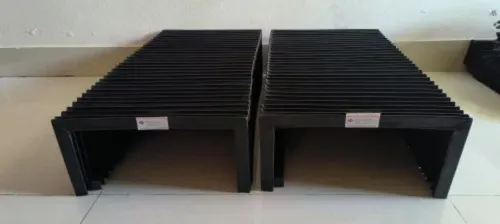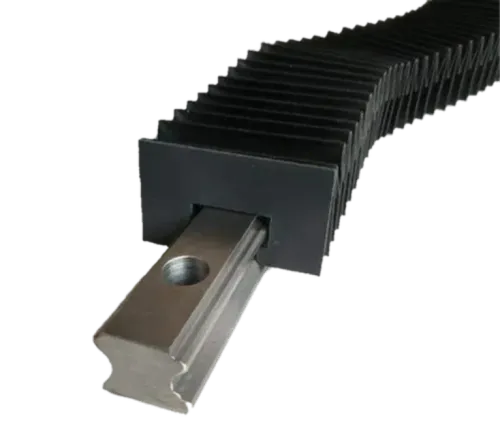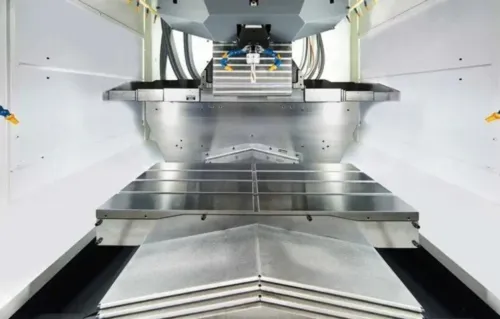

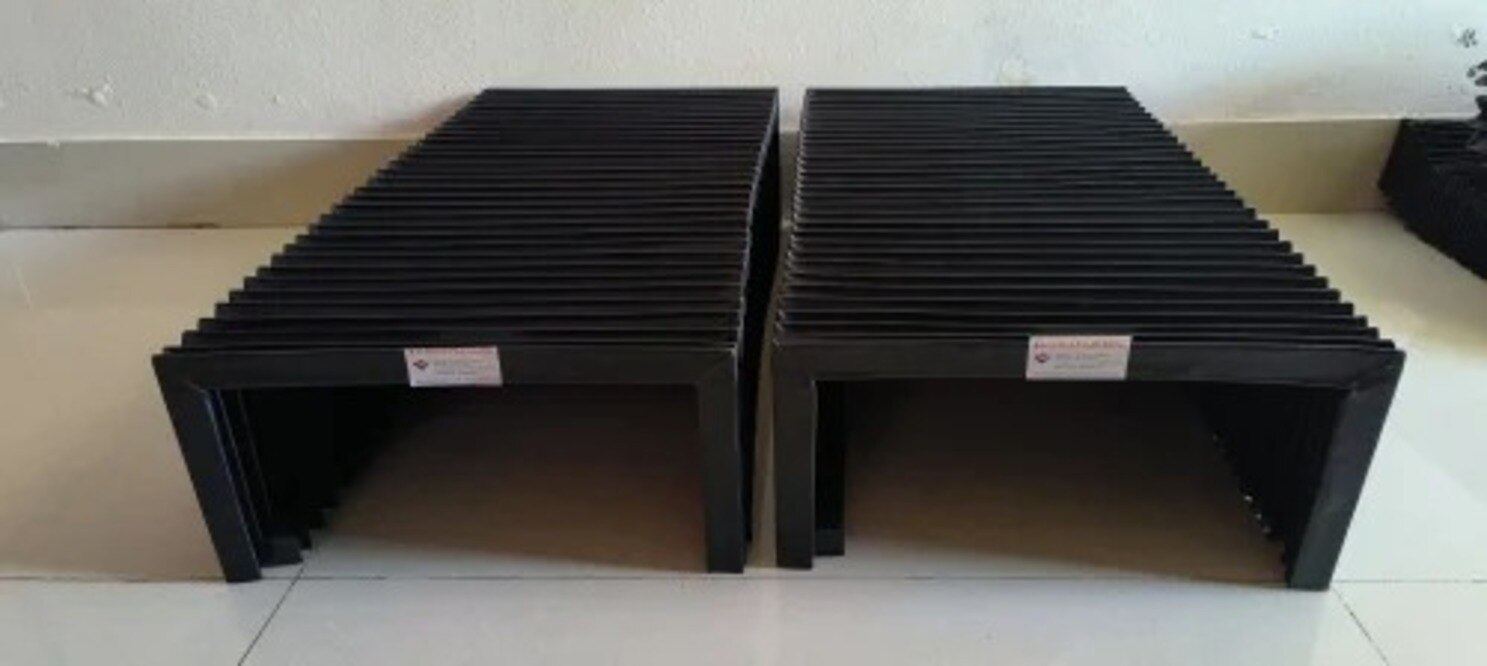
A CMM cover must block contamination without adding drag, vibration, heat, or interference to a measuring system. By comparing bellows with steel covers, roll-up systems, wipers, and exposed guideways—and by checking geometry, materials, and operating conditions—you can specify protection that preserves access and measurement performance.
Key takeaways
- Choose low-friction bellows when measurement accuracy and axis movement matter.
- Use steel covers for severe chips and impact, not delicate CMM access zones.
- Measure travel, compressed length, clearance, and mounting points before ordering.
- Specify chemicals, cleaning methods, temperature, and material compatibility in writing.
Why CMM bellows need a different design standard
A CMM bellow cover is not simply a smaller CNC cover because its first duty is to preserve measurement accuracy, not withstand heavy machining abuse. A bulky or stiff design adds friction, disturbs low-force axis movement, and can restrict the probe, workpiece, or usable measuring volume.
CMM axes also expose scales, bearings, guideways, and drive components to fine dust and coolant mist while demanding smooth, repeatable travel. A cover that survives chips on a milling machine can still sag into the measuring area, collide with a probe, or compress its folds before the axis reaches full stroke.
A cable carrier manages cables, hoses, and pneumatic lines; it does not seal CMM guideways.
A suitable cmm machine protection cover must be designed around the machine’s actual geometry and metrology conditions:
- Check maximum extension, folded length, mounting orientation, minimum fold radius, axis speed, acceleration, and available clearance.
- Keep every fold, seam, and mounting frame outside the probe path and workpiece access area.
- Select low-friction, lightweight construction so the cover does not load or pull the moving axis.
- Specify protection for the actual contamination: dust, chips, coolant mist, or accidental contact.
- Treat a custom CMM bellow cover as contamination protection, not a personnel guard; add fixed guarding or interlocked doors where an operator can reach moving parts.
Heavy hot chips, welding spatter, severe impact, aggressive solvents, or rigid load-bearing requirements point to another protection method rather than a conventional CMM bellows design.
CMM bellows versus steel covers, blinds, wipers, and open ways
For light dust, fine chips, and coolant mist on a fast-moving CMM, choose a fabric bellows: it adds less moving mass and drag, preserves low-friction axis response, and leaves more access around the measuring volume.
| Option | Movement and access | Contamination and durability |
|---|---|---|
| CMM bellows | Low mass, low extension force, and flexible clearance around the probe and workpiece | Best for dust, fine chips, mist, and moderate coolant; not for impact or hot spatter |
| Telescopic steel cover | Rigid and heavier, with greater moving clearance and stronger enclosure | Best for heavy chips, continuous abrasive coolant, impact, and heat; can restrict access |
| Roll-up cover or blind | Compact when retracted, but needs winding space and controlled travel | Suits light dust and occasional contamination; sealing depends on side gaps |
| Way wipers or brush seals | Simple, low-profile contact protection rather than a complete enclosure | Suits light debris on a defined edge; chips and coolant can pass around the wiping line |
| Open ways | Maximum access and no cover drag | Acceptable only in a controlled, clean metrology area; exposed guides invite measurement errors and wear |
A bellows is the wrong choice where hot chips, welding spatter, aggressive solvents, severe impact, or a load-bearing guard is involved. It also cannot replace an interlocked door or fixed personnel guard.
A cmm machine bellow cover in hyderabad should be selected from the machine’s axis geometry, travel frequency, dust load, coolant exposure, and required probe access—not from the search phrase alone. A custom CMM bellows can include openings for cables, but a cable carrier protects hoses and cables; it does not seal the guideway.
How to size a custom CMM cover before ordering
Nominal axis stroke is not enough: a custom cmm bellow cover must fit the machine’s mounting points, folded package, extended length, and moving envelope at both ends of travel.
1. Record the axis travel from hard reference position to hard reference position. Measure the distance between the proposed mounting faces when fully retracted and fully extended, then specify the required coverage beyond each guideway or scale end.
2. Measure the available width and height around the guideway, including the space occupied by brackets, clamps, cable carriers, pneumatic lines, and the bridge. Record the mounting orientation and leave clearance for the cover’s maximum fold thickness; a package that fits only when stationary can collide during motion.
3. Mark every no-contact zone. Check the optical or magnetic scale, read head, probe, stylus, bridge, column, table, workpiece envelope, and calibration artefact. A cover that blocks probe access or rubs a scale can damage measurement accuracy.
4. Give the manufacturer the required folded length, maximum extension, fold pitch, minimum fold radius, and attachment dimensions. Do not infer these from the nominal stroke; over-compression causes fold collision and seam failure, while excess extension leaves the way exposed.
5. Add travel speed, acceleration, cycle frequency, and the axis’s full motion sequence. Specify the smallest clearance measured during rapid moves, not just at rest, and include access needed for probe qualification, cleaning, and inspection.
Send dimensioned sketches or photographs with measurements from fixed datum points. That information lets the supplier verify coverage through the complete stroke before manufacturing.
How material, chemicals, temperature, and cleaning change the choice
Choose the construction from the contaminant and cleaning method, not from the label “cmm machine protection cover.” Coated fabrics and laminated materials keep moving mass low and allow tight folds; reinforcement improves wear resistance and dimensional stability but adds bending stiffness.
Specify the actual room and machine-floor temperature range, coolant exposure, dust load, cleaning chemicals, and whether the CMM moves between a metrology room and production area.
| Construction | Advantage | Best fit |
|---|---|---|
| Coated or laminated fabric bellows | Low mass, flexible folds, low friction | Dust, coolant mist, light chips, and frequent axis movement |
| Reinforced fabric bellows | Better wear and shape retention, with greater stiffness | High-cycle travel or rubbing against nearby machine parts |
| Telescopic steel or rigid guarding | High stiffness and chip resistance, but heavier and less accessible | Hot chips, abrasive coolant, impact, or a rigid barrier requirement |
Do not accept a generic chemical-compatibility claim. Ask how the seams, end frames, mounting flanges, and fold valleys are sealed, then define whether cleaning means wiping, low-pressure rinsing, solvent use, or alkaline washdown. Cable carriers can manage hoses and cables beside or inside the cover, but they do not seal guideways.
A bellows is the wrong method when the application includes:
- Heavy hot chips or welding spatter
- Severe impact or a load-bearing guard requirement
- Aggressive solvents that attack the selected coating or laminate
- Extreme temperatures outside the material’s tested range
- Continuous abrasive coolant or unlimited washdown exposure
- A need for personnel protection rather than contamination control
What to put in a Hyderabad CMM cover specification
Specify the CMM’s real environment and movement data, then compare each cmm bellow cover manufacturer against the same evidence. A standard accordion profile is not an accountable specification.
| Specification item | Record in purchase document | Compare suppliers by |
|---|---|---|
| Environment | Room and floor temperatures, dust, coolant mist, chemicals, cleaning method, and production-room transfers | Proposed fabric, coating, seams, and chemical compatibility |
| Geometry | Make, axis, stroke, folded length, extension, mounting orientation, fold radius, envelope, and clearances | Drawing showing full-stroke coverage without over-compression or fold collision |
| Motion | Travel speed, acceleration, cycle frequency, scanning motion, and allowable drag | Calculated mass, extension force, and tested travel behaviour |
| Protection | Dust, chips, coolant, scale, bearing, and drive exposure; state whether impact or hot chips occur | Clear limits, test evidence, and exclusions rather than “heavy duty” wording |
| Interfaces | Mounting holes, fasteners, cable carriers, access panels, and probe or workpiece clearance | Complete interface drawing and replacement method |
Reject a quotation that gives only nominal axis length. Ask for a signed drawing, material construction, temperature and chemical limits, expected folded life, inspection points, warranty exclusions, and acceptance criteria such as full-stroke coverage without contact.
A cmm machine bellow cover in Hyderabad may move between a controlled metrology room and production floor; state both conditions and the transfer procedure. The search phrase cmm bellow cover for benefits in hyderabad does not define performance.
Kalavijay Engineering, like any shortlisted supplier, should be judged on its response to this custom cmm bellow cover specification, not on catalogue wording.
Related product
 | Bellow Cover We, " KALAVIJAY ENGINEERING" are masters in manufacturing and supplying excellent quality of Bellows covers For CMM & VMM Machine Bellow Covers. View product → |
Frequently asked questions
Why do CMM bellows need a different design standard?
A CMM cover must protect guideways without adding excessive friction, restricting axis travel, disturbing probe movement, or reducing the usable measuring volume. Low mass, flexible folds, and accurate clearances matter more than heavy-duty chip resistance.
How do CMM bellows compare with steel covers, blinds, and wipers?
Bellows suit exposed CMM axes that need flexible, low-force protection. Steel covers handle heavier chips and impact but add mass and occupy more space. Blinds protect selected openings, wipers remove debris from surfaces, and open ways provide no protection.
What measurements are needed for a custom CMM bellow cover?
Record axis travel, fully extended and compressed lengths, width and height, fold height, mounting-hole pattern, attachment direction, nearby moving parts, and the clearance required around the probe, workpiece, and measuring volume.
How do chemicals, temperature, and cleaning affect CMM cover selection?
Choose the cover fabric, coating, thread, fasteners, and reinforcement after identifying coolant, oil, solvent, disinfectant, temperature range, UV exposure, and cleaning method. Confirm compatibility rather than selecting material by appearance alone.