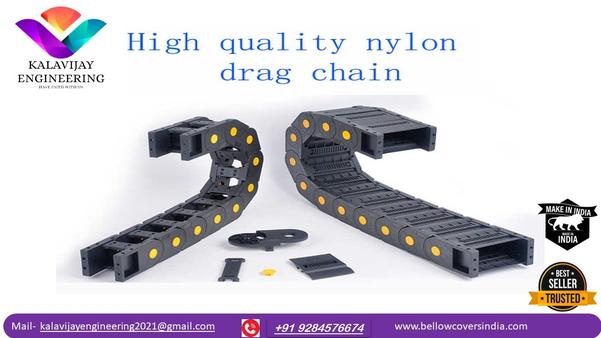

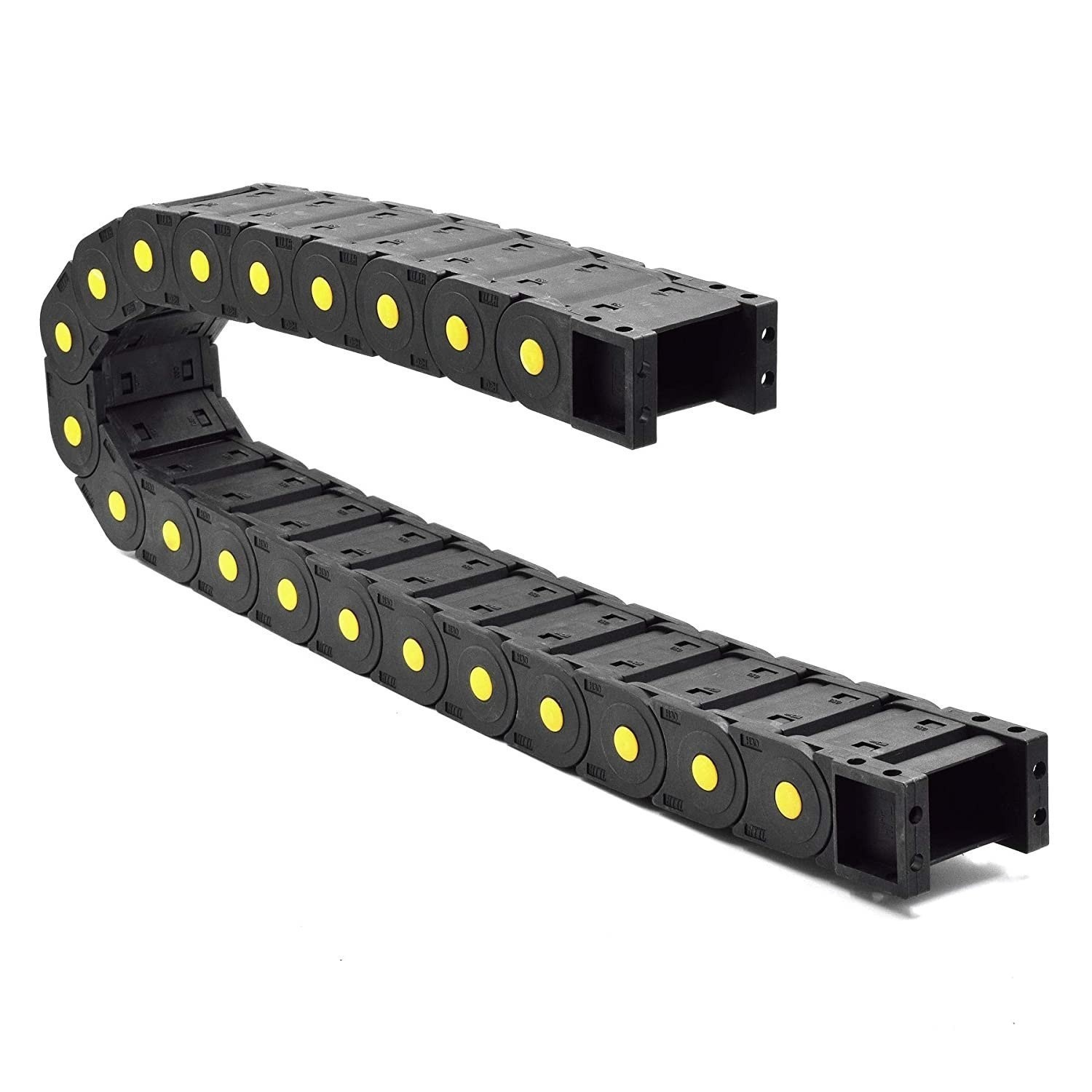
Cables and hoses on automated machinery rarely remain stationary. They bend repeatedly as machine axes, robotic assemblies, material handling equipment, and other moving systems operate. Without controlled routing, repeated movement can cause cables to twist, rub, sag, tangle, or experience excessive bending. A Cable Drag Chain provides a guided path that keeps these moving services organized throughout the machine cycle.
The basic principle is straightforward. Cables, pneumatic tubes, hydraulic hoses, and similar flexible services are placed inside a segmented carrier. As the machine moves, the chain bends within a controlled radius and guides the enclosed services along a predictable path. This reduces uncontrolled movement and helps keep cables away from surrounding components.
For engineering and manufacturing facilities in Coimbatore, Tamil Nadu, drag chains can be relevant to CNC equipment, automation systems, machine tools, cutting machines, packaging equipment, material handling systems, and special-purpose machinery.
Several factors influence drag chain selection.
Bending radius: Every cable has a permissible bend radius. A chain that forces a tighter bend than the cable can tolerate may contribute to premature cable damage.
Internal dimensions: The chain must provide sufficient space for the number and diameter of cables or hoses being routed. Packing everything tightly into a small carrier can restrict free movement.
Travel distance: Short machine strokes and long travel applications create different mechanical requirements. Chain size and arrangement should suit the actual travel.
Cable separation: Power cables, signal cables, pneumatic lines, and hydraulic hoses may benefit from organized separation inside the carrier rather than being bundled randomly.
Operating environment: Dust, chips, oil, coolant, temperature, and machine speed should be considered when selecting the chain material and construction.
One common mistake is treating a drag chain only as a cable storage channel. Its real purpose is dynamic cable management. The cables need enough clearance to move slightly within the carrier without becoming twisted or compressed. Correct installation also avoids unnecessary tension at connection points.
Routine inspection should include checking chain links, mounting brackets, cable condition, bending behaviour, and any signs of rubbing. If cables repeatedly fail near moving sections, engineers should examine the entire routing arrangement rather than simply replacing the damaged cable.
Coimbatore's manufacturing base includes industries where machinery often operates for extended production cycles. Reliable cable movement becomes especially important when unplanned interruptions affect output.
Kalavijay Engineering works with machine protection and cable management requirements for industrial applications in Coimbatore. Understanding travel, load, bend radius, available space, and operating conditions before selecting a cable drag chain can result in a cleaner installation and more controlled movement throughout the equipment's working cycle.